
Water/Wastewater Check Valve Replacement: CVI405 vs CVS407
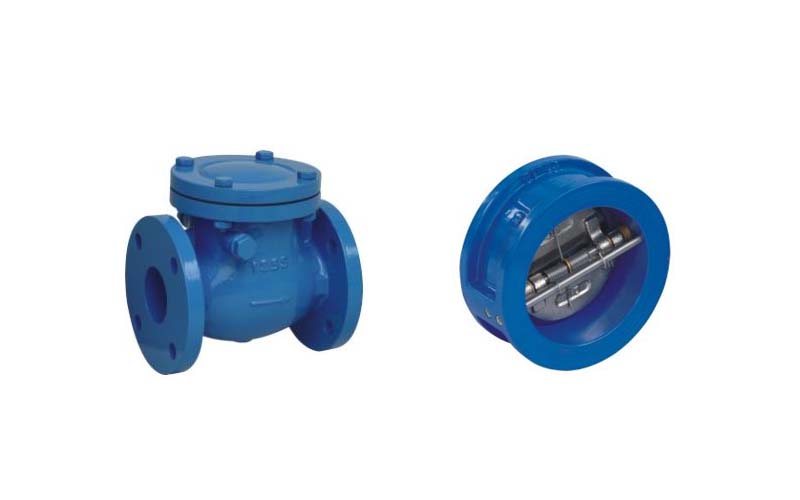
The CVI405 versus CVS407 replacement question is a service-condition decision, not a material upgrade contest. CVI405 is a cast iron check valve documented for water and wastewater, HVAC, building services, municipal utilities, and general industrial systems. CVS407 is the cast steel check valve model in this comparison. The model name identifies the material family, but it does not confirm whether a specific water or wastewater duty, size, pressure class, trim, or end connection is suitable. That confirmation must come from the approved project data sheet.
For maintenance and procurement teams, the practical task is to replace a check valve without creating a new mismatch. A check valve permits flow in one direction and closes to limit reverse flow. In water and wastewater systems, that function may protect pumps, isolate sections, or limit backflow depending on where the valve is installed. The replacement must therefore match the line, the fluid, the piping, and the maintenance plan, not just the old valve outline.
EG Valves Manufacturing Co., Ltd (www.egvalves.com) is a Wenzhou-based industrial valve manufacturer established in 2000. Its product range includes check valves, and its factory processes are ISO 9001-certified. This article uses only the product-application and capability facts supplied for the CVI405 and CVS407 decision, and it separates documented facts from the checks a buyer must complete before a retrofit.
Why a check valve replacement can go wrong
A replacement often starts with a maintenance finding: reverse flow, seat leakage, noise, a disc that no longer moves freely, or an obsolete spare part. The simplest response is to order the same model again. That works only when the original selection is still correct for the line and when the model, size, pressure class, end connection, and internal configuration are still available.
Retrofit conditions can change the answer. A pump may have been replaced, a line may now carry a different fluid, the isolation philosophy may have changed, or the maintenance team may need better access to the valve interior. A cast iron check valve and a cast steel check valve can look similar from the outside while serving different project requirements. The buyer should not infer pressure rating, size range, trim, or application suitability from the body-material name alone.
What CVI405 and CVS407 are in this decision
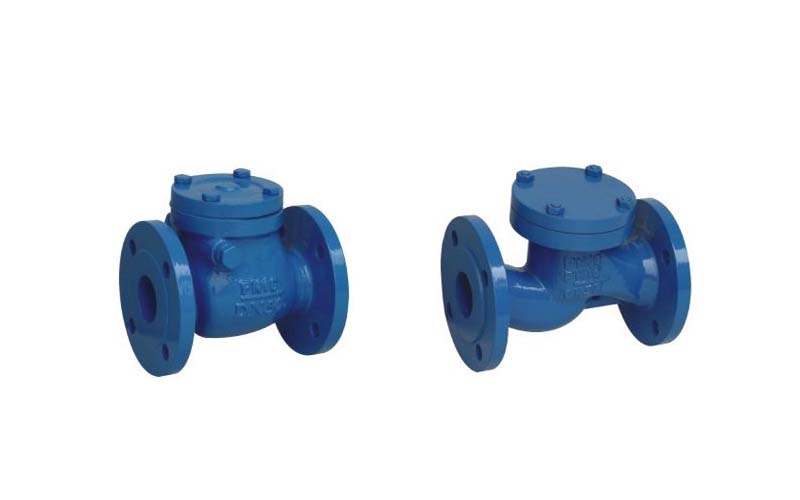
CVI405 is identified as a cast iron check valve. Its body material is cast iron or ductile iron. It is available in swing type, wafer type, lift type, and globe silent type constructions. The documented size range is NPS 1-1/2 inch to 24 inch, or DN40 to DN600. The documented pressure rating is Class 125 or Class 150, or PN10 or PN16. End types include FF, RF, and wafer type. The valve has a one-piece disc construction designed to withstand severe service conditions, and the design prohibits galling or scoring of seating surfaces. A large bolted-on cover provides access to the interior for routine maintenance. Coating options are epoxy powder coating or paint coating.
CVS407 is identified as a cast steel check valve. EG application sets list the CVS407 in connection with power, mining, chemical, refining, oil and gas, and food and beverage applications. That is useful project context, but it is not a substitute for a model-specific data sheet. For a water or wastewater replacement, the buyer must confirm the CVS407 size, pressure class, end connection, body material, trim, coating, and suitability for the actual medium before approving the substitution.
Service-condition questions that separate the two models
1. What is the actual fluid and application?
CVI405 is documented for water and wastewater, HVAC, building services, municipal utilities, and general industrial systems. That makes it the natural starting point when the line is a water or wastewater duty within its documented parameters. The word wastewater covers a wide range of conditions, so the buyer should still describe the fluid clearly: clean water, raw water, wastewater with suspended solids, or another service. If the medium is outside the documented application, do not assume CVI405 is suitable merely because it is a water-service check valve.
CVS407 is a cast steel check valve model. Its application set is broader in the supplied project references, but a water or wastewater duty should be confirmed on the approved model data. The cast steel body may be relevant to a project requirement, yet the buyer should not treat the material name as proof of pressure class, trim compatibility, or water/wastewater approval.
2. What are the pressure and temperature conditions?
CVI405 is documented at Class 125 or Class 150 and PN10 or PN16. If the replacement line is above those ratings, the CVI405 data does not support the application. The buyer should record the design pressure, operating pressure, design temperature, and any surge conditions that affect valve selection. Do not use the old valve's appearance or the line size as evidence that the pressure class is adequate.
For CVS407, the pressure and temperature ratings must come from the project-specific data sheet. A cast steel check valve is not automatically rated for every high-pressure or high-temperature service. The buyer should verify the class, body material, trim, gasket, and coating against the actual line conditions before purchase.
3. Does the size and end connection match the piping?
CVI405 covers NPS 1-1/2 inch to 24 inch, or DN40 to DN600. End types include FF, RF, and wafer type. The replacement check should confirm the line size, flange drilling, face-to-face needs, and available space. A valve that is hydraulically correct but does not fit the piping is still a failed retrofit.
CVS407 size and end details must be confirmed for the specific project. The buyer should not take the CVI405 size range as a proxy for CVS407 availability. If the line is outside the documented CVI405 range, the selection discussion should move to a model whose data sheet supports the required size and connection.
4. Which construction suits the installation and maintenance access?
CVI405 offers swing, wafer, lift, and globe silent constructions. Each construction has a different internal arrangement and maintenance implication. The selection should match the available space, piping layout, flow direction, and access for inspection. The large bolted-on cover on CVI405 provides access to the interior for routine maintenance, which is relevant when the valve is installed in a location where future service is possible.
For CVS407, the construction, cover arrangement, and access requirements must be confirmed on the data sheet. Do not assume that the same construction type or internal layout carries over from CVI405. The maintenance team should be able to isolate the valve, remove the cover if required, and obtain the correct spare parts without modifying the surrounding piping.
5. Is the body material and coating compatible with the environment?
CVI405 uses cast iron or ductile iron for the body. Coating options are epoxy powder coating or paint coating. The buyer should confirm that the selected coating is suitable for the external environment and the expected internal service. The body material certificate and coating specification should be part of the purchase record.
CVS407 uses a cast steel body by model designation. The buyer should verify the exact body material, trim material, and coating system on the approved data sheet. Material names alone do not establish corrosion performance in a specific water or wastewater line.
CVI405 vs CVS407 selection matrix
| Decision question | CVI405 | CVS407 | What the replacement team should confirm |
|---|---|---|---|
| Product identity | Cast iron check valve | Cast steel check valve | Match the existing nameplate and the approved replacement model. |
| Body material | Cast iron or ductile iron | Cast steel | Verify the body material certificate and trim specification. |
| Documented size range | NPS 1-1/2 inch to 24 inch; DN40 to DN600 | Confirm the project-specific size | Check line size, flange drilling, face-to-face needs, and space. |
| Documented pressure rating | Class 125 or Class 150; PN10 or PN16 | Confirm the project-specific class | Do not infer the CVS407 rating from the CVI405 rating. |
| Construction options | Swing, wafer, lift, and globe silent types | Confirm the selected construction | Match flow direction, piping layout, and maintenance access. |
| Application anchor | Water and wastewater, HVAC, building services, municipal utilities, general industrial systems | Listed in EG application sets for power, mining, chemical, refining, oil and gas, and food and beverage | Confirm the actual water or wastewater duty before substituting. |
| Maintenance features | One-piece disc; large bolted-on cover for interior access | Confirm cover access and spare-part availability | Plan isolation, gaskets, and internal spare parts. |
| Coating | Epoxy powder coating or paint coating | Confirm the coating system | Check external environment and fluid compatibility. |
The matrix shows why the CVI405 and CVS407 should not be treated as interchangeable by model number alone. CVI405 has a clearly documented cast iron envelope for water and wastewater, HVAC, building services, municipal utilities, and general industrial systems. CVS407 is the cast steel option, and its project data must confirm the actual service envelope. The selection is strongest when the line data, the valve data, and the purchase documentation agree.
Where CVI405 fits in water and wastewater service
CVI405 is the documented starting point when the replacement line is within its size, pressure, material, and application envelope. That includes water and wastewater duties, HVAC and building services, municipal utilities, and general industrial systems. The available swing, wafer, lift, and globe silent constructions allow the buyer to match the valve to the piping and maintenance approach. The large bolted-on cover is useful where the maintenance team needs access to the interior, and the one-piece disc construction is designed to withstand severe service conditions. The design also prohibits galling or scoring of seating surfaces.
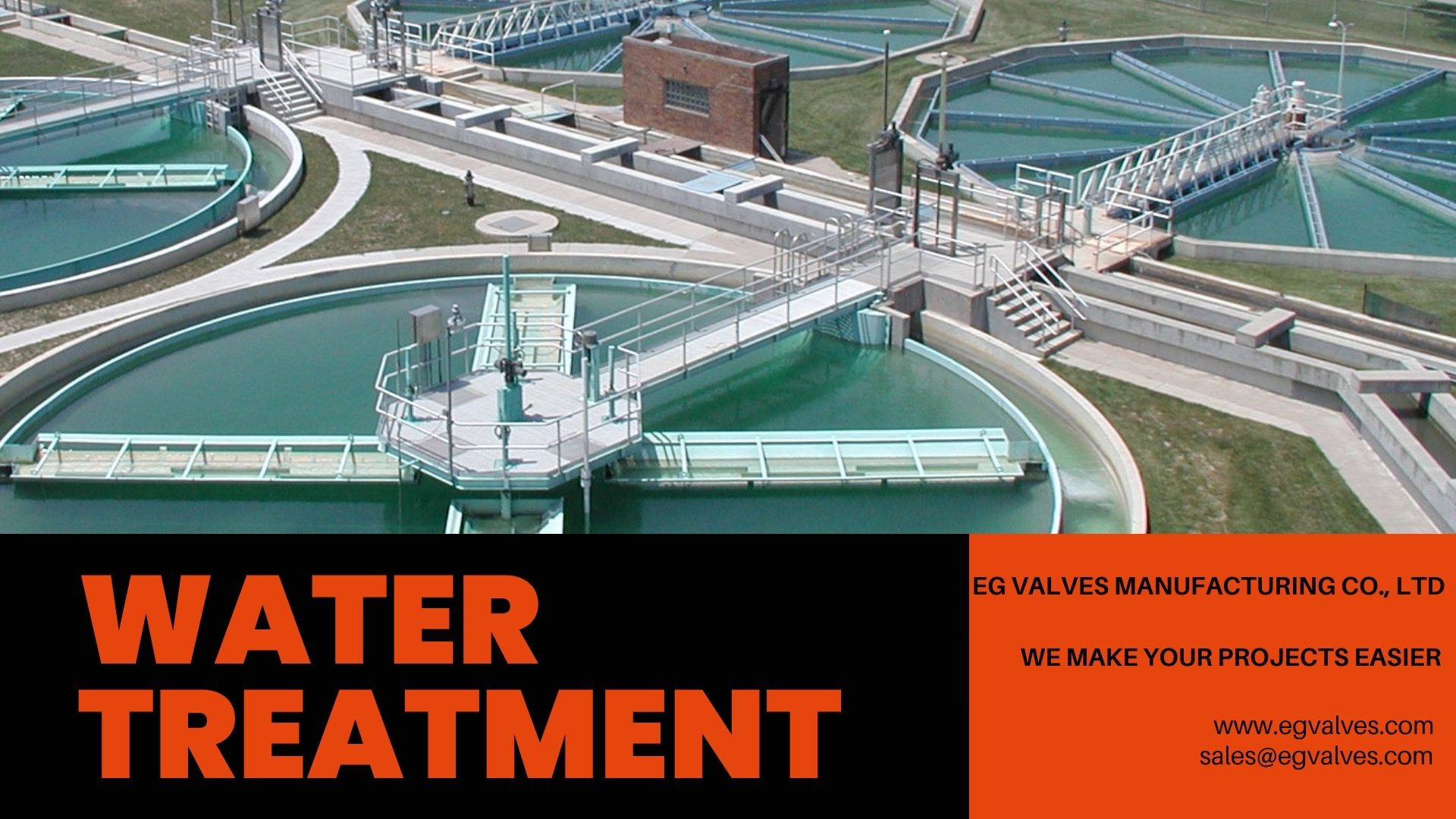
Project evidence should be read carefully. EG's Brazil water-treatment reference covers a 326-piece valve package including gate, butterfly, and check valves stated as PN16 and DN40 to DN2000, with eight years of reported stable operation. CVI405 is listed among the related check-valve models for that application. That reference supports the use of CVI405 in water-treatment contexts, but it does not mean that every line in a water or wastewater plant can use the same size, pressure class, or construction. The specific line data still controls.
Where CVS407 requires a verified project case
CVS407 should enter the replacement decision when the project data sheet supports a cast steel check valve for the actual service. The model is listed in EG application sets for power, mining, chemical, refining, oil and gas, and food and beverage. Those references show that CVS407 is used in demanding industrial project contexts. They do not replace a line-specific review for water or wastewater service.
Before approving CVS407, ask for the model-specific data sheet and confirm the body material, size, pressure class, end connection, trim, coating, and maintenance arrangement. If the replacement brief requires a cast steel check valve for water or wastewater, make that a written technical requirement and attach the supporting data. Do not accept a verbal statement that CVS407 is equivalent to CVI405 because both are check valves. Material family, pressure rating, and application suitability are separate questions.
Decision rule: Use CVI405 when the line is within its documented water and wastewater envelope and the needed construction, size, pressure class, and end connection are confirmed. Consider CVS407 when cast steel construction is a project requirement and its model-specific data sheet confirms the actual service. Do not substitute one for the other on model name alone.
Step-by-step replacement workflow
- Capture the existing valve data. Record the nameplate model, size, pressure class, end connection, body material, trim, coating, flow direction, and any visible damage. Photograph the installation and the piping connections.
- Define the service envelope. Record the fluid, normal and maximum pressure, temperature, line size, expected solids or debris, and whether the valve is on a pump discharge or another critical duty. Confirm the isolation and maintenance access available to the crew.
- Check CVI405 against the data. Compare the line to the documented CVI405 size range of NPS 1-1/2 inch to 24 inch, or DN40 to DN600, and the documented pressure rating of Class 125 or Class 150, or PN10 or PN16. Confirm the required construction, end type, and coating.
- If CVS407 is proposed, verify the project case. Obtain the model-specific data sheet and confirm the size, pressure class, end connection, trim, coating, and water or wastewater suitability. Do not use the CVI405 data as a proxy.
- Confirm maintenance and spares. Check that the selected valve can be isolated, that the cover can be removed if needed, and that the correct gaskets and internal parts are available for future service.
- Fix the purchasing terms. Put the model, configuration, documentation, inspection requirements, quantity, lead time, branding, and acceptance criteria in the purchase order.
- Inspect at receipt. Check the nameplate, body markings, dimensions, end connection, coating, disc movement, cover fasteners, and documentation before the valve is released to the maintenance crew.
Purchasing terms and acceptance criteria before the retrofit
The purchase order should freeze the configuration in writing. For CVI405, that means the model, construction type, size, pressure class, end type, body material, coating, and any required documentation. For CVS407, it means the same details plus the approved project-specific data sheet. A generic description such as cast steel check valve is not enough for acceptance.
EG's manufacturing capability facts are relevant to the purchasing discussion. The company states monthly capacity of 8,000 valves and a lead time within 25 to 35 days. The MOQ is stated as 1 piece for big-size valves and 10 pieces for small-size valves. EG offers OEM and ODM production with the client's brand logo or the EG brand logo. Every valve is inspected by a strict QC team, and EN 10204 3.1 Material Test Certificates are provided to every order. These terms should be confirmed for the actual order, because the quotation and delivery schedule remain project-specific.
Acceptance should also cover the factory certification scope. EG's factory processes are ISO 9001-certified, and the factories have obtained API 600, API 6D, CE, and PED certifications. Those are factory-level facts. The buyer should request the product-specific certificate or test document that applies to the ordered check valve, rather than assuming that every individual model carries every certificate.
- Confirm the exact model and configuration against the approved data sheet.
- Confirm the size, pressure class, end connection, body material, trim, and coating.
- Require EN 10204 3.1 Material Test Certificates for the order.
- Confirm the 100 percent inspection requirement and the inspection record format.
- Confirm the lead time, quantity, MOQ, and branding terms in the purchase order.
- Check the valve at receipt for nameplate details, dimensions, coating, disc movement, cover fasteners, and documents.
- Keep a spare-parts list for gaskets and internal components that may be needed during maintenance.
FAQ
What is the main difference between CVI405 and CVS407 for a replacement?
CVI405 is a cast iron check valve documented for water and wastewater, HVAC, building services, municipal utilities, and general industrial systems. Its documented size range is NPS 1-1/2 inch to 24 inch, or DN40 to DN600, and its documented pressure rating is Class 125 or Class 150, or PN10 or PN16. CVS407 is a cast steel check valve model listed in EG application sets for power, mining, chemical, refining, oil and gas, and food and beverage. The material family differs, but the actual selection depends on the line conditions and the model-specific data sheet.
When is CVI405 the safer starting point?
CVI405 is the safer starting point when the replacement line is within its documented water and wastewater application and within its size, pressure, end connection, coating, and construction envelope. Confirm the required swing, wafer, lift, or globe silent construction, and check that the maintenance team can access the bolted-on cover if service is needed. Do not use CVI405 when the pressure class, size, or service conditions fall outside its documented data.
What should be confirmed before accepting CVS407 for water or wastewater service?
Before accepting CVS407, obtain the model-specific data sheet and confirm the body material, size, pressure class, end connection, trim, coating, and water or wastewater suitability. The model is listed in EG application sets for power, mining, chemical, refining, oil and gas, and food and beverage, so a water or wastewater duty should be documented for the specific project. Do not rely on the cast steel body name as proof of suitability.
What purchasing and acceptance terms should be fixed before the retrofit?
Fix the model, configuration, size, pressure class, end connection, body material, trim, coating, documentation, inspection requirement, quantity, lead time, MOQ, and branding in the purchase order. EG states monthly capacity of 8,000 valves, a lead time within 25 to 35 days, an MOQ of 1 piece for big-size valves and 10 pieces for small-size valves, 100 percent inspection, and EN 10204 3.1 Material Test Certificates with every order. For a replacement review, send the existing nameplate and line data to EG's sales team at sales@egvalves.com, and use the EG Valves product brochure for the next technical discussion.
Conclusion
The CVI405 versus CVS407 decision should be made from the service conditions outward. CVI405 is the documented cast iron choice for water and wastewater, HVAC, building services, municipal utilities, and general industrial systems when the line falls within its size range of NPS 1-1/2 inch to 24 inch, or DN40 to DN600, and its pressure rating of Class 125 or Class 150, or PN10 or PN16. CVS407 is the cast steel check valve model in the comparison, and it should be accepted only when the model-specific data sheet confirms the actual project duty.
The purchasing file should show the same discipline. Freeze the configuration, confirm the application, require the material certificates and inspection records, and check the valve at receipt. That process gives the maintenance and procurement teams a replacement decision they can defend, rather than a model swap that happens to fit the pipe.
For the next step, review the line data against the CVI405 documentation, request the CVS407 data sheet if cast steel is required, and confirm the commercial terms before the retrofit is released. The EG Valves brochure provides the product-range context for that review.
Have Questions or Need More Details?
Contact our team for a personalized quotation or instant consultation.
Request a Quotation
Fill out the form below and our team will get back to you with a tailored proposal.
WhatsApp Direct Chat
Prefer to chat in real-time? Message us on WhatsApp for instant assistance & quick answers.
- Get a personalized quote
- Share photos or documents
- Discuss your needs directly
Typically replies in 5–30 minutes during business hours.