
Triple Offset Butterfly Valve Basics: BOV303 Sizes, Pressure Classes, Configurations
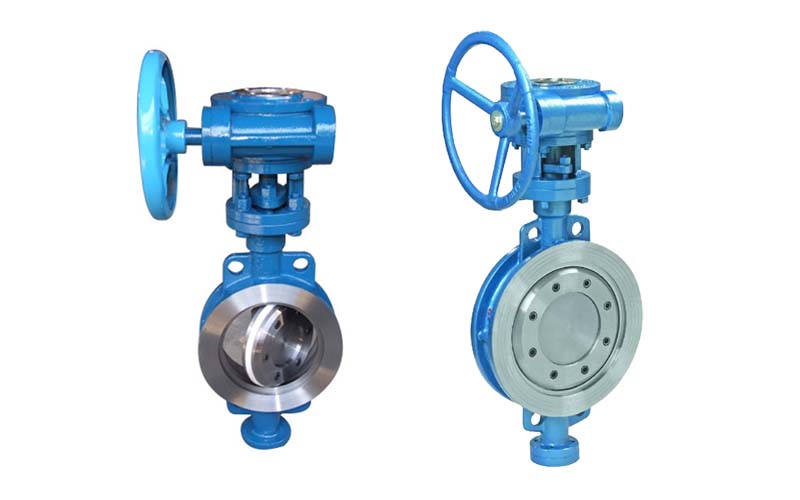
A triple offset butterfly valve is the butterfly category a buyer reaches for when the line has to shut off tightly and a resilient-seated valve is no longer the suitable answer. In the EG Valves portfolio, that category is carried by the BOV303. Three facts define the model at the entry level: it covers NPS 2" to 60", which is DN50 to DN1500; it is rated for Class 150, Class 300 and Class 600 under the ASME class system, and for PN10, PN16, PN25 and PN40 under the ISO/PN system; and it is available in Wafer, Lug and Double Flange body configurations.
This article explains what each of those three specification dimensions actually changes for a project, and then connects the BOV303 to the industries EG Valves lists for it: oil and petroleum, refinery and tanks, chemical factories, steel mills and shipbuilding. It is a starting reference for a procurement or engineering team meeting the model for the first time, not a substitute for the project datasheet.
What a Triple Offset Butterfly Valve Is
The triple offset design is a sealing geometry, not a marketing label. The seating surfaces are arranged so that the disc and the seat do not drag across one another through most of the stroke; contact is made only at the final point of closure. EG Valves states this directly for the BOV303: the triple offset design eliminates the wear associated with sealing surface contact.
Two consequences follow for the buyer. First, the valve is described as delivering bubble-tight closure, which EG Valves frames as process efficiency combined with reduced maintenance. Second, because the seal is not relying on continuous sliding contact to stay tight, the model can be offered with seat options that suit tougher media: the standard seat is stainless steel with graphite, or PTFE with stainless steel, and an optional Stellite seat is available for optimum resistance to erosion.
BOV303 at a Glance
The table below consolidates the published BOV303 parameters. Every value in it comes from the EG Valves product data for this model, and it is the reference point for the rest of the article.
| Specification | BOV303 |
|---|---|
| Model | Triple Offset Butterfly Valve, BOV303 |
| Size range | NPS 2" ~ 60" ; DN50 ~ DN1500 |
| Pressure rating — ASME class system | Class 150 / Class 300 / Class 600 |
| Pressure rating — ISO/PN system | PN10 / PN16 / PN25 / PN40 |
| Body material | Carbon Steel, Stainless Steel, Alloy Steel, Duplex Steel, etc. |
| Disc material | Carbon Steel, Stainless Steel, Duplex Steel, etc. |
| Seat material | Stainless Steel + Graphite, or PTFE + Stainless Steel |
| Optional seat | Stellite seat, offering optimum resistance to erosion |
| Body configuration | Wafer type, Lug type and Double Flange type are all available |
| Mode of operation | Handle Lever, Gearbox, Worm Gear, Electric, Pneumatic |
| Listed industries | Oil and petroleum, refinery and tanks, chemical factories, steel mills, shipbuilding |
Read as a whole, the table describes a single model series with a wide working envelope rather than a narrow niche product. The size range spans more than an order of magnitude in nominal bore, and the two pressure-rating systems together cover the common classes used in process piping and utility headers.
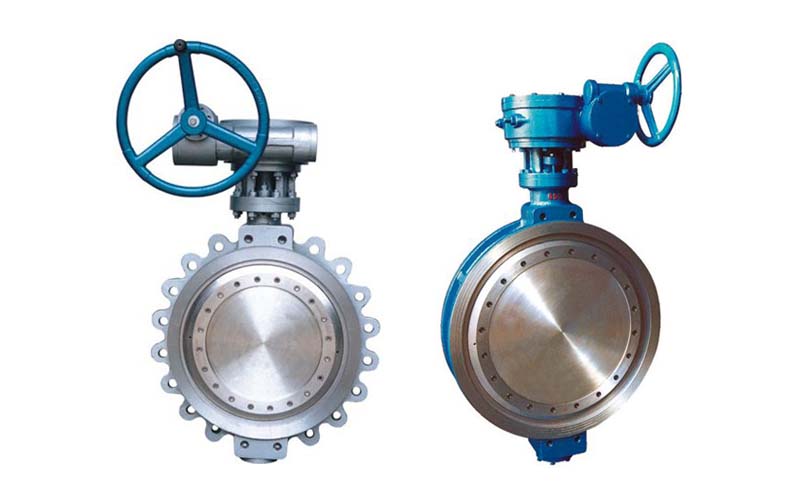
Size Range: NPS 2" to 60" (DN50 to DN1500)
The BOV303 spans NPS 2" through NPS 60", equivalently DN50 through DN1500. That envelope is wide enough to cover small isolation duty on a utility branch as well as large-bore line isolation on a main process header, using one model designation instead of several. Three practical points follow from it.
The same model family covers the whole project scope
When the small and large isolation points on a plant come from one model series, spares planning, seat and gasket familiarisation and maintenance training consolidate around a single product. That is a genuine operational simplification for a refinery or chemical site, where isolation valves appear across many line sizes.
Large sizes change the site conversation early
At the upper end of the range, handling, lifting and the physical space needed around the valve become project items in their own right. They are matters for the installation plan, not the datasheet, but they should be flagged at the sizing stage so that the pipe routing and access arrangements are agreed before fabrication. BOV303 is rated across the full NPS 2"–60" span, so size alone never forces a change of model — the constraint is usually the surrounding steelwork.
Size interacts with pressure class and configuration
A size is never selected in isolation. The same nominal bore can appear in a Class 150 line and in a Class 600 line, and the body configuration can differ between the two. Section by section is therefore the wrong order of work. The reliable method is to fix the line size, the pressure rating and the mounting arrangement together, then confirm the combination against the BOV303 data.
Pressure Classes: Class 150 / 300 / 600 and PN10 / 16 / 25 / 40
EG Valves rates the BOV303 under two naming systems at once: ASME/ANSI Class 150, Class 300 and Class 600, and ISO/EN PN10, PN16, PN25 and PN40. Both lists are complete and internally consistent, but they are not interchangeable labels.
Two systems, two conventions
The Class system and the PN system are separate classification conventions with their own reference temperatures and their own dimensional and testing traditions. A specification should name the system it is written in — ASME Class for an ANSI-style piping package, PN for a DIN or EN-style package — and stay inside it. Crossing between systems by treating the numbers as equivalent is a recurring source of confusion in bid comparisons, because the two series do not pair up one-to-one.
What the BOV303 range covers
Class 150, 300 and 600 cover the pressure bands most commonly specified for process isolation on refinery, chemical and utility lines, and PN10 through PN40 covers the equivalent ground under the European convention. Within each system the BOV303 is a single model that moves up and down the rating ladder, so a project does not need a second product family simply because one section of the plant runs at a higher class.
Where the rating check belongs
Pressure class is a line-design decision, not a valve decision. The valve is ordered to match the class already fixed for the pipe. The buyer's job is to make sure the requested class appears on the enquiry in the same system the piping specification uses, and that the corresponding BOV303 entry is confirmed. Ratings outside the four PN values or the three Class values listed for this model fall outside the BOV303 envelope and need to be handled as a separate enquiry.
Configurations: Wafer, Lug and Double Flange
The BOV303 is offered in Wafer, Lug and Double Flange body types. All three are available on the model; the choice is about how the valve is held in the line and how it can be serviced, not about the sealing principle, which stays the same across the three.
| Configuration | How it sits in the line | What it changes for the buyer |
|---|---|---|
| Wafer | Clamped between two pipe flanges and held by the through-bolting across the joint | The most compact of the three in face-to-face terms, and the choice when the flange gap is fixed and space around the valve is tight |
| Lug | Carries its own lugged flange ears and is bolted to each pipe flange independently | Allows the valve to be unbolted from one side while the other side stays in place, which matters where a line has to be isolated for maintenance without dismantling the adjacent spool |
| Double Flange | Flanged at both ends and bolted to the pipe flanges as a flanged valve body | The most direct match where the piping specification already calls for a flanged valve, and the easiest of the three to handle as a discrete flanged component |
Why this is called a "basic selection concept"
Configuration is the easiest of the three specification dimensions to get wrong by defaulting. A buyer who copies a Wafer valve into a position that needs single-side removal will discover the problem only at the first maintenance shutdown. Working through the three options at the enquiry stage, against the actual pipe flange arrangement and the site's maintenance practice, is the cheap moment to make the decision.
Operation: From Handle Lever to Actuated Control
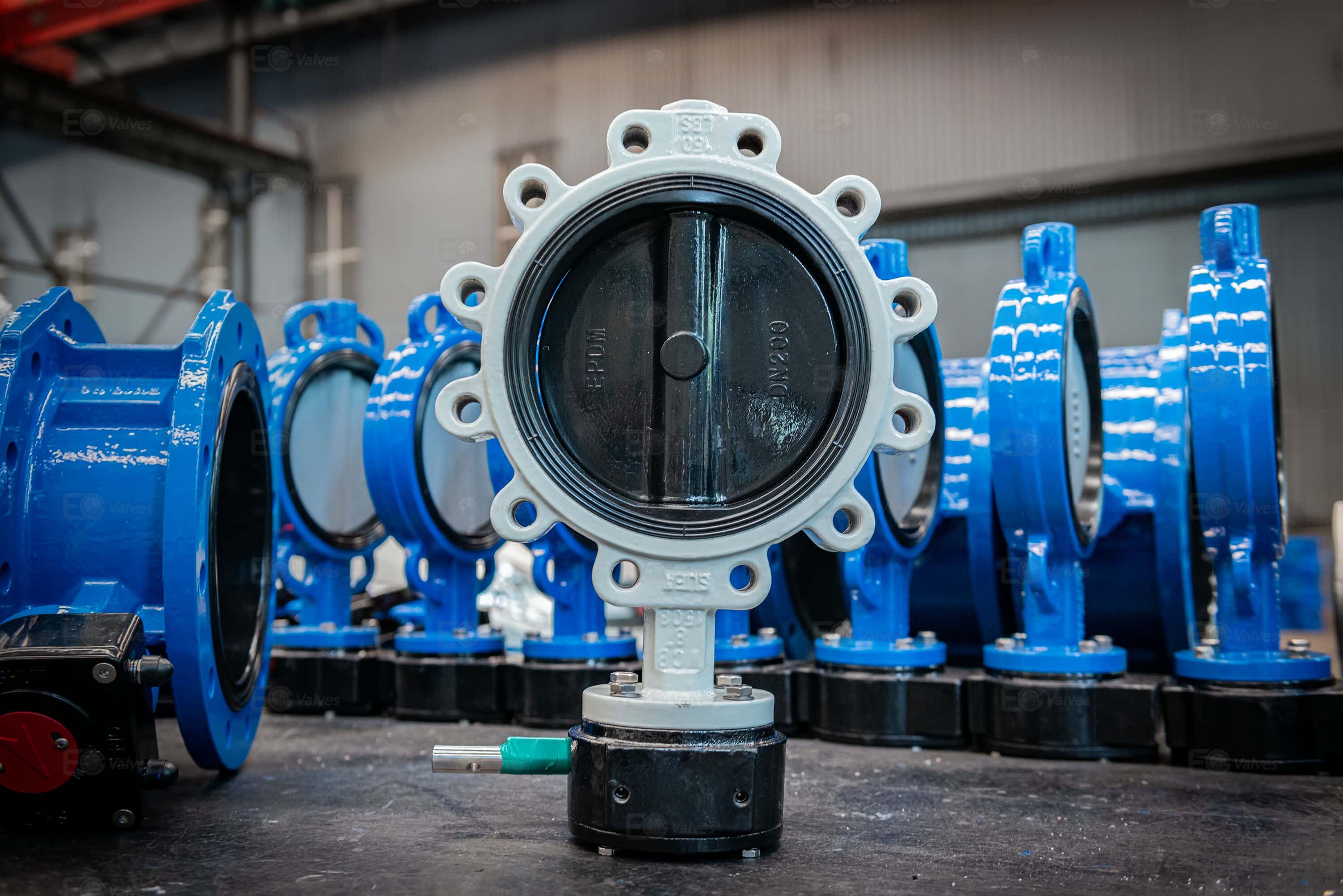
The BOV303 is offered with handle lever, gearbox, worm gear, electric and pneumatic operation. The list spans manual and actuated duty on the same model.
Manual operation via handle lever or gearbox suits isolation points operated occasionally, where the valve is opened or closed as part of a line-up procedure rather than modulated in service. Electric and pneumatic operation move the same valve into remote or automated duty, where the actuator rather than an operator performs the stroke.
Three things should be settled alongside the operation choice. The first is whether the valve is being used for isolation or for regulation — the BOV303 data describes isolation performance (bubble-tight closure) and does not represent the model as a control valve. The second is the actuator interface: gearbox, worm gear, electric and pneumatic are distinct arrangements, and the valve is ordered against one of them. The third is torque at the chosen size and pressure class, which is confirmed with the supplier at the enquiry stage rather than assumed from a smaller reference size.
Materials and Seat Options
Body and disc materials for the BOV303 are listed as carbon steel, stainless steel, alloy steel and duplex steel, with the disc list covering carbon steel, stainless steel and duplex steel. The seat is stainless steel with graphite, or PTFE with stainless steel, and an optional Stellite seat provides optimum resistance to erosion.
Material selection is the point where the industry application actually enters the specification. The five sectors EG Valves lists for the BOV303 — oil and petroleum, refinery and tanks, chemical factories, steel mills and shipbuilding — are not uniform in their demands, and the material and seat combination is the main lever for matching the valve to the medium.
- Corrosive media: stainless steel and duplex steel bodies, and the PTFE-with-stainless-steel seat, are the natural conversation to have first.
- Erosive media: the optional Stellite seat exists specifically for erosion resistance and should be raised at enquiry rather than retrofitted later.
- General hydrocarbon and utility duty: carbon steel bodies with the stainless steel and graphite seat are the baseline combination in the published data.
Matching BOV303 to Its Listed Industries
EG Valves lists five industries for the BOV303: oil and petroleum, refinery and tanks, chemical factories, steel mills and shipbuilding. Each carries a different emphasis, and the size, class and configuration choices should be read in that light.
Oil and petroleum
Petroleum service is characterised by high temperature and pressure, flammable and explosive media, toxicity and severe corrosion, with continuous and automated production and strict safety management. For the BOV303, that points toward pressure ratings chosen strictly from the line class, metallic body and disc materials selected for the medium, and actuation considered wherever the line is part of an automated sequence.
Refinery and tanks
Refining is a continuous, large-scale process built around atmospheric and vacuum distillation, catalytic cracking and reforming, hydrotreating, hydrocracking, coking, hydrogen production and sulphur recovery. The operating envelope is high temperature and high pressure, close to hydrogen, prone to coking, and corrosive. A triple offset valve in this setting is chosen for isolation integrity; the seat option and the body material are the two specification levers that carry most of the application fit.
Chemical factories
Chemical production runs at high temperature and pressure in closed, continuous systems, with media that are strongly corrosive, flammable, explosive, toxic and hazardous. Here the material question dominates: stainless steel, alloy steel or duplex steel bodies and the appropriate seat selection move to the front of the specification, and the corrosion resistance of the trim is a more important criterion than the nominal pressure class alone.
Steel mills
Steel operations combine heavy equipment, dust, heat and continuous production, with fluids and services that are demanding on seals and surfaces. The BOV303's erosion-resistant Stellite seat option is the parameter most worth raising here, because erosion resistance is a service-life question in this environment rather than a marginal refinement.
Shipbuilding
Shipboard installations compress the same duties into confined spaces with restricted access for maintenance. That makes the configuration choice — Wafer, Lug or Double Flange — more consequential than it would be ashore, because the amount of dismantling needed to reach a valve is a direct maintenance cost at sea.
Step-by-Step: Specifying a BOV303
The sequence below applies the three specification dimensions in the order that avoids rework. It assumes the line design is already fixed and the valve is being selected to match it.
- Confirm the line size. Establish the nominal bore and convert it to the BOV303 designation — NPS or DN — checking that it falls inside NPS 2" to 60" or DN50 to DN1500.
- Read the pressure class from the piping specification. Note whether the specification is written in ASME Class or in PN, and record the value in that same system. Confirm it is one of Class 150, 300, 600 or PN10, 16, 25, 40 as listed for the BOV303.
- Choose the body configuration. Decide between Wafer, Lug and Double Flange against the actual flange arrangement, the space available and the maintenance access the site can realistically provide.
- Select body and disc material. Match carbon steel, stainless steel, alloy steel or duplex steel to the medium and to the industry conditions described above.
- Select the seat. Choose stainless steel with graphite, or PTFE with stainless steel, as the base option, and add the Stellite seat where erosion resistance is a stated requirement.
- Fix the mode of operation. Decide between handle lever, gearbox, worm gear, electric and pneumatic, based on whether the valve is manually lined up or remotely actuated.
- Confirm the combination with EG Valves. Send the size, class system, class value, configuration, materials and operation as one enquiry so the complete BOV303 build is confirmed as a set rather than line by line.
Common Misreadings to Avoid
- Treating Class and PN as interchangeable numbers. They are different classification systems. Specification in one system should be answered in that same system.
- Assuming Wafer, Lug and Double Flange are cosmetic variants. They differ in how the valve is held, and therefore in how it can be removed for service.
- Ordering the base seat into an erosive duty. The Stellite seat option exists for exactly that case and is cheaper to specify at the start than to install later.
- Assuming the model is a control valve. The BOV303 data describes isolation performance; regulation duty is a separate question to raise with the supplier.
- Assuming any rating above the listed classes is available by default. Class 150/300/600 and PN10/16/25/40 are the published envelope for this model.
Frequently Asked Questions
What is the BOV303?
The BOV303 is a triple offset butterfly valve from EG Valves. Its triple offset design eliminates the wear associated with sealing surface contact, and it provides bubble-tight closure for process efficiency with reduced maintenance. It is available in sizes from NPS 2" to 60" (DN50 to DN1500).
What pressure classes does the BOV303 cover?
The BOV303 is rated for Class 150, Class 300 and Class 600 under the ASME class system, and for PN10, PN16, PN25 and PN40 under the ISO/PN system. The two lists are separate naming conventions and should be quoted in whichever system the project piping specification uses.
Which body configurations are available?
Wafer type, Lug type and Double Flange type are all available on the BOV303. Wafer bodies are clamped between pipe flanges, Lug bodies are bolted independently to each flange so one side can be released for maintenance, and Double Flange bodies are flanged at both ends for direct bolting to flanged pipe.
What materials and seat options can be specified?
Body materials are carbon steel, stainless steel, alloy steel and duplex steel; disc materials are carbon steel, stainless steel and duplex steel. The seat is stainless steel with graphite, or PTFE with stainless steel, and an optional Stellite seat offers optimum resistance to erosion.
Which industries is the BOV303 listed for?
EG Valves lists the BOV303 for oil and petroleum, refinery and tanks, chemical factories, steel mills and shipbuilding industries. The material and seat specification should be matched to the conditions of the specific sector rather than carried over unchanged between them.
How do I request a BOV303 quotation or sample?
Send the line size, the pressure class and the system it is written in, the required configuration, the body and disc material, the seat option and the mode of operation to the EG Valves sales team at sales@egvalves.com, or call +86 577 5799 2227. Providing the full combination in one enquiry lets the team confirm the BOV303 build as a complete set. The EG Valves catalogue is also available for download.
Conclusion
The BOV303 is a triple offset butterfly valve built around three specification dimensions that a buyer can hold in mind together: a size range from NPS 2" to 60" (DN50 to DN1500), pressure ratings in Class 150, 300 and 600 and in PN10, 16, 25 and 40, and a choice of Wafer, Lug and Double Flange body types. Its sealing approach is described by EG Valves as eliminating the wear associated with sealing surface contact while delivering bubble-tight closure, with a Stellite seat option for erosion resistance.
Those parameters are what connect the model to oil and petroleum, refinery and tanks, chemical factories, steel mills and shipbuilding. Size follows the line, class follows the piping specification, configuration follows the flange arrangement and maintenance practice, and materials and seat follow the medium. Getting those four decisions onto one enquiry is the whole of the basic selection task.
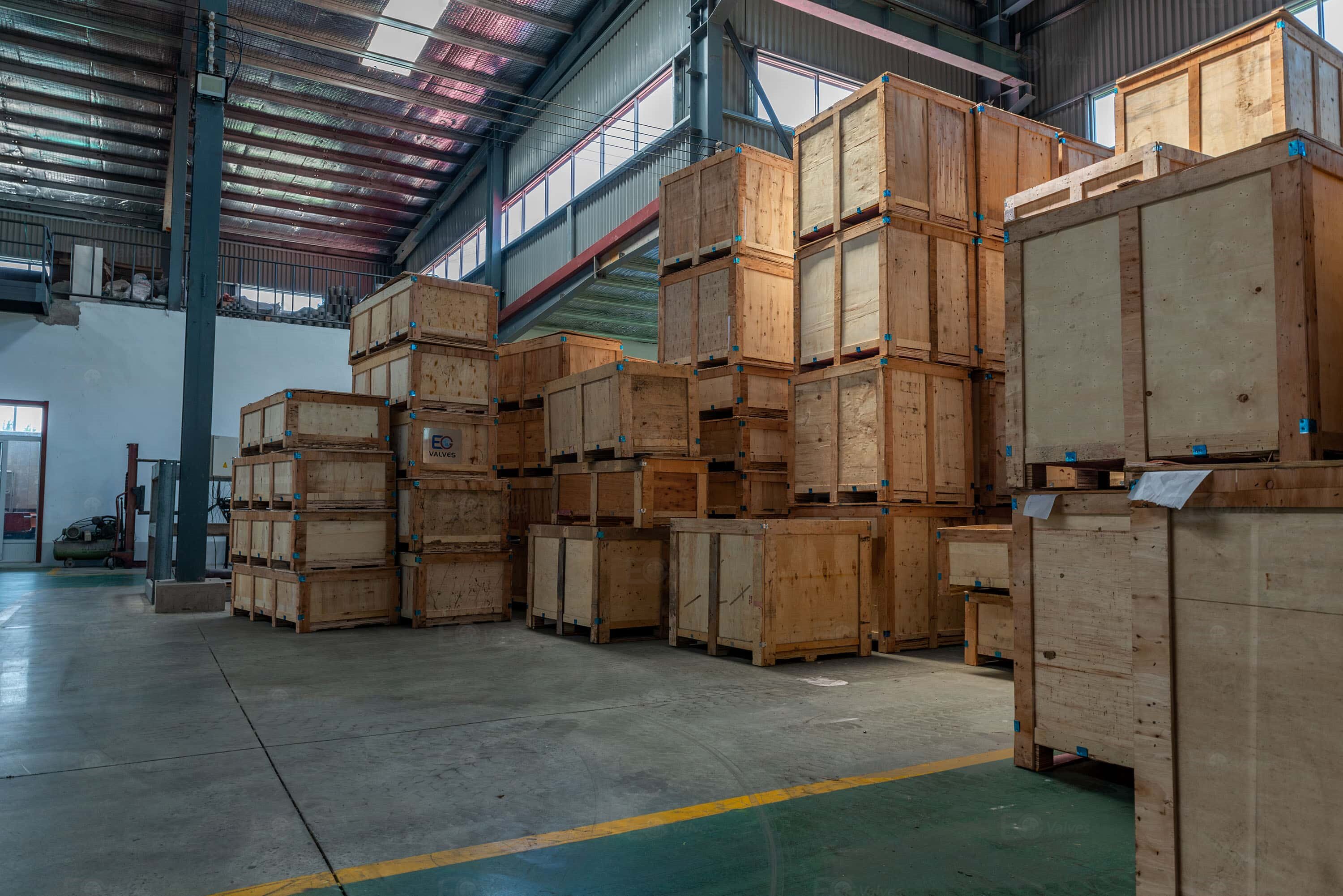
EG Valves Manufacturing Co., Ltd has manufactured industrial valves since 2000 from a 27,500 m² facility in Wenzhou, Zhejiang Province, China, with an annual output of 90,000 pieces and a stated export share of 80% to markets in the EU, North America, Latin America and the Middle East.
For the full BOV303 parameter set alongside the rest of the EG Valves range, the product catalogue can be downloaded here.
Have Questions or Need More Details?
Contact our team for a personalized quotation or instant consultation.
Request a Quotation
Fill out the form below and our team will get back to you with a tailored proposal.
WhatsApp Direct Chat
Prefer to chat in real-time? Message us on WhatsApp for instant assistance & quick answers.
- Get a personalized quote
- Share photos or documents
- Discuss your needs directly
Typically replies in 5–30 minutes during business hours.