
Check Valve Ranking: Cast Iron vs. Cast Steel for Water, HVAC, and Power
Answer first: for water, wastewater and HVAC lines rated Class 125/150, the CVI405 cast iron check valve is the best-matched option in the EG Valves range. For sewage treatment, HVAC, mining, power generation, irrigation and food and beverage duty where the piping class rises toward Class 1500, the CVS407 cast steel check valve is the correct starting point. Both are one-piece disc check valves with anti-galling seat design; the difference is the duty envelope each body material can carry.
A check valve does one job: it stops reverse flow. What separates two check valves of the same nominal size is the material and pressure envelope around that function — the body material, the pressure class, the available size range, the end connections, and the maintenance access the owner will live with for the life of the line. This is where most water, HVAC and power buyers make their first specification error, and it usually happens long before a purchase order is raised.
This ranking orders check valve models by application suitability using published EG Valves product data only. No specification has been estimated, interpolated or inferred.
The Selection Problem: One Function, Two Duty Envelopes
Reverse-flow protection is a single function. The equipment that performs it is not interchangeable. A check valve sized for a Class 125 municipal water header and a check valve sized for a Class 900 power plant cooling line share a name and a working principle, but almost nothing else in their specification.
Two errors dominate the early evaluation stage:
- Comparing models across different duty envelopes. A buyer who compares a cast iron check valve against a cast steel check valve without first fixing pressure class, size and end connection is comparing two different products. The result is either an over-specified body or an under-rated one.
- Treating “check valve” as a commodity category. The material decision fixes the pressure rating, the size ceiling, the coating system and the bonnet construction. Change the material and all four change with it.
Three variables resolve the question, in this order: pressure class first, then media and body material, then size and end connection. Everything else — coating, bonnet style, maintenance feature — follows from those three.
Industry Background: Why Material Choice Now Carries More Weight
Industrial valves are described in industry research as essential flow-control components across oil and gas, power, water treatment, chemicals and mining. Check valves specifically appear in published application mapping for drinking water processing, wastewater processing and power generation. That mapping matters because it explains why one check valve family is never enough: those four sectors operate at pressure classes that span more than a factor of ten.
Market structure reinforces the point. Asia Pacific accounted for over 42% of the global industrial valve market in 2025, according to IMARC Group research. A large share of that volume is water and power infrastructure work, where cast iron and cast steel check valve demand sits side by side on the same project — cast iron on the low-pressure distribution side, cast steel on the process and generation side.
EG Valves Manufacturing Co., Ltd is a valve manufacturer established in 2000, operating a 27,500 m² factory with approximately 300 staff, including a 30-engineer R&D team, and an annual output of 90,000 pieces. Roughly 80% of production is exported to the EU, North America, Latin America and the Middle East, with products accepted in more than 33 countries and regions. Manufacturing runs under ISO 9001-certified processes, and the factories hold API 600, API 6D, CE and PED certifications.

CVI405 cast iron check valve — Class 125/150, NPS 1-1/2" to 24", for water, wastewater and HVAC duty.
Check Valve Ranking by Application Suitability
Models are ranked on three criteria: whether the published pressure rating covers the line class; whether the size range and end connections match the pipe; and whether the body material is compatible with the media and the project piping specification. Only models with published specifications are ranked.
RANK 1 CVI405 Cast Iron Check Valve — Water, Wastewater and HVAC to Class 150
The CVI405 is the default choice for the largest single block of check valve demand: municipal water, wastewater, building services and general low-pressure industrial lines.
- Body material: cast iron or ductile iron.
- Construction: swing type, wafer type, lift type, and globe silent type available.
- Size range: NPS 1-1/2" to 24" (DN40 to DN600).
- Pressure rating: Class 125 / Class 150; PN10 / PN16.
- End connections: FF, RF, wafer type, and other options.
- Coating: epoxy powder coating or paint coating.
- Design features: one-piece disc construction designed to withstand severe service conditions; design prohibits galling or scoring of seating surfaces; large bolted-on cover provides easy access to the interior for routine maintenance.
- Documented applications: water and wastewater, HVAC, building services, municipal utilities, general industrial systems.
Two things put this model at the top of the ranking for its envelope. First, the four available construction types — swing, wafer, lift and globe silent — let one body family serve different installation layouts without changing material or pressure class. Second, the large bolted-on cover converts a routine inspection into a cover removal rather than a line break, which matters on municipal water and HVAC systems where the check valve is often the least accessible component in the pump discharge assembly.
The boundary is explicit. Class 125/150 and NPS 24" are the ceiling. Above either of those, this model is no longer the answer.
RANK 2 CVS407 Cast Steel Check Valve — Power, Mining, Irrigation and Process Duty to Class 1500
Where the piping class rises, the material has to rise with it. The CVS407 covers the six application sectors that the CVI405 cannot reach at their operating pressure classes.
- Body material: carbon steel, stainless steel, alloy steel, or duplex steel.
- Bonnet construction: bolted bonnet or pressure seal bonnet.
- Size range: NPS 1-1/2" to 36" (DN40 to DN900).
- Pressure rating: Class 150 to Class 1500; PN10 to PN160.
- End connections: RF, FF, RTJ, BW.
- Coating: standard paint coating.
- Design features: one-piece disc construction designed for severe service; design prohibits galling or scoring of seating surfaces; large sizes are provided with lifting rings for easy hoisting.
- Documented applications: water and sewage treatment, HVAC, mining, power generation, irrigation, food and beverage.
The four body material options are the practical core of this model. A carbon steel CVS407 suits a power generation cooling water line; a stainless or duplex body suits the corrosive side of sewage treatment or mineral processing, where the same pressure class applies but the media does not tolerate a carbon steel wetted surface. The availability of both bolted and pressure seal bonnets means the same model family covers a low-pressure water line and a high-pressure steam-adjacent line without a supplier change.
The lifting rings on large sizes are a small feature with a real consequence: a 36" check valve has to be installed and, eventually, removed. Having a certified lift point on the body removes a rigging improvisation from the installation plan.
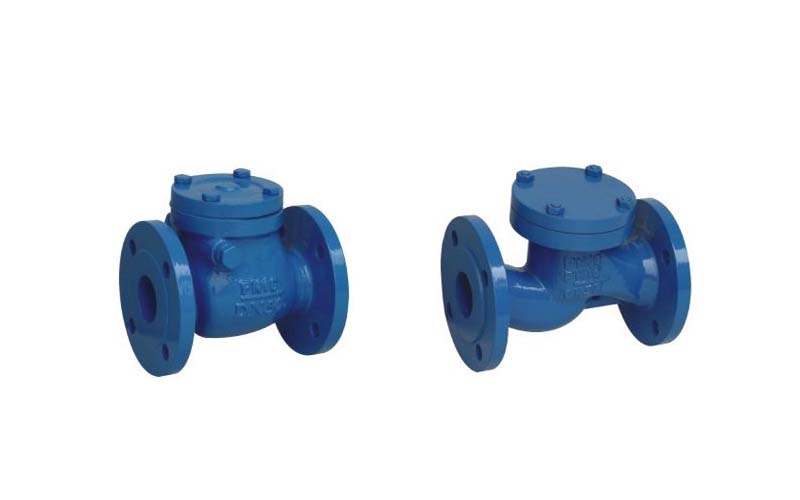
One-piece disc construction and a large bolted-on cover keep routine inspection of the CVI405 off the critical path.
RANK 3 CSV410 Stainless Steel Check Valve — Corrosive and Clean-Media Duty
The CSV410 sits beside the ranking rather than inside the cast iron versus cast steel comparison, because its selection driver is neither of those two materials.
- Body material: stainless steel, duplex steel, or alloy steel.
- Size range: NPS 1/2" to 48" (DN15 to DN1200).
- Pressure rating: Class 150 to Class 1500; PN10 to PN160.
- Construction: dual plate, single plate, wafer lift and threaded valves are all available; optional wafer type, lug type and double flange type.
- Design features: high-torsion Inconel springs for quick closing; seat faces lapped for smooth finish and superior sealing; disc assembly secured in place by a high-strength key; special cleaning for applications such as oxygen or chlorine.
- Documented applications: water treatment, HVAC, oil and gas, petrochemical, power generation, industrial pipelines.
Specify this model when the media or the cleaning regime rules out both cast iron and carbon steel. The special cleaning option for oxygen or chlorine service is the clearest signal: that is a specification line item a standard cast or carbon steel body does not carry.
RANK 4 CVF409 Forged Steel Check Valve — Small-Bore High-Pressure Lines
- Body material: forged carbon steel, stainless steel, or alloy steel.
- Construction: optional bolted bonnet or welded bonnet; available in all trim configurations.
- Size range: NPS 1/2" to 2" (DN15 to DN50).
- Pressure rating: Class 800 to Class 2500; PN140 to PN320.
- End connections: NPT or BSP threaded, SW, RF, BW.
- Design features: seat faces lapped for smooth finish and superior sealing; optional full or reduced port.
- Documented applications: oil and gas, petrochemical, power generation, refining, high-pressure pipeline systems.
This is the model for instrument and small-bore high-pressure connections where the CVS407's size range starts too large and its forged counterpart's class range is required. It does not replace either of the two ranked models above; it fills the gap they leave at small bore and very high class.
Where the two main models overlap: both the CVI405 and the CVS407 are available at Class 150. At that single rating, the decision moves from pressure to media compatibility, project piping specification and end connection. Where the piping class calls for a steel body, the CVS407 satisfies it at the same nominal rating.
How to Match Check Valve Material to Operating Context: Six Steps
- Fix the pressure class before comparing anything else. If the line is Class 125/150, the CVI405 is in scope and the cast steel models are likely unnecessary. If the line is Class 300 and above, the cast iron option is out of scope and the CVS407 becomes the comparison base.
- Confirm the size and the end connection. The CVI405 covers NPS 1-1/2" to 24" with FF, RF and wafer ends. The CVS407 covers NPS 1-1/2" to 36" with RF, FF, RTJ and BW. An RTJ or BW line removes the cast iron option regardless of pressure class.
- Match the body material to the media, not to the price list. Cast iron or ductile iron for water, wastewater, HVAC and municipal service. Carbon steel for general process duty. Stainless, alloy or duplex steel where the media attacks carbon steel — the sewage, mineral processing and food and beverage cases.
- Choose the construction type that fits the installation. Four construction types exist in the CVI405 family: swing, wafer, lift and globe silent. The CVS407 adds bonnet choice, with bolted bonnet or pressure seal bonnet available. Both decisions are driven by line layout and pressure, not by preference.
- Plan the maintenance path at specification stage. The CVI405 offers a large bolted-on cover for interior access. The CVS407 provides lifting rings on large sizes for hoisting. A valve that cannot be inspected or lifted safely will be deferred, and a deferred check valve is a reverse-flow risk.
- Verify documentation and certification against the order. Manufacturing runs under ISO 9001-certified processes, with API 600, API 6D, CE and PED certifications held at factory level. Products are manufactured to ANSI, DIN, BS and JIS standards or to customer requirements. Confirm the specific standard, class and test documentation that applies to the ordered configuration before release.
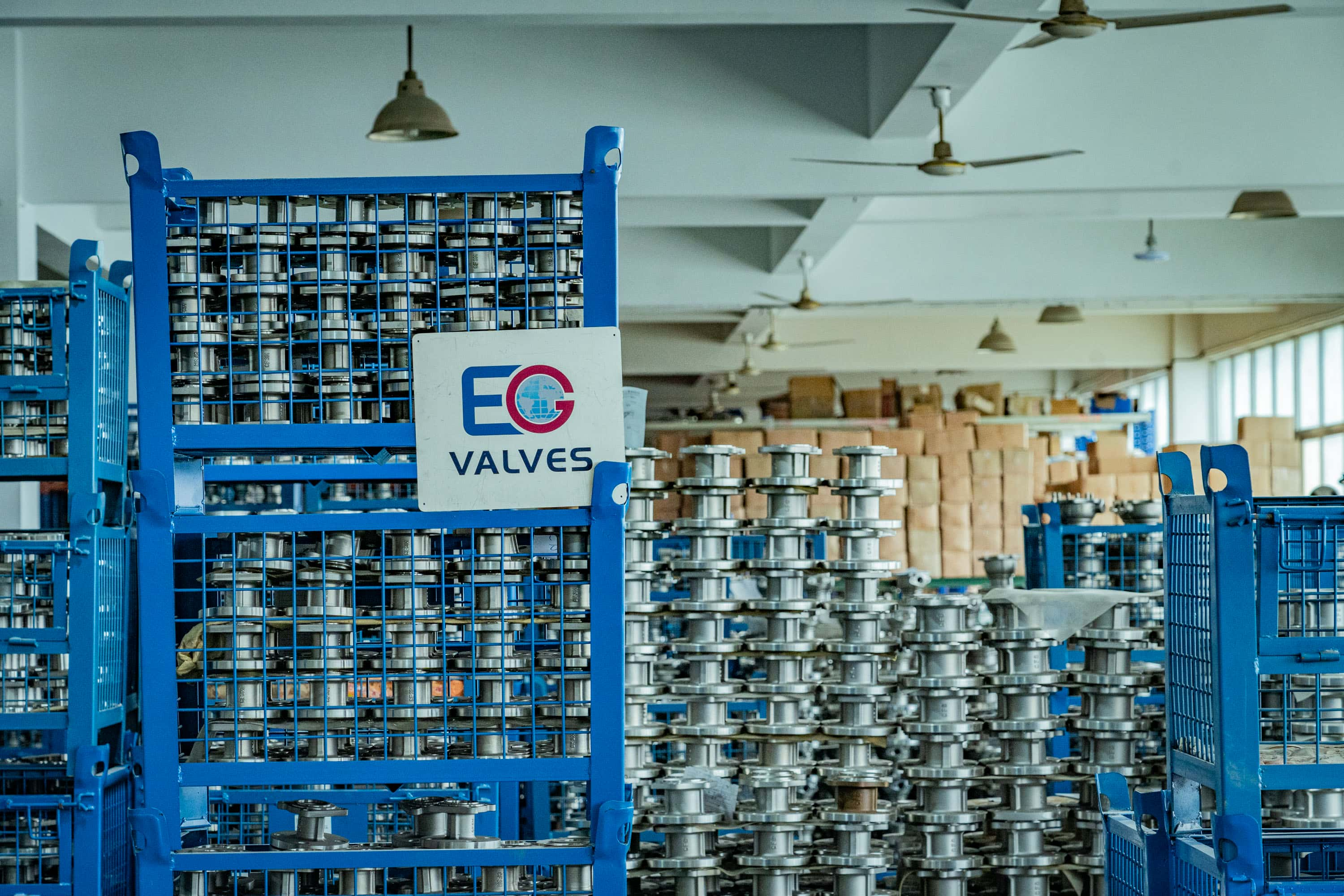
Body material selection follows media and pressure class — not the other way round.
Use Cases: Putting the Ranking to Work
Municipal water and wastewater
Water purification and wastewater treatment are two different working environments inside the same utility. Purification runs under clean, safe conditions with minimal hazards. Wastewater treatment is smelly and humid, with toxic gases present — conditions that put a premium on body material and coating integrity rather than on pressure class. The CVI405 with epoxy powder or paint coating covers the low-pressure side of both; the CVS407 in a stainless or duplex body covers the sewage treatment lines whose piping class exceeds Class 150.
HVAC and building services
HVAC, building services and municipal utilities are listed applications for both ranked models. In practice, the CVI405 handles the plant room and distribution side at Class 125/150, and the CVS407 is specified where the same system carries a higher class or a specifier-mandated steel body. Size range, not material, usually sets the boundary here.
Power generation
Power plant duty means high temperature and high pressure, continuous and stable operation, and large load fluctuations. That combination rules out the cast iron model on class alone. The CVS407 extends to Class 1500 and NPS 36", and the CVF409 covers small-bore high-pressure connections from Class 800 to Class 2500.
Mining and irrigation
Mining spans two extreme environments: underground work that is enclosed, dark, hot, humid, toxic and high-risk, and open-pit work exposed to extreme weather, dust, vehicles and slope hazards. Both are listed applications for the CVS407, whose stainless, alloy or duplex body options address the corrosive side of mineral processing. Irrigation systems typically run at lower classes but at larger sizes and long distances, which is why the 36" ceiling on the cast steel model matters.
Food and beverage
Food and beverage processing involves cleanliness and hygiene control, strict temperature and humidity management, and processes such as washing, sterilization, cooking, freezing and filling. The CVS407 is listed for this sector, and its stainless steel body option is the relevant configuration where wetted-surface cleanliness is a specification requirement.
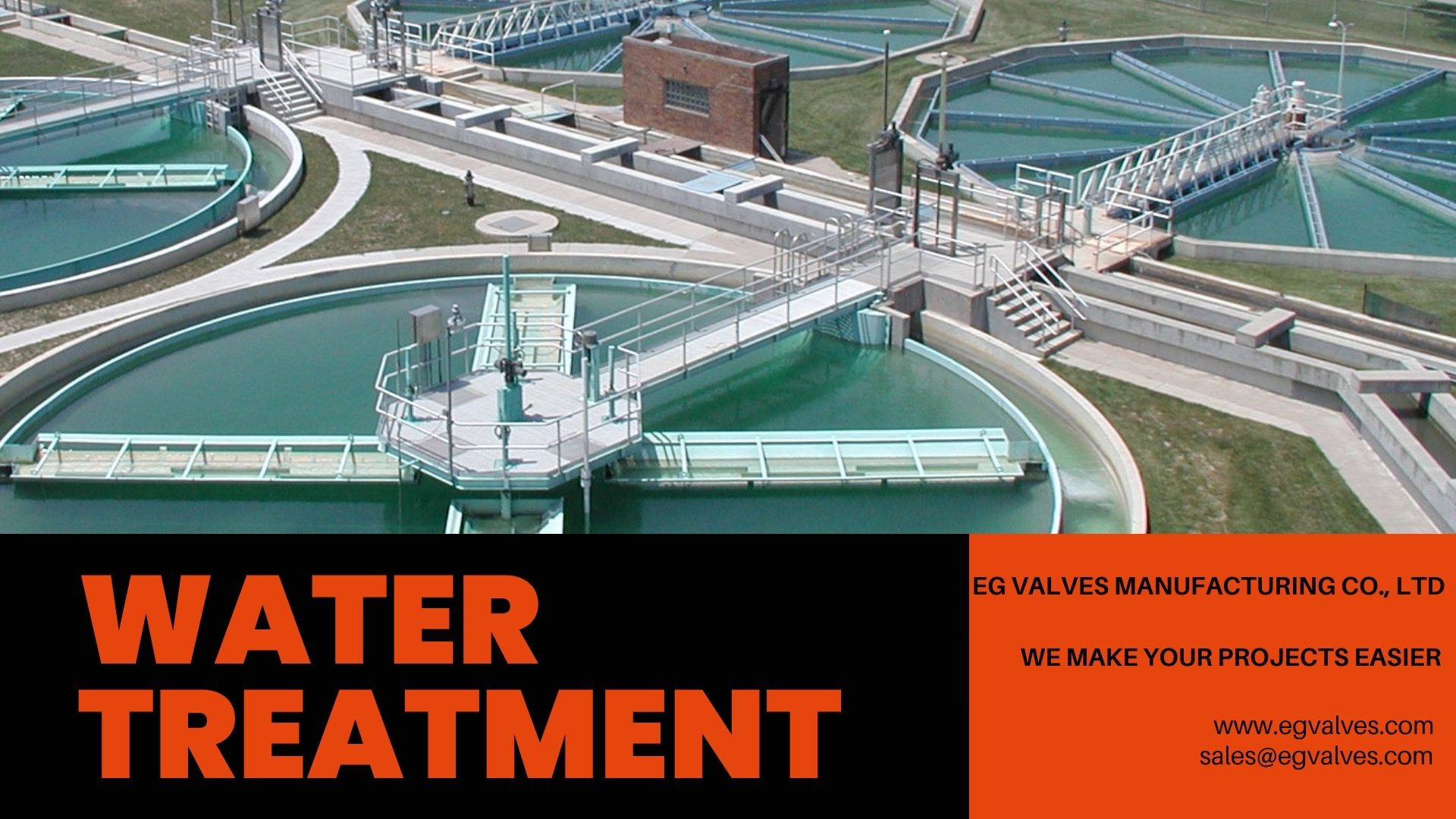
Water and wastewater treatment is the highest-volume application for the CVI405 cast iron check valve.
Cast Iron vs Cast Steel Check Valve: Specification Comparison
| Attribute | CVI405 (Cast Iron) | CVS407 (Cast Steel) | CSV410 (Stainless) | CVF409 (Forged Steel) |
|---|---|---|---|---|
| Body material | Cast iron or ductile iron | Carbon steel, stainless steel, alloy steel, duplex steel | Stainless steel, duplex steel, alloy steel | Forged carbon steel, stainless steel, alloy steel |
| Pressure rating | Class 125 / Class 150; PN10 / PN16 | Class 150 to Class 1500; PN10 to PN160 | Class 150 to Class 1500; PN10 to PN160 | Class 800 to Class 2500; PN140 to PN320 |
| Size range | NPS 1-1/2" to 24" (DN40–DN600) | NPS 1-1/2" to 36" (DN40–DN900) | NPS 1/2" to 48" (DN15–DN1200) | NPS 1/2" to 2" (DN15–DN50) |
| Construction | Swing, wafer, lift, globe silent | Bolted bonnet or pressure seal bonnet | Dual plate, single plate, wafer lift, threaded; wafer, lug or double flange | Bolted bonnet or welded bonnet; all trim configurations |
| End connections | FF, RF, wafer type | RF, FF, RTJ, BW | Wafer, lug, double flange, threaded | NPT or BSP threaded, SW, RF, BW |
| Coating / finish | Epoxy powder coating or paint coating | Standard paint coating | Special cleaning available for oxygen or chlorine service | Lapped seat faces |
| Service feature | Large bolted-on cover for interior access | Lifting rings on large sizes | High-torsion Inconel springs for quick closing | Optional full or reduced port |
| Documented applications | Water and wastewater, HVAC, building services, municipal utilities, general industrial systems | Water and sewage treatment, HVAC, mining, power generation, irrigation, food and beverage | Water treatment, HVAC, oil and gas, petrochemical, power generation, industrial pipelines | Oil and gas, petrochemical, power generation, refining, high-pressure pipeline systems |
Frequently Asked Questions
Which certifications and standards should a buyer verify before ordering a cast iron or cast steel check valve?
EG Valves manufactures to ANSI, DIN, BS and JIS standards or to customer requirements, and production runs under ISO 9001-certified processes. At factory level the company holds API 600, API 6D, CE and PED certifications. Because certification scope is applied per order, a buyer should confirm at RFQ stage which standard, which pressure class and which test documentation apply to the exact configuration being purchased, rather than relying on a generic certificate statement.
Can the CVI405 cast iron check valve be used in power generation duty?
No. The CVI405 is rated Class 125 / Class 150 (PN10 / PN16) and covers NPS 1-1/2" to 24". Power generation, mining and larger sewage treatment lines typically require classes above that ceiling. For those services the CVS407 is rated Class 150 to Class 1500 (PN10 to PN160) up to NPS 36", and the CVF409 forged steel check valve covers NPS 1/2" to 2" from Class 800 to Class 2500 for small-bore high-pressure connections.
What drives the cost difference between a cast iron and a cast steel check valve?
The main cost drivers visible in the published specifications are body material grade, pressure class, size, end connection machining, coating system and bonnet construction. A cast iron or ductile iron body at Class 125/150 sits in a narrower specification band than a carbon, stainless, alloy or duplex steel body rated to Class 1500. End connections also differ in machining cost — FF and RF faces against RTJ and BW preparation — and the CVI405 offers epoxy powder coating as an alternative to standard paint. Published product data does not include pricing, so the actual differential should be confirmed by quotation against a fixed size, class and end connection.
Can a buyer evaluate a sample before committing to a full check valve order?
Yes. A sample allows the buyer to check the construction type, end connection finish, coating quality and cover access before the order is released. For the CVI405 that means confirming whether swing, wafer, lift or globe silent construction suits the installation; for the CVS407 it means confirming body material and bonnet style. Samples of the CVI405 cast iron check valve or the CVS407 cast steel check valve can be requested from the EG Valves sales team at sales@egvalves.com.
How is lead time confirmed for a check valve order?
Lead time depends on model, size, pressure class, end connection, coating and order quantity, so it is confirmed against a complete specification rather than a model number alone. EG Valves states that its order process includes strict control of delivery times and product quality tracking for each order, supported by a 27,500 m² factory and an annual output of 90,000 pieces. The practical next step is to send the line specification — size, class, media, end connection and quantity — and request a quotation with the confirmed delivery schedule, together with the product brochure for the full model range.
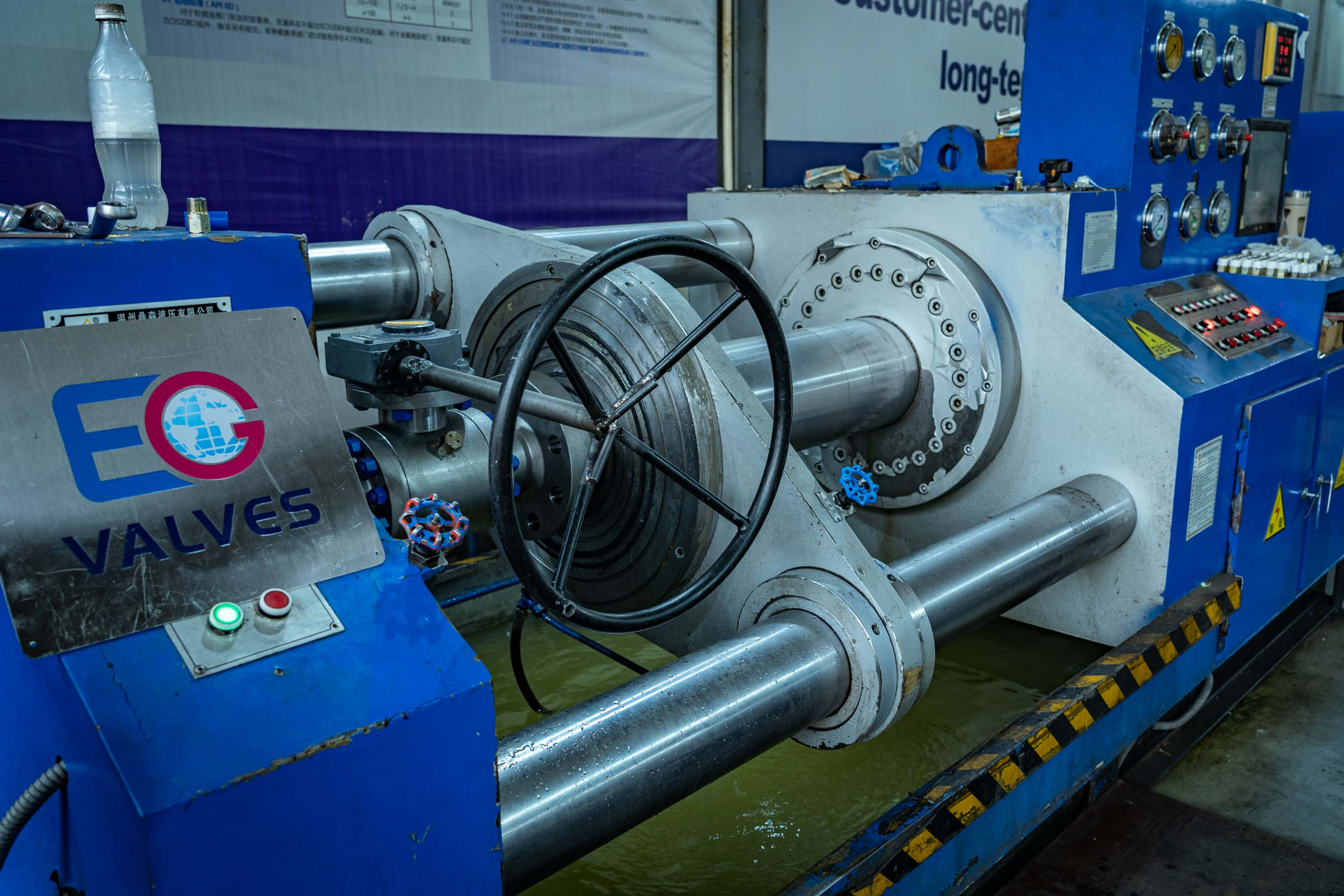
Inspection and documentation are confirmed per order against the specified standard and pressure class.
Conclusion: Pick the Envelope, Then Pick the Model
Check valve material selection is not a preference. It is a consequence of the pressure class, the media and the piping specification already fixed by the project. Once those three are set, the ranking resolves itself: the CVI405 cast iron check valve for water, wastewater and HVAC duty up to Class 150, and the CVS407 cast steel check valve for sewage treatment, HVAC, mining, power generation, irrigation and food and beverage duty up to Class 1500. Where those two envelopes do not fit — corrosive or clean-media service, or small-bore high-pressure lines — the CSV410 and CVF409 fill the remaining space without inventing a specification.
The fastest way to shorten evaluation is to stop comparing model names and start comparing duty envelopes: class, size, end connection, body material.
Next step: match a check valve to your line
Send the line specification — size, pressure class, media, end connection and quantity — and the EG Valves team will confirm which model fits and issue a quotation with the delivery schedule.
Email: sales@egvalves.com | Tel: +86 577 5799 2227 | WhatsApp: +86 132 0637 0946
Website: www.egvalves.com
Address: Sanqiao Industrial Zone, Wenzhou, Zhejiang Province, China 325100
Download the full product brochure: EG Valves Product Catalog (PDF)
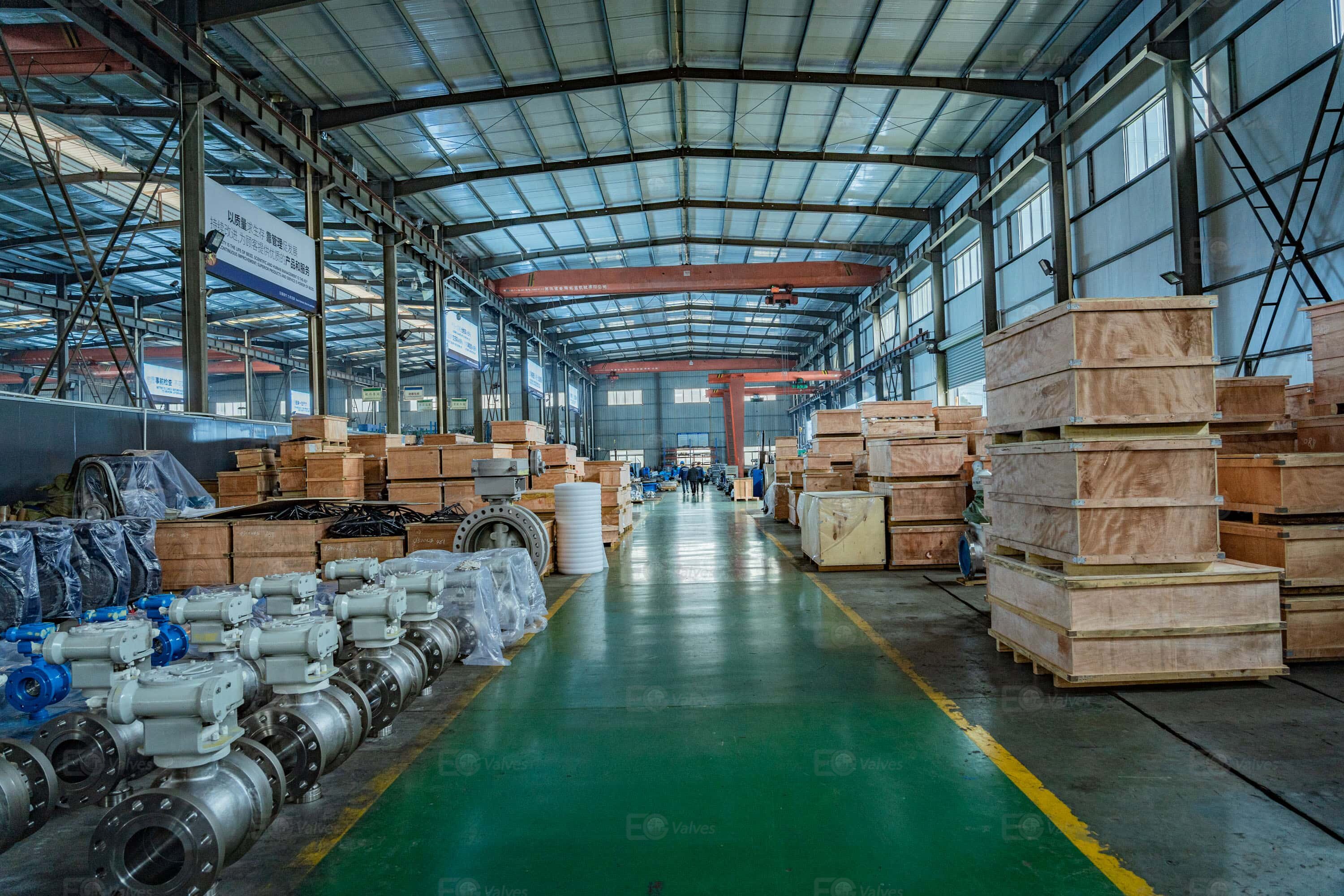
Export packing and delivery scheduling are confirmed per order specification.
Have Questions or Need More Details?
Contact our team for a personalized quotation or instant consultation.
Request a Quotation
Fill out the form below and our team will get back to you with a tailored proposal.
WhatsApp Direct Chat
Prefer to chat in real-time? Message us on WhatsApp for instant assistance & quick answers.
- Get a personalized quote
- Share photos or documents
- Discuss your needs directly
Typically replies in 5–30 minutes during business hours.