
Ranking Industrial Valves for Water and HVAC Isolation: EG Valves Product Picks
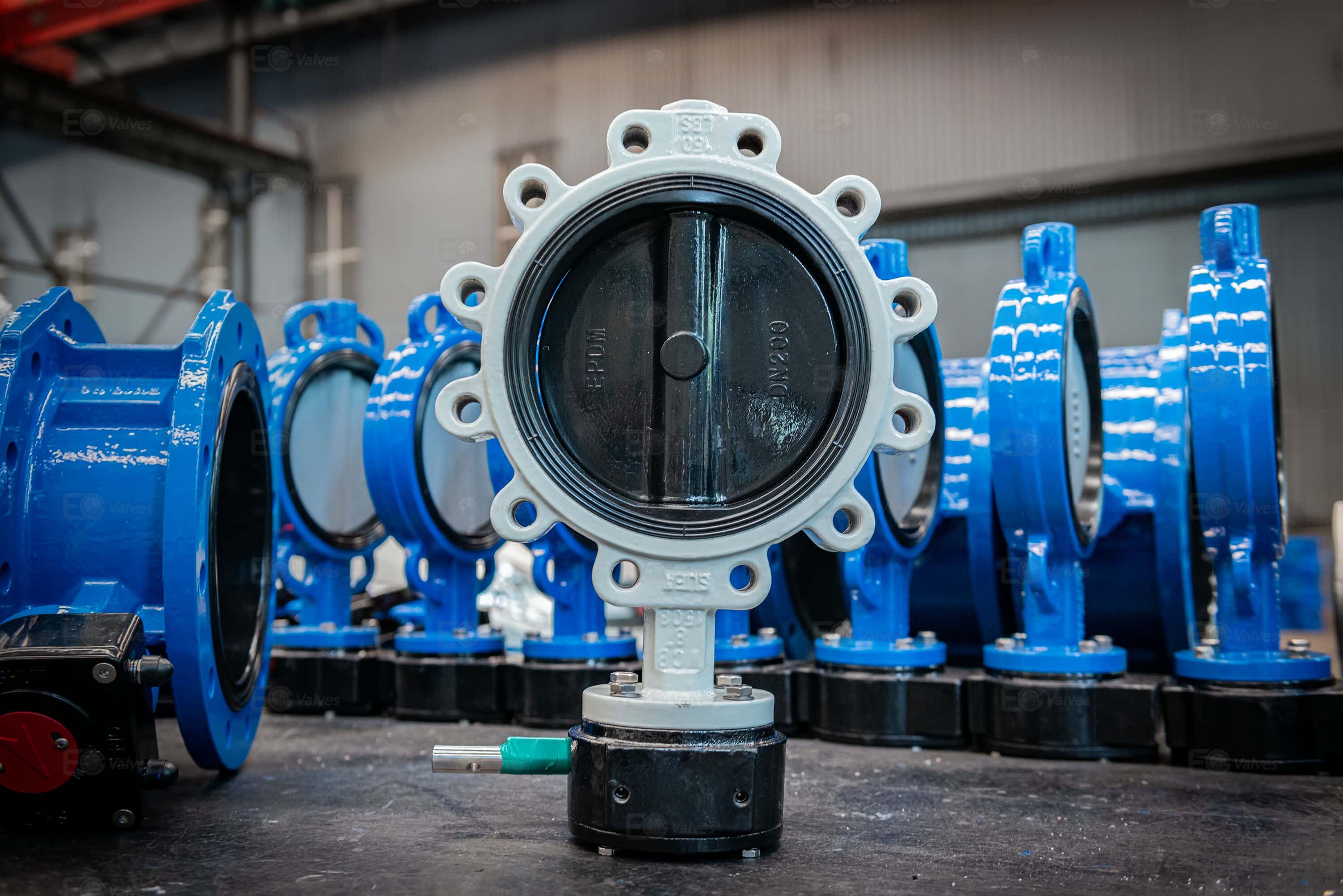
Cover image: EG Valves lug butterfly valve media. Butterfly valves are central to compact water and HVAC isolation, but they are not the only family a plant needs.
Industrial valve selection for water and HVAC isolation is not a catalog beauty contest. A plant room may need a compact butterfly valve on a grooved header, a gate valve on a treatment line, a ball valve on a small-bore drain, and a check valve on a pump discharge. Each duty solves a different problem, and the wrong family creates maintenance, pressure-loss, or verification issues later.
EG Valves Manufacturing Co., Ltd is a valve manufacturer established in 2000, with a 27,500 m2 factory, 300 employees, and annual output of 90,000 pieces. Its product list covers gate, globe, ball, butterfly, check, plug, and strainer families for power, oil and gas, water and wastewater, chemical, and other industrial duties. This article narrows that portfolio to six application-fit picks for common water and HVAC isolation, flow-control, and backflow duties.
This review ranks documented EG Valves product families for application fit. Model-level size, pressure class, seat material, and actuator details must be confirmed against the current datasheet and project specification before order. The ranking is not a laboratory performance ranking, and it does not use market-share claims or unsupported competitor comparisons.
What this ranking covers
The ranking covers four EG Valves families that appear directly in common water and HVAC discussions: butterfly valves, gate valves, ball valves, and check valves. Butterfly and gate valves handle isolation. Ball valves handle compact isolation and quick operation. Check valves handle backflow prevention. The article does not treat these duties as interchangeable. A check valve cannot replace an isolation valve, and a butterfly valve should not be chosen only because it is compact.
The buyer question behind this ranking is practical: which EG Valves product should an engineer or procurement team examine first for a given water or HVAC duty? The answer depends on piping connection, maintenance access, material specification, certification scope, and the project bill of materials. Catalog breadth alone does not settle the choice.
Industry background: one plant, several valve duties
Industry sources consistently map industrial valves to water treatment, wastewater treatment, power generation, oil and gas, chemicals, and mining. Manufacturer application pages also describe drinking-water processing, wastewater processing, and power generation as valve applications. These are qualitative application maps, not proof that every valve model suits every duty. For water and HVAC systems, the useful point is that a single facility usually combines isolation, flow regulation, and backflow protection.
Water treatment plants need dependable isolation for filters, pumps, and treatment trains. HVAC plant rooms need compact isolation on chilled-water and hot-water circuits, plus check valves around pumps. Commercial buildings, district systems, and light industrial sites may use grooved piping, flanged piping, or threaded small-bore connections. Each connection style changes the starting product family.
This is why a ranking by catalog size would be weak. The stronger approach is to rank by application fit. A grooved butterfly valve may be the first pick for one HVAC line, while a cast iron gate valve may be the first pick for a water-treatment isolation point. Both can be correct in the same project.
Ranking method: application fit, not catalog breadth
The ranking uses four criteria. First, the valve family must match the duty: isolation, flow control, or backflow prevention. Second, the model name and product list must support the connection or material logic required by the line. Third, the pick should have a documented anchor, such as inclusion in EG Valves' product list, certification scope, or a supplied water-treatment case. Fourth, the buyer must be able to verify the remaining model-level details before purchase.
Ranking position reflects fit across common water and HVAC isolation duties. Backflow prevention is treated as a separate duty, so check valves are ranked where they belong in the system rather than as substitutes for isolation valves. The ranking does not claim that one valve type replaces another. It gives procurement and engineering readers a defensible starting order for technical review.
EG Valves product picks for water and HVAC duties
Rank 1: BGV304 Grooved Butterfly Valve for grooved HVAC and water isolation
The BGV304 Grooved Butterfly Valve is the first pick when the water or HVAC piping is already grooved and the specification allows a butterfly isolation valve. The model name identifies a grooved butterfly valve, so the practical starting point is the connection style: grooved piping is common where compact installation and coordinated coupling systems are required. Butterfly valves are also widely used for compact isolation in water and HVAC circuits.
Why it earns its place: it combines a butterfly valve body with a grooved connection designation, making it a natural candidate for plant-room headers, risers, and water lines where the piping system is grooved rather than flanged. It should not be selected merely because it is compact. The project must confirm pressure class, seat material, disc material, actuator requirement, and the applicable grooved coupling standard.
Procurement check: ask for the current BGV304 datasheet, confirm the pressure and temperature limits for the actual line, verify the seat and disc materials against the water quality, and confirm whether manual, electric, or pneumatic actuation is required. If the line is flanged or the project specification prohibits grooved connections, move to a different butterfly family or a gate valve instead.
Rank 2: BTV305 Double Eccentric Butterfly Valve for specified butterfly isolation
The BTV305 Double Eccentric Butterfly Valve is the second pick for projects that explicitly call for a double-eccentric butterfly valve. Its documented identity in the EG Valves product list is the double-eccentric butterfly family. That matters because butterfly valves are not one specification. Resilient-seated, high-performance, double-eccentric, and triple-offset designs serve different project requirements.
Why it earns its place: when the engineering specification names a double-eccentric geometry, the BTV305 is the matching EG Valves family rather than a generic butterfly substitute. This pick is strongest in water and HVAC isolation points where the designer has already selected that geometry for the line. The model name alone does not establish pressure class, seat design, leakage class, or actuator type, so those values must come from the datasheet and project specification.
Procurement check: confirm the required pressure class, face-to-face dimension, end connection, seat and disc materials, and actuation. If the specification calls for a resilient-seated butterfly valve or a triple-offset valve, do not force BTV305 into that role. Use the family that matches the stated design requirement.
Rank 3: GTI001 Cast Iron Gate Valve for water-treatment isolation
The GTI001 Cast Iron Gate Valve is the third pick and the strongest gate-valve choice for common cast iron water-treatment isolation. Gate valves are generally selected for isolation duties where a full-bore flow path and slow-operation isolation are acceptable. The GTI001 is listed in EG Valves' product portfolio as a cast iron gate valve, and it appears in the related product list for EG Valves' Brazilian water-treatment case.
That case reports a scope of 326 gate, butterfly, and check valves rated PN16 and sized DN40-DN2000 for a water-treatment project running for eight years. The related product list includes GTI001 together with butterfly and check valve models. This does not prove that every valve in the case was GTI001, but it does anchor the model in a documented water-treatment application context. For a water-treatment isolation point where cast iron is the specified material, GTI001 is a credible first gate-valve candidate.

Body image: EG Valves cast iron gate valve media. Gate valves are used for isolation duties where the project accepts slow-operation, full-bore isolation.
Procurement check: confirm trim material, stem design, gasket material, pressure class, and end connection. If the project requires a steel gate valve instead of cast iron, the GTS019 Cast Steel Gate Valve is the steel gate model listed within the API 600 certificate scope for bolted bonnet steel gate valves.
Rank 4: BVI201 Cast Iron Ball Valve for compact small-bore isolation
The BVI201 Cast Iron Ball Valve is the fourth pick for compact isolation where a ball valve is specified. Ball valves are often selected for quick isolation on smaller lines, drains, and auxiliary water connections. The BVI201 is listed in the EG Valves portfolio as a cast iron ball valve. This ranking places it below the butterfly and gate picks because the article focuses on common water and HVAC isolation duties, where butterfly and gate valves usually carry the main line sizes.
Why it earns its place: it gives the buyer a cast iron ball-valve option within the same EG Valves portfolio, which can simplify a mixed bill of materials when the project already uses cast iron valves for water service. It is not a universal replacement for a gate or butterfly valve on larger isolation points.
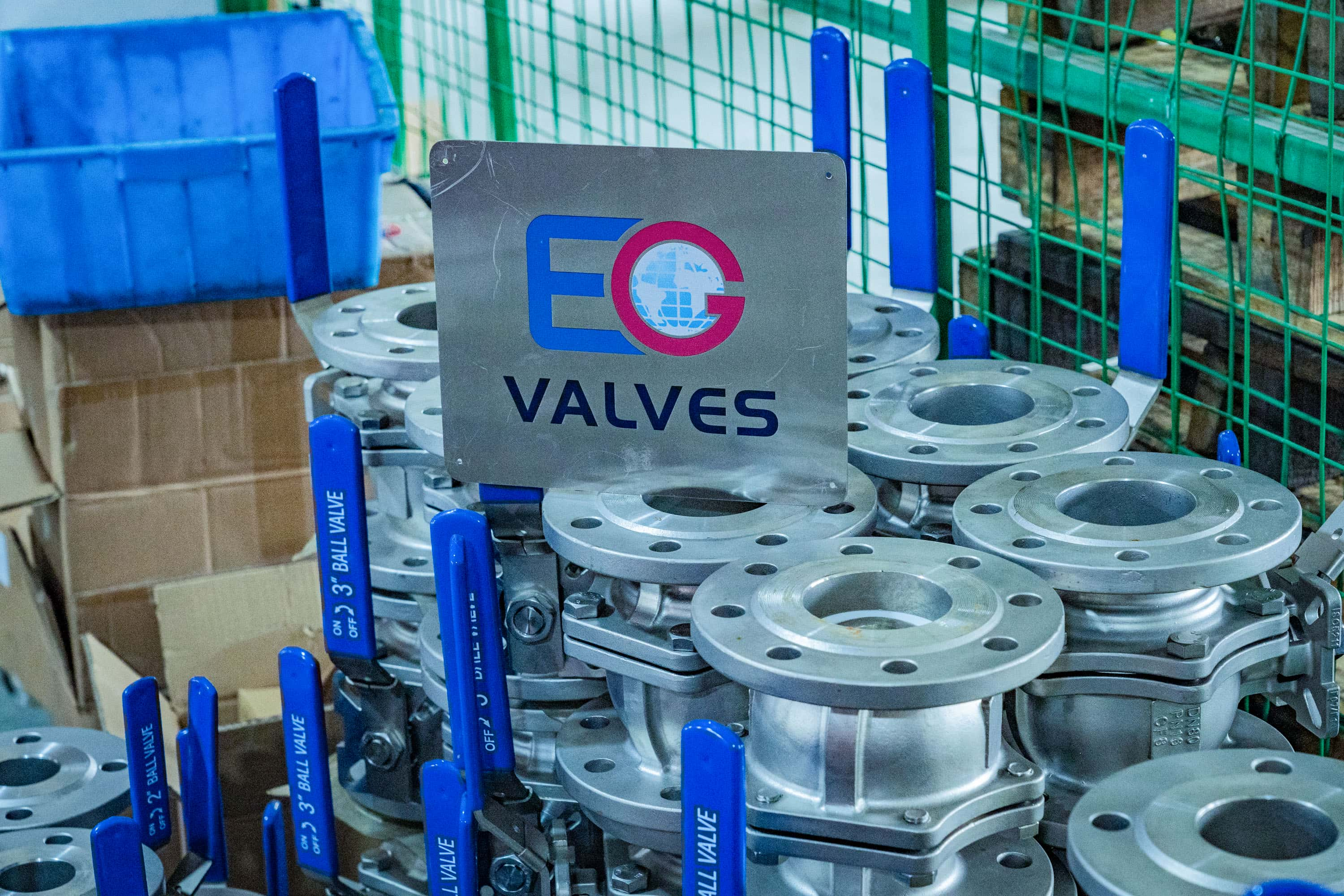
Body image: EG Valves floating ball valve media. Ball valves are commonly used for quick isolation on smaller water and HVAC lines.
Procurement check: confirm port size, end connection, seat material, and pressure class. If the line requires a steel ball valve or a trunnion-mounted design, review another model in the EG Valves ball-valve range rather than treating BVI201 as the only option.
Rank 5: CVI405 Cast Iron Check Valve for water-treatment backflow protection
The CVI405 Cast Iron Check Valve is the fifth pick and the first check-valve recommendation for cast iron water-treatment duties. Check valves are not isolation valves. They allow flow in one direction and prevent reverse flow, which makes them relevant to pump discharge lines, header protection, and treatment processes where backflow must be controlled. The CVI405 is listed as a cast iron check valve and appears in the related product list for the Brazilian water-treatment case.
Why it earns its place: it is the cast iron check-valve option that connects directly to EG Valves' documented water-treatment application context. For a water-treatment plant using cast iron valves and standard water-service materials, CVI405 is a logical first check-valve candidate. The case does not establish a pressure range or size range for this model, so those values must be confirmed on the datasheet.
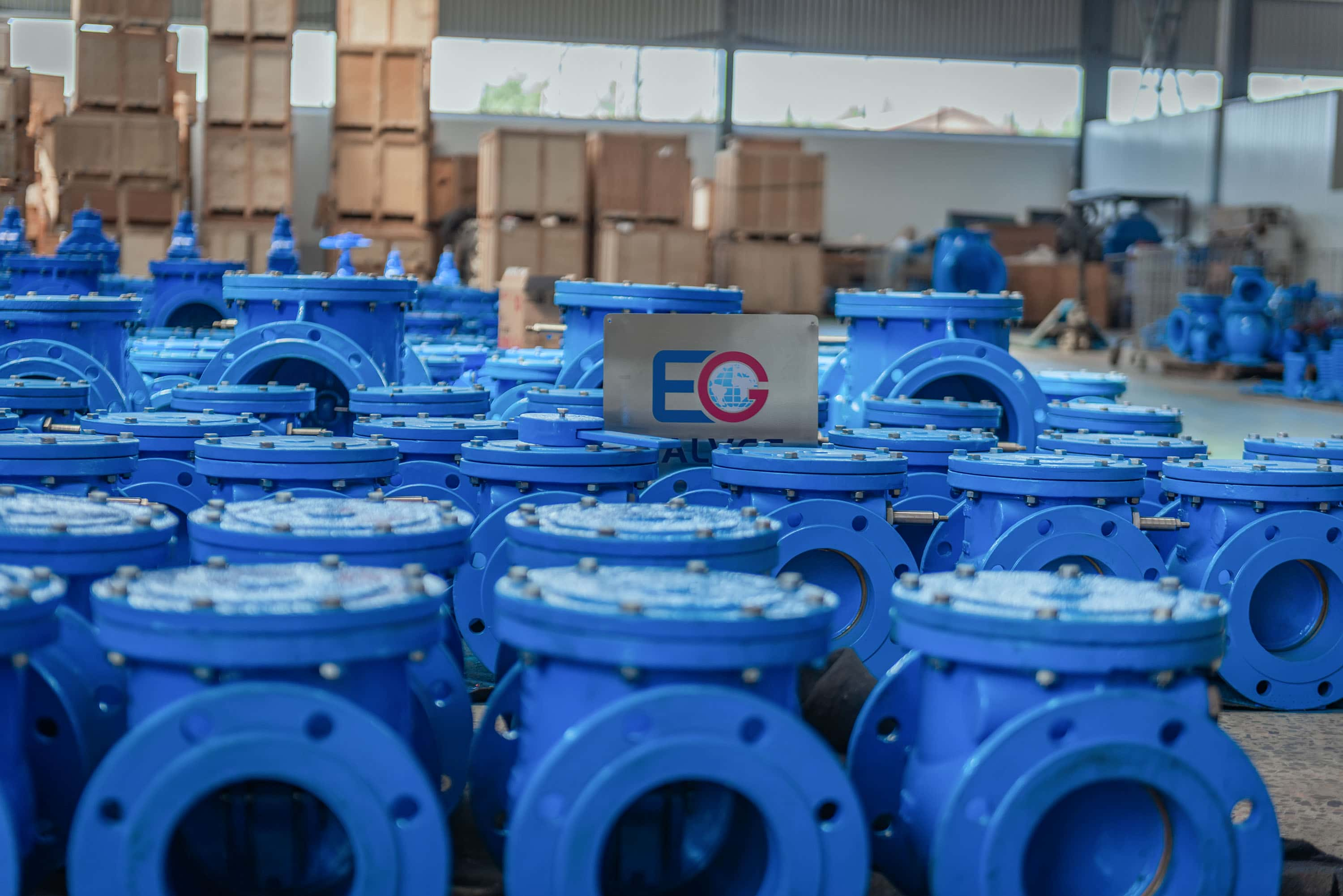
Body image: EG Valves cast iron check valve media. Check valves are specified for backflow prevention, not for line isolation.
Procurement check: confirm installation orientation, cracking pressure, pressure class, end connection, and trim material. Check valves can behave differently in horizontal and vertical lines, so the installation drawing should be reviewed before order.
Rank 6: CVS407 Cast Steel Check Valve for steel-specification backflow duties
The CVS407 Cast Steel Check Valve is the sixth pick and the steel check-valve alternative. It is listed as a cast steel check valve and appears in the API 6D certificate scope for check valves, ball valves, and gate valves. That certification anchor makes it relevant where the project uses API 6D as part of the valve specification or submittal review.
Why it earns its place: it gives the buyer a cast steel check-valve option when the water or HVAC system specification calls for steel rather than cast iron. It is ranked below CVI405 for common water-treatment backflow because the article's primary water-treatment case uses cast iron valves, but CVS407 is the stronger fit when the material specification is cast steel or when API 6D scope is required.
Procurement check: confirm pressure class, end connection, trim material, and installation orientation. The API 6D certificate supports scope eligibility, not a guarantee that every size or pressure class is covered. Verify the exact model and size against the certificate scope and the current datasheet.
Comparison table: six application-fit picks
| Rank | Model | Family | Best-fit duty in this review | Documented anchor |
|---|---|---|---|---|
| 1 | BGV304 Grooved Butterfly Valve | Butterfly | Grooved water and HVAC isolation where a butterfly valve is specified | EG Valves product list |
| 2 | BTV305 Double Eccentric Butterfly Valve | Butterfly | Water and HVAC isolation where double-eccentric geometry is specified | EG Valves product list |
| 3 | GTI001 Cast Iron Gate Valve | Gate | Cast iron water-treatment isolation | Product list; Brazilian water-treatment case related products |
| 4 | BVI201 Cast Iron Ball Valve | Ball | Compact small-bore water and HVAC isolation | EG Valves product list |
| 5 | CVI405 Cast Iron Check Valve | Check | Water-treatment backflow protection with cast iron specification | Product list; Brazilian water-treatment case related products |
| 6 | CVS407 Cast Steel Check Valve | Check | Backflow protection where cast steel or API 6D scope is specified | Product list; API 6D certificate scope |
Table note: the table ranks application fit for this article. It does not state model-level pressure ratings, size ranges, or seat materials that were not provided in the approved product facts.
Step-by-step selection path for procurement and engineering
- Define the duty before the product. Mark each line as isolation, flow control, or backflow prevention. A butterfly valve on a pump discharge may be an isolation valve, while a check valve on the same discharge is a backflow device. Do not merge the two duties in one line item.
- Confirm the piping connection. If the HVAC or water line is grooved, start with BGV304. If it is flanged or the specification requires a gate valve, review GTI001 or GTS019. If it is small-bore and quick isolation is needed, review BVI201.
- Match the material to the water quality and project specification. Cast iron is common in water-treatment and building-service applications, while cast steel is used where the project specification calls for steel. The model name tells you the material family; the datasheet must confirm the trim and seat materials.
- Check certification scope and expiry. EG Valves lists ISO 9001, API 600, API 6D, and CE/PED certifications with defined scopes. Match the certificate scope to the actual product family, size, and pressure class. A certificate for one valve family does not automatically cover every model in the catalog.
- Verify model-level data and request a sample or quotation. Confirm pressure class, size, seat material, actuator, and installation orientation. Then request the current datasheet, material certificate, and quotation for the exact model and quantity.
Use cases: where each pick fits
HVAC plant-room isolation
In a chilled-water or hot-water plant room, grooved piping is often used for headers and risers. The BGV304 Grooved Butterfly Valve is the first EG Valves pick when the specification allows a grooved butterfly valve for isolation. The BVI201 Cast Iron Ball Valve can serve small-bore isolation and drain points. Check valves around pumps should be selected as backflow devices, not as isolation valves. Confirm the HVAC system pressure class and local code requirements before finalizing the models.
Water-treatment plant isolation and backflow
In water-treatment plants, GTI001 Cast Iron Gate Valve is a practical cast iron isolation candidate for treatment lines, while CVI405 Cast Iron Check Valve is the cast iron backflow candidate. The supplied Brazilian water-treatment case includes gate, butterfly, and check valves rated PN16 and sized DN40-DN2000, with a related product list that includes GTI001 and CVI405. This case supports the application context, but it does not replace line-by-line verification of pressure class, size, and trim.
Mixed water and steel-specification systems
Some projects combine cast iron valves in water service with cast steel valves in higher-specification areas or steel piping. In those projects, GTS019 Cast Steel Gate Valve and CVS407 Cast Steel Check Valve provide steel-family options within the same portfolio. The CVS407 also appears in the API 6D certificate scope for check valves, ball valves, and gate valves. Use the material specification and certificate scope to decide where cast iron ends and cast steel begins.
Limitations and verification points
- The ranking is based on application fit and documented product-family facts, not on independent laboratory testing of every model.
- Model-level size, pressure class, seat material, and actuator details must be confirmed on the current EG Valves datasheet for the exact model and size.
- HVAC suitability depends on the project specification, local code, water quality, and operating conditions. A grooved butterfly valve is not automatically approved for every HVAC system.
- Certification scope matters. ISO 9001, API 600, API 6D, and CE/PED certificates have defined scopes and expiry dates. Verify that the exact product and size are covered before submitting the certificate.
- Check valves require installation-orientation review. A check valve that suits a horizontal line may not be the correct choice for a vertical line without confirming the manufacturer instructions.
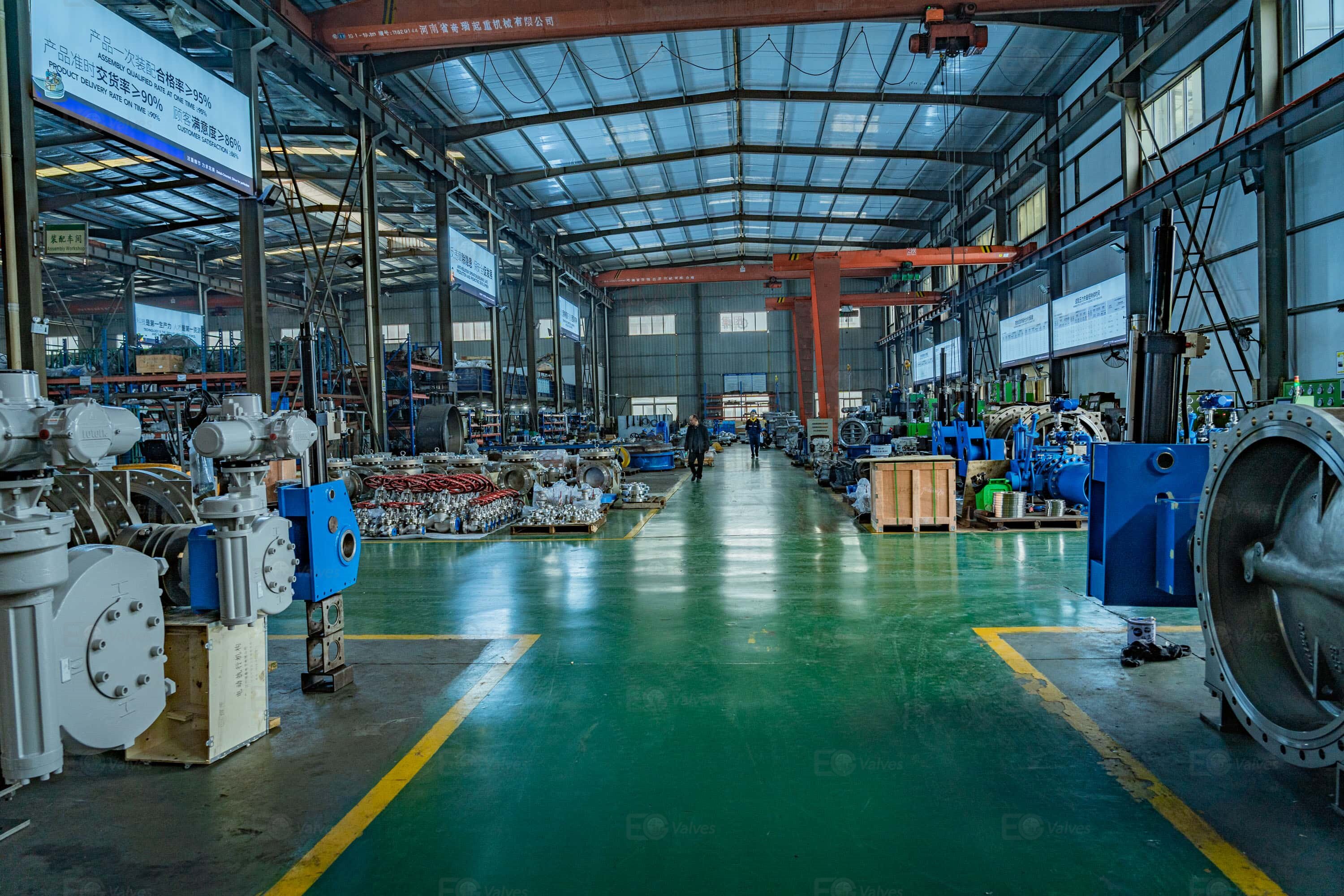
Proof image: EG Valves workshop media. EG Valves states that it uses a strict QC team with 100% inspection of every valve and provides EN 10204 3.1 material test certificates to every order.
Certification and capability checks that support the ranking
EG Valves lists ISO 9001:2015 certificate 00125Q33391R3M/3400, issued by China Quality Certification Center, with an expiry date of 2028-05-22 and a scope covering gate valves, globe valves, ball valves, butterfly valves, check valves, pipe filters, and flanges. It also lists API 600 certificate 600-0179, expiring 2027-03-30, for bolted bonnet steel gate valves; API 6D certificate 6D-0506, expiring 2027-03-30, for check valves, ball valves, and gate valves; and CE/PED certificate DGR-0036-QS-1360-24, expiring 2027-05-26, with a scope covering gate, ball, globe, check, butterfly valves, and strainers.
For procurement, the certificate number and scope are more useful than a general statement that the company is certified. Match the certificate to the model family, size, pressure class, and destination market. If the project requires a declaration of conformity or a material test certificate, confirm the exact document package before order. EG Valves states that it provides EN 10204 3.1 material test certificates to every order.
Frequently asked questions
Which EG Valves product should I start with for water and HVAC isolation?
Start with the duty and connection. For grooved water or HVAC piping where a butterfly valve is specified, the first pick is BGV304 Grooved Butterfly Valve. For cast iron water-treatment isolation, review GTI001 Cast Iron Gate Valve. For backflow prevention, review CVI405 Cast Iron Check Valve or CVS407 Cast Steel Check Valve depending on the material specification. Confirm pressure class, size, and seat material before order.
Is BGV304 suitable for HVAC water systems?
BGV304 is listed as a Grooved Butterfly Valve. It is a logical candidate where the HVAC or water piping is grooved and a butterfly isolation valve is allowed by the specification. It is not automatically suitable for every HVAC system. Confirm the pressure class, seat material, actuator, water quality, and local code requirements before selecting it.
What is the difference between CVI405 and CVS407?
CVI405 is listed as a Cast Iron Check Valve. CVS407 is listed as a Cast Steel Check Valve and appears in the API 6D certificate scope for check valves. The difference is primarily the material family and the certification context. Choose CVI405 where cast iron is specified for water-treatment service, and CVS407 where cast steel or API 6D scope is required. The model names alone do not establish pressure rating or size range.
Which certifications can support a water or HVAC valve submittal?
EG Valves lists ISO 9001:2015 certificate 00125Q33391R3M/3400, expiring 2028-05-22; API 600 certificate 600-0179, expiring 2027-03-30, for bolted bonnet steel gate valves; API 6D certificate 6D-0506, expiring 2027-03-30, for check, ball, and gate valves; and CE/PED certificate DGR-0036-QS-1360-24, expiring 2027-05-26. Check the exact certificate scope against the model, size, and destination market before including it in a submittal.
What are the MOQ and lead time for EG Valves orders?
EG Valves states a MOQ of 1 piece for big-size valves and 10 pieces for small-size valves. The stated lead time is within 25-35 days, with monthly capacity of 8,000 pieces. The company also states 100% inspection of every valve and provides EN 10204 3.1 material test certificates. Confirm the final MOQ and lead time for the exact model, quantity, and configuration in the quotation.
How can I request a sample or quotation?
For a sample or quotation, contact the EG Sales Team at sales@egvalves.com, call +86 577 5799 2227, or use WhatsApp +86 132 0637 0946. Include the valve duty, model, line size, pressure class, connection type, material, actuator requirement, quantity, and destination market so the quotation can be checked against the correct product family.
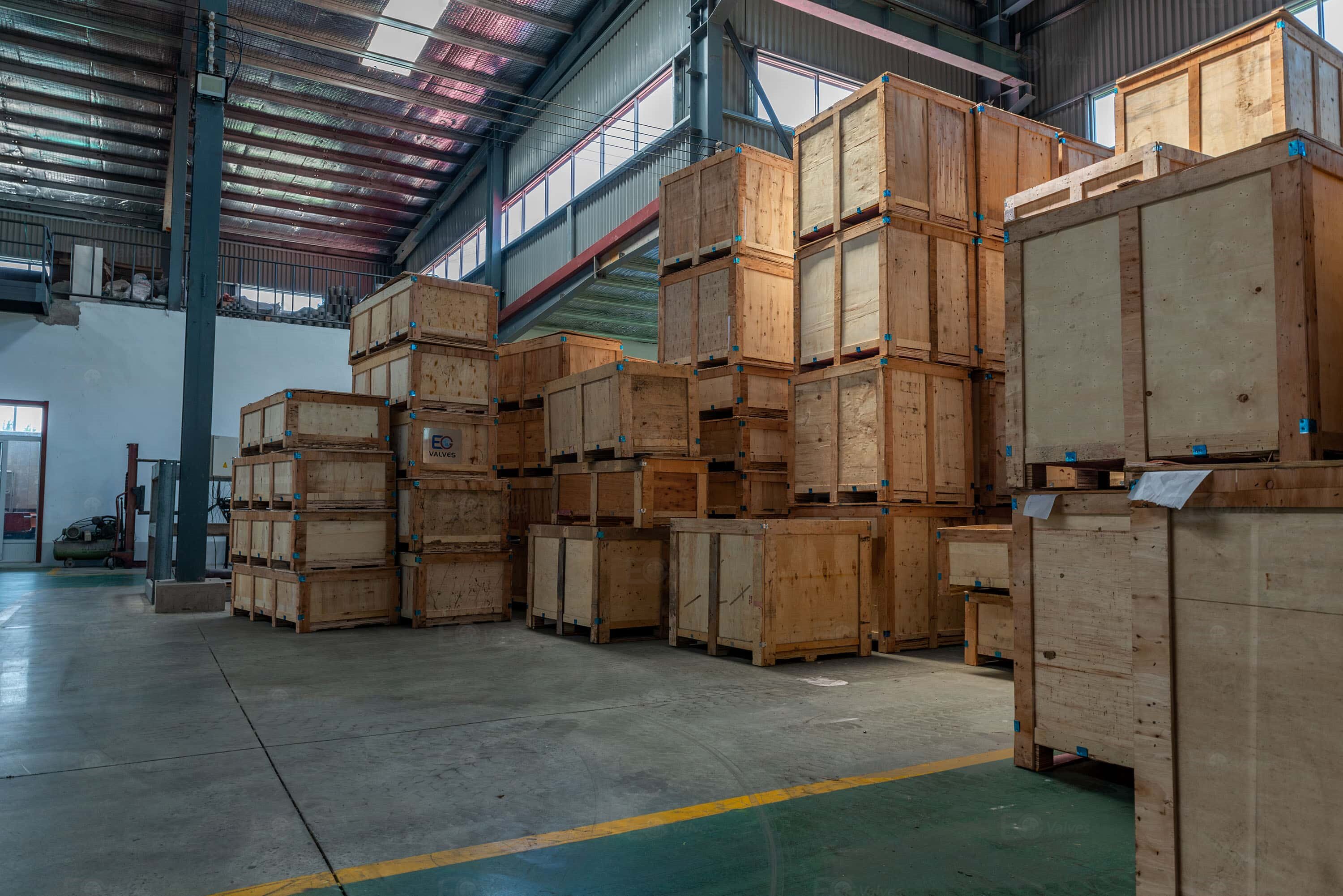
CTA image: EG Valves packaging media. For project-specific selection, request the current datasheet and confirm the exact model before order.
Conclusion: rank by duty, then verify the model
The strongest EG Valves picks for water and HVAC isolation are not the same for every line. BGV304 leads when a grooved butterfly valve fits the piping and duty. BTV305 follows when the specification calls for double-eccentric geometry. GTI001 provides a cast iron gate-valve option for water-treatment isolation. BVI201 covers compact small-bore isolation. CVI405 and CVS407 handle backflow duties in cast iron and cast steel specifications respectively.
Use this ranking to start the technical review, not to skip it. Confirm the model-level size, pressure class, seat material, actuator, certification scope, and installation orientation. For a sample, quotation, or catalog review, contact the EG Sales Team or download the EG Valves brochure. A clear duty statement and verified datasheet will produce a more useful quotation than a catalog page alone.
Have Questions or Need More Details?
Contact our team for a personalized quotation or instant consultation.
Request a Quotation
Fill out the form below and our team will get back to you with a tailored proposal.
WhatsApp Direct Chat
Prefer to chat in real-time? Message us on WhatsApp for instant assistance & quick answers.
- Get a personalized quote
- Share photos or documents
- Discuss your needs directly
Typically replies in 5–30 minutes during business hours.