
Industrial Valve Supplier Evaluation: Capability & Delivery Checklist
Industrial Valve Supplier Evaluation: Capability & Delivery Checklist
An industrial valve project is awarded on evidence, not on a catalogue. Between technical bid clarification and the purchase order, a buyer has to prove four things about the supplier being compared: that the valve types on the line list are actually produced, that the offered size and pressure-class range covers every item, that the industries named in the brochure are backed by comparable work, and that the purchasing terms define exactly what will be tested, documented and accepted.
This checklist is built for that decision point. It is written for procurement and engineering teams evaluating suppliers, and it uses EG Valves Manufacturing Co., Ltd — a valve manufacturer established in 2000 in Wenzhou, Zhejiang Province, China, operating a 27,500 m² factory with 300 employees and an annual output of 90,000 pieces — as a worked example of what a verifiable answer looks like. The criteria themselves are supplier-neutral and apply to any industrial valve manufacturer, OEM partner or trading company under evaluation for the same project.
The short answer: an award-ready evaluation rests on four evidence blocks — demonstrated product-type scope (gate, globe, ball, butterfly, check, plug valves and strainers), size and pressure-class coverage matched item by item to the line list, application fit proven by named product families rather than by sector adjectives, and delivery terms that fix inspection, testing, documentation and acceptance criteria before the order is placed.
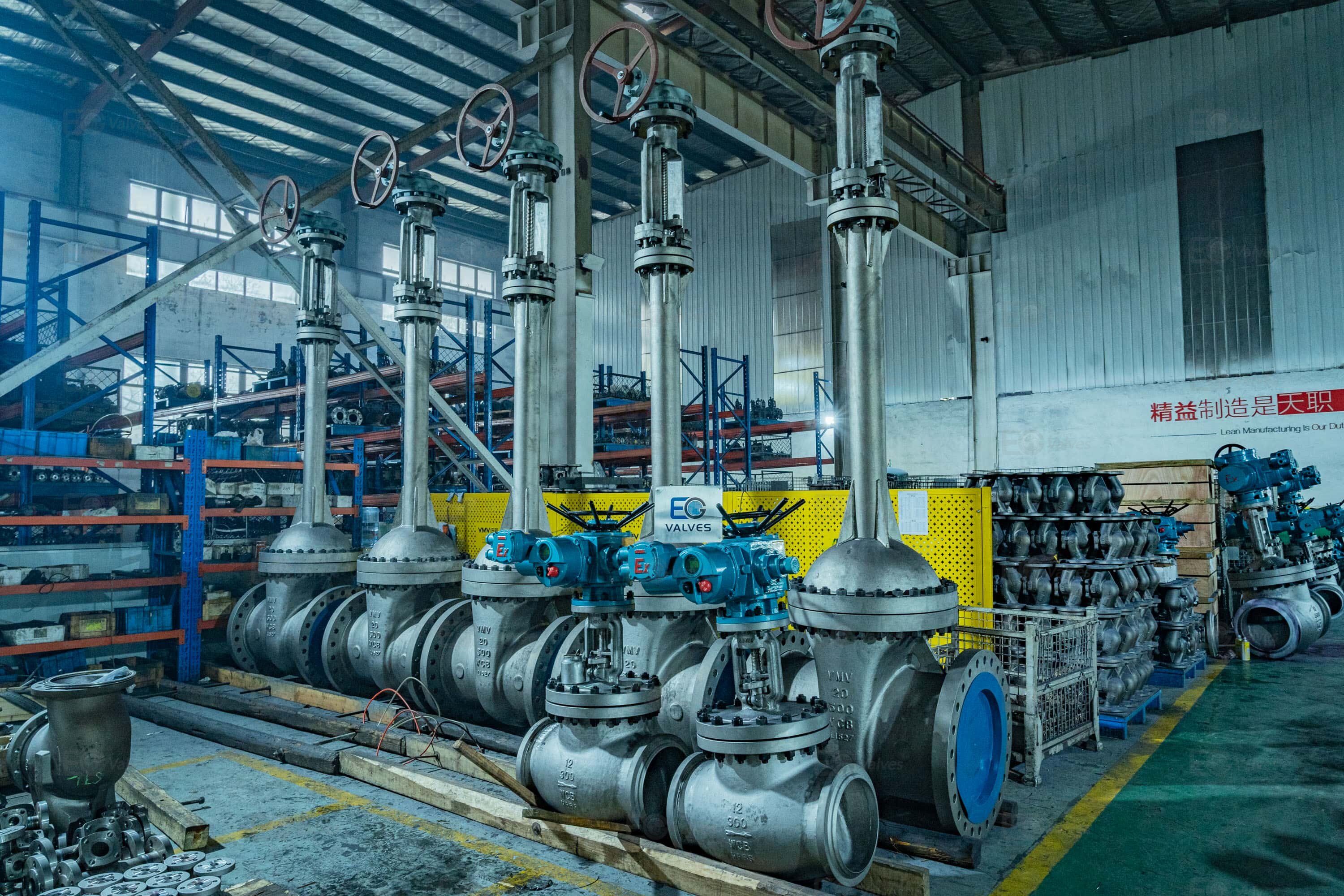
A supplier evaluation should be answered on the production floor, not only in a catalogue: machine capability, test stations and packing discipline are part of the evidence set.
Where Supplier Evaluation Breaks Down Before Award
Most evaluation templates ask the wrong question. They ask “do you make butterfly valves?” instead of “which butterfly valve size, pressure class and configuration covers line item 14 in this line list?” The first question can be answered by any catalogue; the second can only be answered by someone who has the drawings, the material certificates and the test standard in front of them.
Three mismatches account for most of the problems that surface after an industrial valve contract is signed.
1. Type coverage read as scope coverage
A supplier that lists seven valve families may still be unable to release the specific size, pressure class or actuation arrangement a project needs. Type coverage is a family-level claim; scope coverage is an item-level claim. Evaluation has to move from the first to the second.
2. Application claims read as application evidence
“Suitable for power, oil and gas and water treatment” is a positioning statement. Evidence looks different: a named valve family, a stated duty, a list of industries where that family is applied, and a data sheet that matches the service conditions. Without the named family, the sector list cannot be checked.
3. Unit price read as delivery certainty
Two quotations for the same data sheet rarely describe the same scope. Material certification, pressure-test witnessing, third-party inspection, documentation package and sea-freight packing all move the number — and all of them are the items most likely to be discovered late.
Industrial Valves in 2026: A Multi-Sector, Multi-Standard Procurement Problem
Industrial valves are flow-control components used across oil and gas, power, water treatment, chemicals and mining, and the same component families recur across drinking-water processing, wastewater processing and power generation. Commercial research published in 2025 estimated that Asia Pacific accounted for over 42% of the industrial valve market, which is one reason so many project packages now include an Asian manufacturing option in the bid list.
For the buyer, the practical consequence is that one supplier may quote a power station industrial valve, an oil and gas isolation valve and a water treatment check valve from a single catalogue — but those three items are qualified differently. They differ in body material (cast iron, ductile iron, cast steel, forged steel, stainless steel, brass, bronze or PTFE-lined), in pressure class, in test requirement and in the documentation that has to travel with the shipment.
Standards add a second layer. Dimensional and product requirements may be written to ANSI, DIN, BS or JIS, or to a customer specification; pipeline and refinery duty frequently names API 600 and API 6D; European market access brings CE and PED into the evaluation. Pressure testing is commonly referenced to ISO 5208 for metallic valves, and fugitive-emission qualification to ISO 15848 where the specification demands it. None of these references mean anything in an evaluation unless the supplier can tie them to the specific item being quoted.
EG Valves illustrates how that evidence is normally documented. The manufacturer operates under ISO 9001-certified processes and holds API 600, API 6D, CE and PED certification, with products manufactured to ANSI, DIN, BS and JIS standards or to customer requirements. Around 80% of output is exported to the EU, North America, Latin America and the Middle East, and products are supplied to more than 33 countries and regions — a profile in which documentation discipline is not optional, because every shipment crosses a conformity checkpoint.
The Four Evidence Blocks of an Award-Ready Supplier
Rather than scoring a supplier on brochure language, structure the evaluation around four blocks that can each be traced back to a document.
Block 1 — Product scope
The families that must be demonstrably produced, not merely traded: gate valves, globe valves, ball valves, butterfly valves, check valves, plug valves and strainers. For each family, the evaluator needs the size range, the pressure classes, the body material options and the available configurations.
Block 2 — Application fit
Named products mapped to named industries. This is where the difference between a catalogue and a capability becomes visible, because a named family can be interrogated: which duty, which media, which size band, which actuation.
Block 3 — Quality system
Certification scope, inspection points, test standards and the engineering resource behind non-standard requirements. A manufacturer with a 30-engineer R&D team can usually answer a deviation request; a trading company usually forwards it.
Block 4 — Delivery assurance
Purchasing terms, acceptance criteria, documentation package and packing standard — the block that determines whether the valves arriving on site can actually be accepted without a second round of correspondence.
Step-by-Step: The Pre-Award Evaluation Checklist
Work through the eight steps in order. Each step produces a document that either closes the question or flags it, and the sequence prevents a common failure mode in which commercial negotiation runs ahead of technical verification.
Step 1 — Fix the requirement baseline before contacting any supplier
Assemble one table per line item: medium, operating pressure and design pressure class, operating and design temperature, required standard, body and trim material, end connection, actuation, and inspection level. Every later question depends on this baseline. If high pressure, high temperature, cryogenic or anti-corrosion service appears anywhere in the list, isolate those items — they need specific material and test evidence and should never be assumed to be covered by a general range.
Step 2 — Confirm product-type coverage, family by family
Ask for the family list in writing and cross out anything that is not produced in-house or under a controlled supply arrangement. EG Valves' stated range covers gate valves, globe valves, ball valves, butterfly valves, check valves, plug valves and strainers, with more than 30,000 specifications across the catalogue. The evaluation task is to confirm which of those specifications are released for your pressure class and material group.
Step 3 — Check size and pressure-class coverage against the line list
This is where breadth is tested. The stated size envelope runs from DN6 to DN1800, from small to extra-large diameters — a genuine range, but one that has to be checked per family, because a large-diameter butterfly valve and a large-diameter globe valve are different manufacturing problems. Take the three largest and three smallest items on the list and ask for confirmation of size, pressure class and configuration for each.
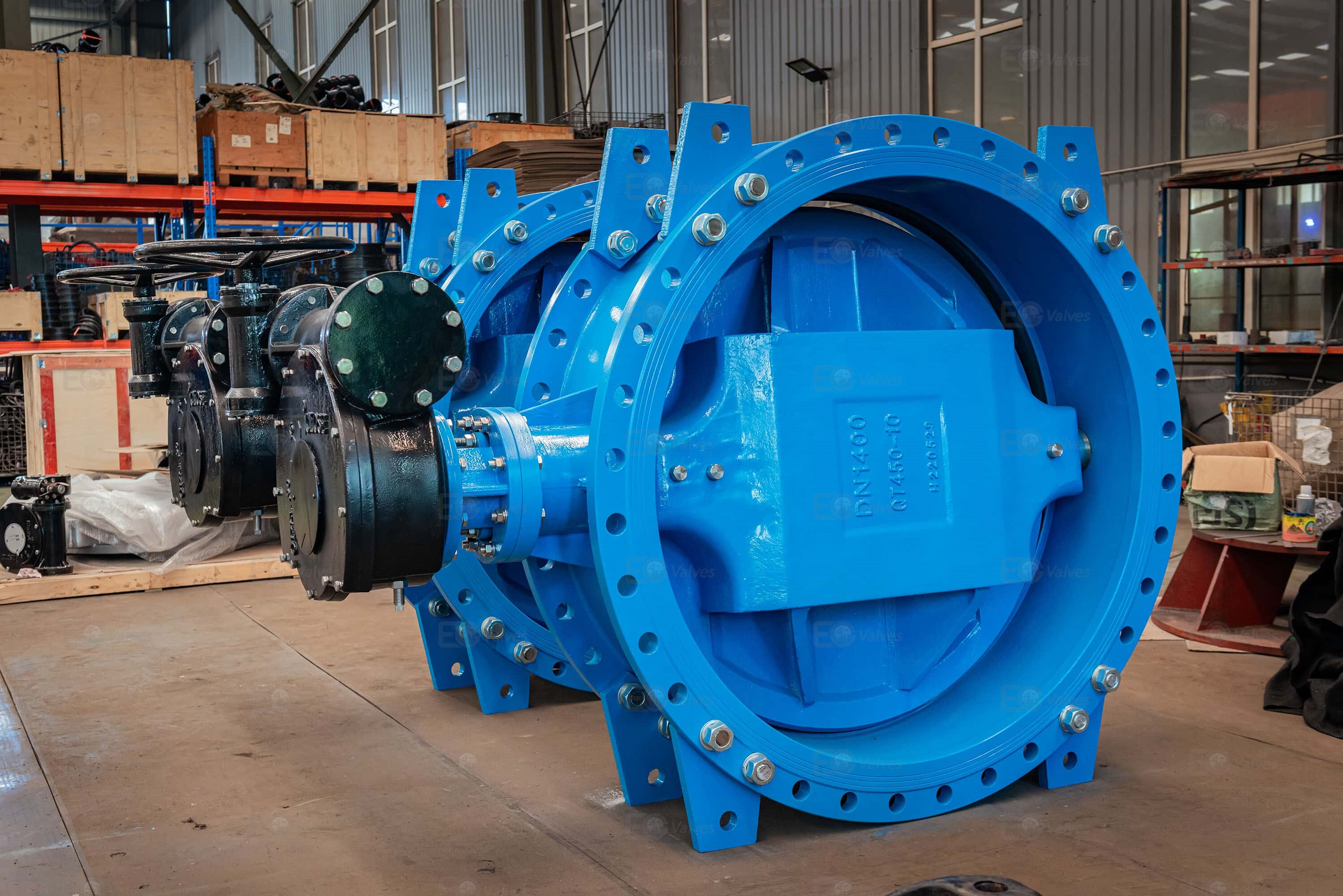
Size-range verification: the largest and smallest items on the line list are the fastest way to test whether a catalogue range is usable on a specific project.
Step 4 — Test the application claim with a named example
Replace sector adjectives with named families. The BOV303 triple offset butterfly valve is positioned for oil, refinery, chemical, steel and shipbuilding industries. The CVS407 cast steel check valve is positioned for water and sewage treatment, HVAC, mining, power generation, irrigation, and food and beverage. The CVI405 cast iron check valve is positioned for water, wastewater and HVAC. Each of these can be interrogated: size range, pressure classes, configuration options, seat construction and torque data for the exact size quoted. That interrogation is the whole point — a named family can be checked, a sector list cannot.
Step 5 — Verify material and anti-corrosion logic
Materials are the most common source of post-award variation. Confirm which body material groups are genuinely available: brass, bronze, cast iron, ductile iron, carbon steel, stainless steel, alloys and PTFE-lined. Then link material to medium. Corrosive media, salt spray and solid particles attack valve bodies, discs, seats, packing and seals; the practical control is selection according to the corrosiveness of the medium, plus filtration upstream where particles are present, plus a scheduled inspection interval that replaces components before leakage begins.
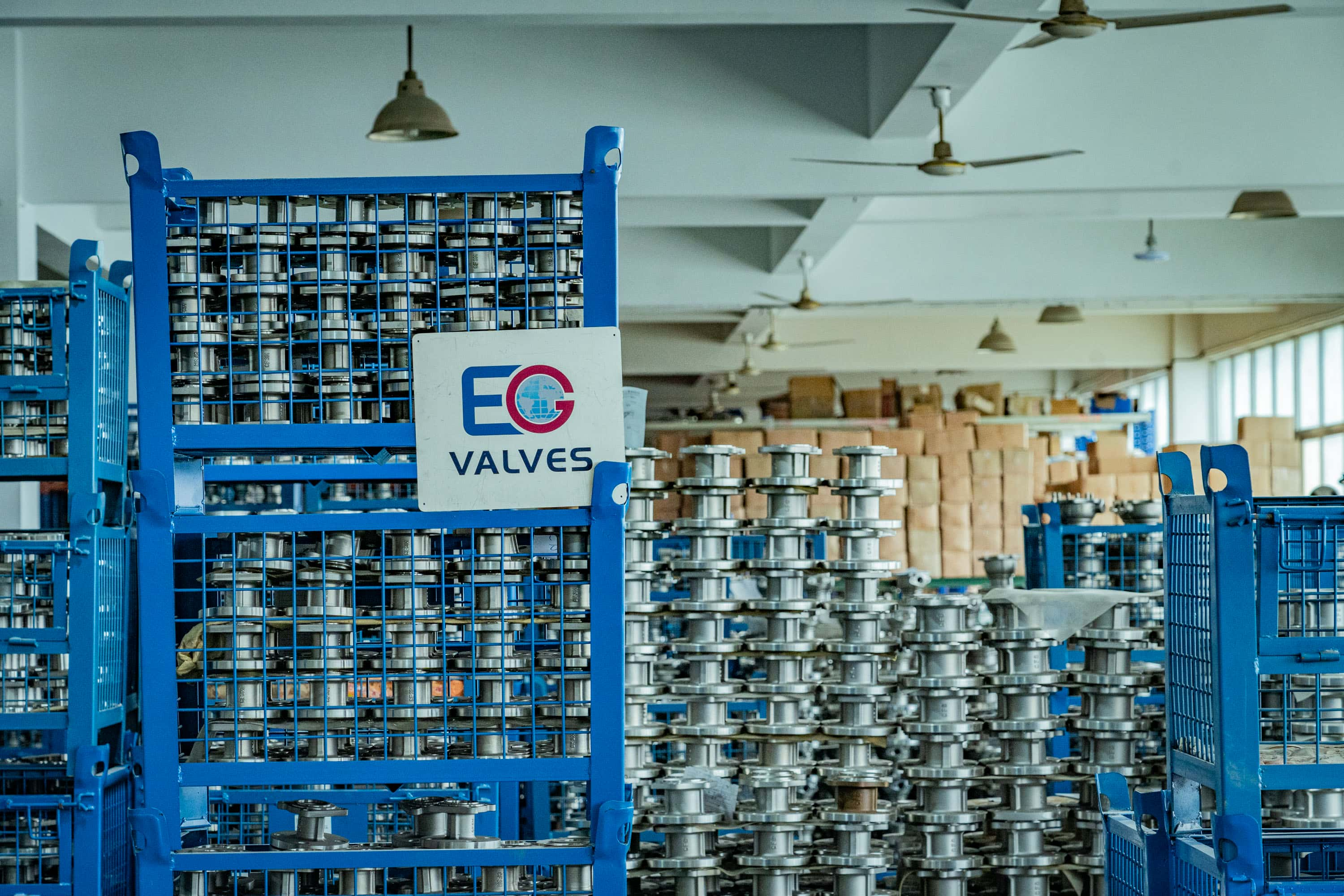
Material review belongs in the evaluation, not in the after-sales conversation: body, trim, seat and seal materials must be matched to the medium before the order is confirmed.
Step 6 — Confirm actuation and interface compatibility
If the line list includes electric actuated or pneumatic actuated valves, the evaluation extends beyond the valve body. Confirm the actuation options available — manual, pneumatic, electric and hydraulic operation are all offered within the EG Valves range — and then confirm the interface: mounting flange, stem dimensions and linkage to the specific actuator brand that will be installed. An actuated valve that arrives without a compatible mounting interface is a schedule problem, not a valve problem.
Step 7 — Review the quality system, certificates and inspection points
Request certificates with scope, issuing body and validity date, and check that the quoted valve type falls inside the scope. A company-level certificate is not automatically an item-level certificate. Then fix the inspection plan: which items are pressure-tested, at what test pressure and to which standard, which tests are witnessed, and whether third-party inspection is permitted at defined hold points.
Step 8 — Lock delivery assurance, purchasing terms and acceptance criteria
Delivery assurance is a written package, not a lead-time number. It contains the inspection and test plan, the document set shipping with each valve (material certificates, test reports, dimensional records, packing list, marking), the packing and marking standard for sea freight, the delivery schedule with batch sizes, and the acceptance criteria at site including who bears re-test cost. EG Valves states strict control of delivery times and product quality tracking for each order; the evaluation question is whether those commitments appear as clauses in the purchase order.
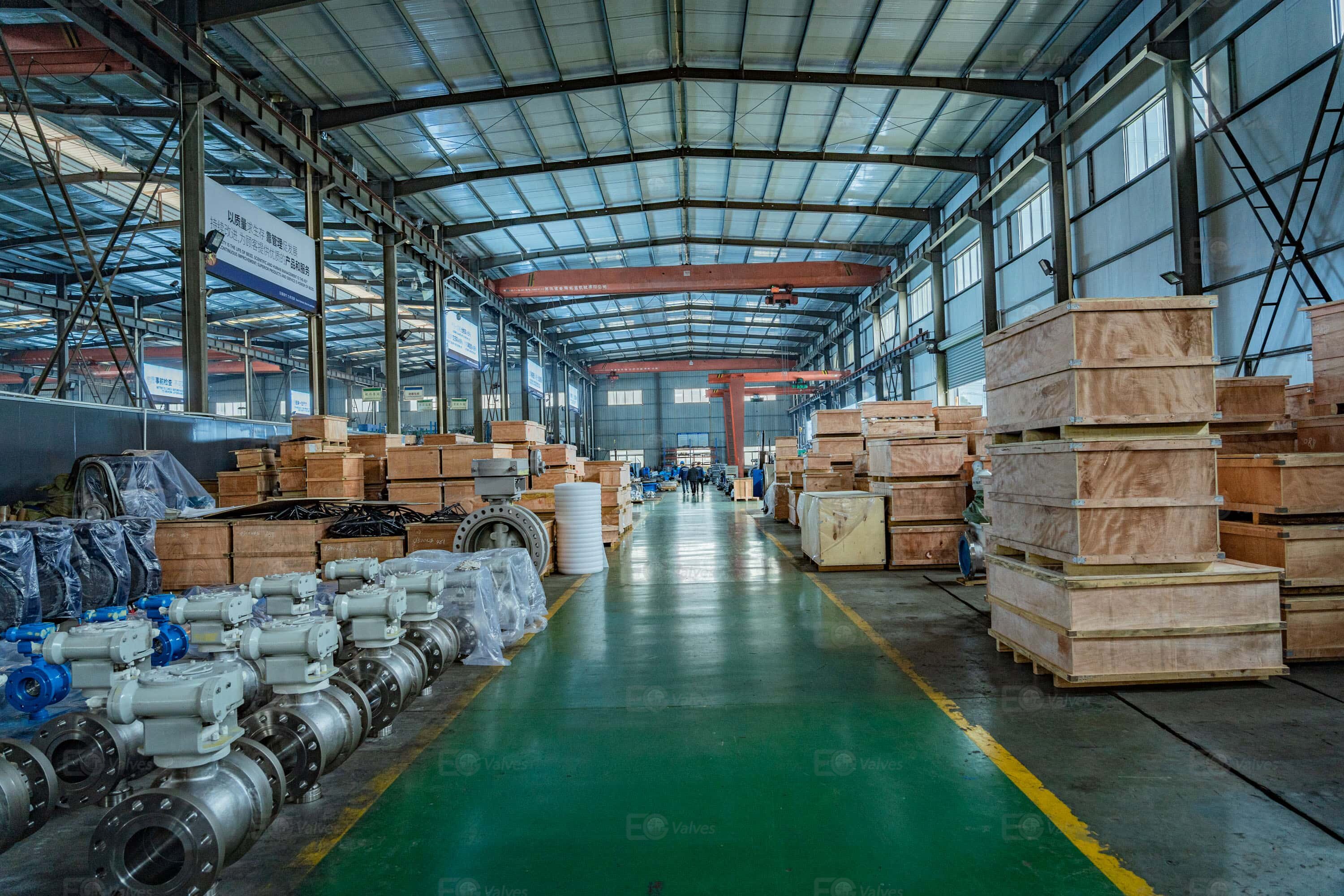
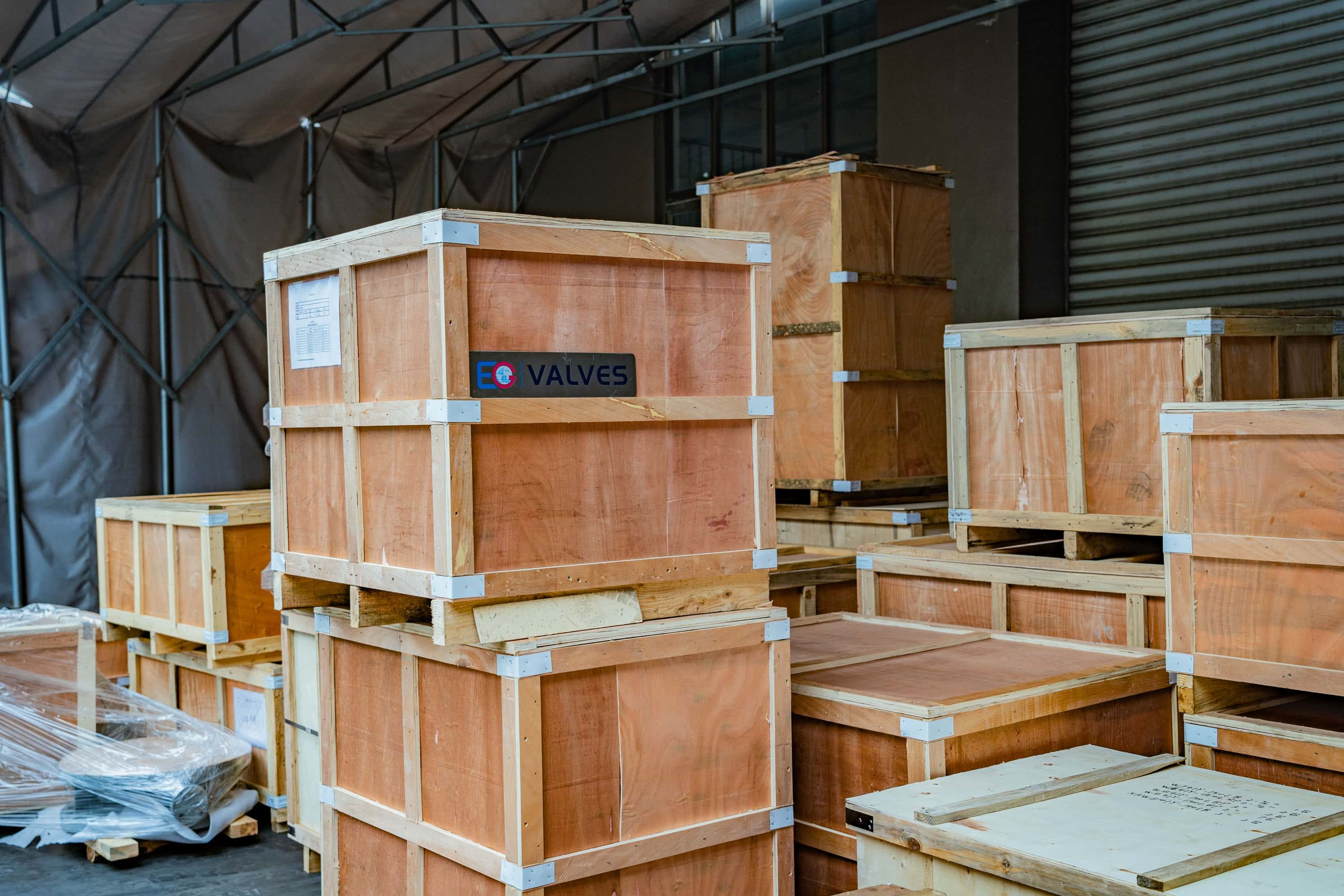
Delivery assurance ends in the packing area: marking, protection and documentation determine whether an export shipment can be accepted on arrival.
Use Cases: Three Application Checks in Practice
Application fit becomes testable when each claim is attached to a product family and a duty. The three families below show how the check works in a live evaluation.
Oil, refinery, chemical, steel and shipbuilding — BOV303 triple offset butterfly valve
BOV303 is positioned for oil, refinery, chemical, steel and shipbuilding industries. In an evaluation, the questions are specific: which sizes and pressure classes are released for the duty, which configurations are offered, and what torque data applies to the quoted size. Torque is not a detail — it determines actuator sizing, and an undersized actuator turns a valve problem into an instrumentation problem.
Water and sewage treatment, HVAC, mining, power generation, irrigation and food and beverage — CVS407 cast steel check valve
CVS407 is positioned for water and sewage treatment, HVAC, mining, power generation, irrigation and food and beverage. Because the same family is applied across municipal water and industrial process lines, the evaluation should confirm the body material certificate, the pressure test record and the permitted installation orientation for each line item — three fields that are frequently missing from a proposal.
Water, wastewater and HVAC — CVI405 cast iron check valve
CVI405 is positioned for water, wastewater and HVAC. Cast iron check valves in these duties are usually specified on pressure class and material grade rather than on exotic trim, so the evaluation is fast: confirm the body material, the pressure class, the test standard and the marking that will identify the valve after installation.
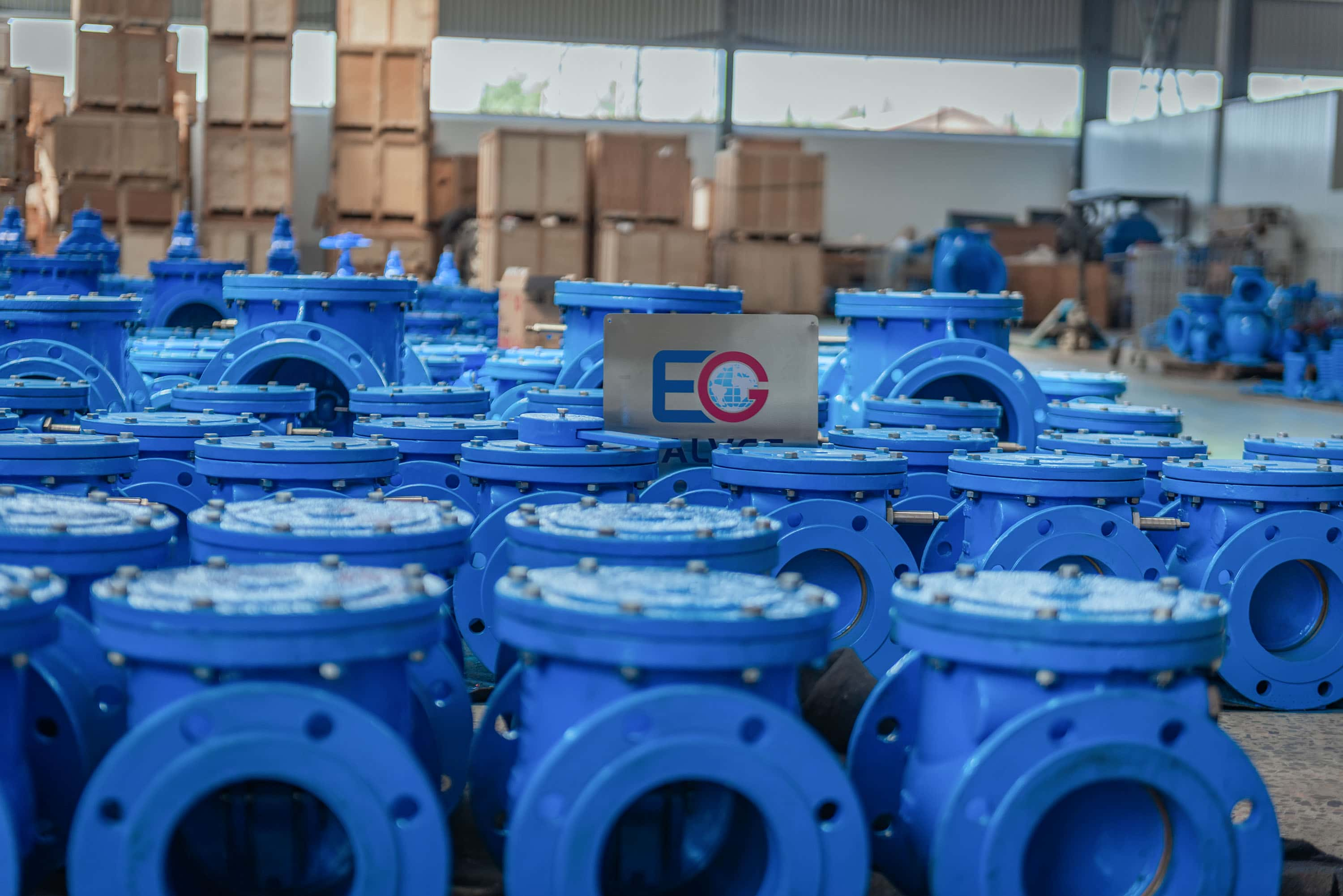
Check valve families are evaluated on body material, pressure class and test record — the three fields most often left blank in a first-round proposal.
Comparison Table: Application-Fit Map for Named Valve Families
| Valve family | Type and duty | Industries cited for the range | Evidence to request before award |
|---|---|---|---|
| BOV303 | Triple offset butterfly valve | Oil, refinery, chemical, steel, shipbuilding | Size range and pressure classes released for the duty; configuration options; torque data for the quoted size; actuation interface |
| CVS407 | Cast steel check valve | Water and sewage treatment, HVAC, mining, power generation, irrigation, food and beverage | Body material certificate; pressure test record and standard; installation orientation; marking |
| CVI405 | Cast iron check valve | Water, wastewater, HVAC | Body material grade; pressure class; test standard; marking and traceability |
The table is a starting point, not a specification. Each row must be closed with a document that names the item, the size and the pressure class that will actually be delivered.
Evaluation Evidence Matrix
| Evaluation criterion | Question to put to the supplier | Acceptable evidence |
|---|---|---|
| Product-type scope | Which of the seven families do you manufacture, and in which materials? | Family list linked to material groups, with the in-house versus sourced boundary stated |
| Size coverage | Confirm size and pressure class for these three largest and three smallest line items | Item-level confirmation, not a catalogue page range |
| Application fit | Which named family covers this duty, and on what basis? | Named family, stated industries, data sheet matched to service conditions |
| Material and corrosion | Which body, trim and seat materials are released for this medium? | Material specification plus corrosion and wear control logic |
| Actuation | Which actuation types are available, and what is the mounting interface? | Manual, pneumatic, electric or hydraulic configuration with interface dimensions |
| Certification | Which certificates cover this product, and what is their scope and validity? | Certificate with scope, issuing body and expiry, matched to the quoted item |
| Inspection and testing | Which items are pressure-tested, to which standard, and can it be witnessed? | Inspection and test plan with hold points and third-party access |
| Delivery assurance | What ships with each valve, and what is the acceptance criterion at site? | Document package list, packing and marking standard, acceptance clause in the purchase order |
Rule of thumb: if a supplier cannot name the size, pressure class, body material and configuration that matches a specific line item, the answer is a catalogue answer, not a project answer.
Frequently Asked Questions
Which certificates should an industrial valve supplier provide before award?
At minimum, a current quality-management certificate and the product certificates relevant to the families quoted. EG Valves operates under ISO 9001-certified processes and holds API 600, API 6D, CE and PED certification. For European projects the CE and PED position is the market-access item; for pipeline, refinery and general industrial duty, API 600 and API 6D are the standards normally named in a specification. Request the certificate scope, the issuing body and the expiry date, then confirm that the quoted valve type falls inside that scope — a company certificate is not automatically an item certificate.
How do you tell catalogue breadth from real project capability?
Test it with named items. Give the supplier three specific line entries — size, pressure class, body material and actuation — and ask for the exact family, configuration and test standard that covers each one. EG Valves' stated scope runs from DN6 to DN1800 across more than 30,000 specifications and eight material groups, including brass, bronze, cast iron, ductile iron, carbon steel, stainless steel, alloys and PTFE-lined bodies, with manual, pneumatic, electric and hydraulic operation available. The range is the starting point; the answer that matters is which part of it is released for your pressure class, your medium and your actuator.
Why do two quotations for the same industrial valve differ so much?
Because they rarely describe the same valve. Quotation variance is driven by body and trim material, pressure class, seat construction, actuation type, test standard and witness level, documentation package, packing, and delivery batch size. Two proposals can look identical on a data sheet and still differ in material certification and pressure-test witnessing. Normalise the offers against the evidence matrix before comparing figures — a lower number that excludes third-party inspection or material certification is not a lower cost, it is a different scope.
What should a pre-award sample actually prove?
A sample is only useful when it comes from the same production route as the ordered batch. Check the dimensions against the drawing, the marking against the certificate, and the body and seat materials against the specification; then confirm the mounting interface against the actuator you intend to fit. Record the batch or serial reference so the sample can be traced back to production. For a decision-stage evaluation, one traceable sample of the critical item carries more weight than several loose samples taken from stock.
Which delivery questions should be settled before the purchase order?
Five, and all in writing: the inspection and test plan with hold points; the document package that ships with each valve; the packing and marking standard for sea freight; the delivery schedule with agreed batch sizes; and the acceptance criteria at site, including who bears re-test cost. EG Valves states strict control of delivery times and product quality tracking for each order, which is exactly the type of commitment that should appear as a clause rather than an assurance. Buyers who want to review the full range first can download the EG Valves catalogue PDF or send the line list to sales@egvalves.com for a project-specific response.
Conclusion: Award on Documents, Not on Adjectives
A supplier evaluation for an industrial valve project succeeds when it converts claims into documents. Product-type scope becomes an item-level size and pressure-class confirmation. Application fit becomes a named family with a stated duty and a matching data sheet. Quality becomes a certificate with a scope and an inspection plan with hold points. Delivery becomes a purchasing clause covering documents, packing and acceptance.
Run the eight steps in order, close each one with a document, and the decision becomes defensible — whichever supplier is finally selected. The remaining risk after award is then a technical risk that has been priced, not a verification gap that has been postponed.
Request the EG Valves Catalogue or a Project Quote
Send the line list — valve type, size, pressure class, body material and actuation — and the EG Valves sales team will return the matching product family, configuration and documentation scope for evaluation.
Email: sales@egvalves.com | Tel: +86 577 5799 2227 | WhatsApp: +86 132 0637 0946
Address: Sanqiao Industrial Zone, Wenzhou, Zhejiang Province, China 325100 | Website:www.egvalves.com
Have Questions or Need More Details?
Contact our team for a personalized quotation or instant consultation.
Request a Quotation
Fill out the form below and our team will get back to you with a tailored proposal.
WhatsApp Direct Chat
Prefer to chat in real-time? Message us on WhatsApp for instant assistance & quick answers.
- Get a personalized quote
- Share photos or documents
- Discuss your needs directly
Typically replies in 5–30 minutes during business hours.