
ANSI, API, and CE Certified Industrial Valves: A Technical Procurement Guide for Power, Oil & Gas, and Chemical Industries
Selecting an industrial valve without first verifying its pressure class, body material, and certification is one of the most common causes of procurement failure in power, oil & gas, and chemical projects. The technical shortcut is to put ANSI/ASME, API, and CE PED compliance at the top of your evaluation checklist. This guide explains what those standards mean for valve performance, how to match them to plant operating conditions, and how a supplier like EG Valves Manufacturing Co., Ltd documents compliance across a catalog of more than 30,000 specifications.
Why Certification Is the First Technical Gate in Valve Selection
Certification is not an administrative formality. It is the shortest available summary of a valve’s design limits, material traceability, and manufacturing quality system. A certified industrial valve gives the buyer verifiable evidence that the product can operate under a stated maximum pressure and temperature, and that the factory has controls in place to reproduce that performance from batch to batch.
The oil and gas sector remains the largest application segment for industrial valves, so the standards most often requested in that industry carry the strongest weight. API 6D and API 600 are the primary industry-specific standards for oil and gas critical applications, while ASME B16.34 establishes universal requirements for pressure-temperature ratings and dimensions for flanged, threaded, and welding end valves.
ANSI / ASME: The Dimensional and Rating Backbone
Buyers frequently use "ANSI" to mean two different things. In valve procurement, the practical reference is ASME B16.34, which governs pressure-temperature ratings and dimensional requirements for flanged, threaded, and welded end valves. The "Class" designation (Class 150, Class 300, Class 600, Class 1500, Class 2500) comes from this rating system, not from a single material thickness. The same Class number can be satisfied by different body materials only if the design meets the corresponding pressure-temperature limits.
For example, a cast steel gate valve with a Class 150 to Class 1500 rating and a size range of NPS 1-1/2” to 48” gives a buyer a standard dimension and rating envelope across a wide pipeline range. A forged steel gate valve rated from Class 800 to Class 2500 is for smaller, high-pressure instrument and process lines where the forging grain structure provides added strength and leak resistance.
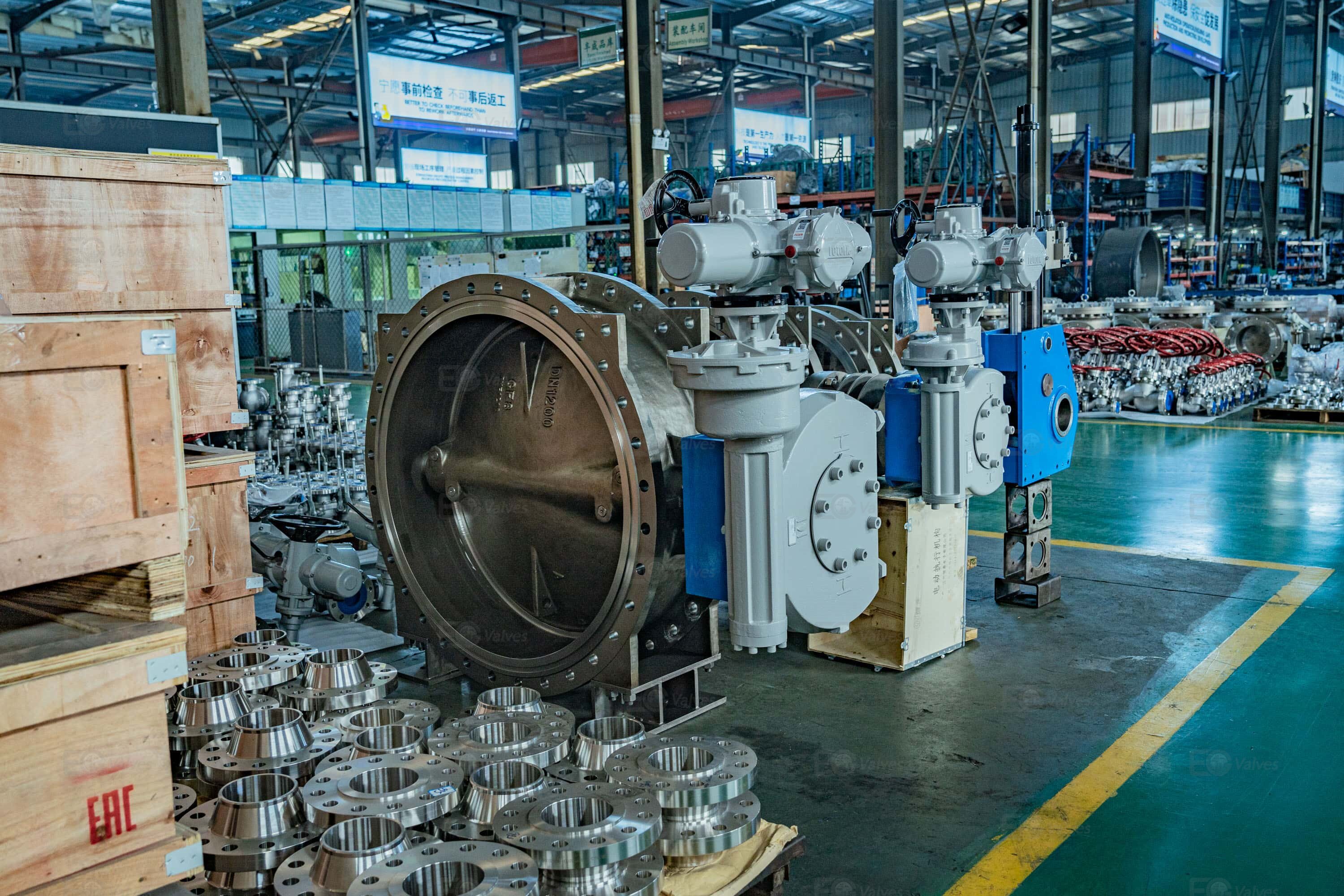
API 600 and API 6D: What They Actually Certify
API 600 and API 6D are separate standards, but buyers often see them requested together.
API 600 is the American Petroleum Institute standard for bolted bonnet steel gate valves. It covers the design, materials, and testing requirements for gate valves used in petroleum and natural gas service. EG Valves holds API 600 certification number 600-0179, issued by the American Petroleum Institute, covering bolted bonnet steel gate valves and products such as the GTS019 cast steel gate valve. The certification is for the global market and was valid from 2025-03-30 to 2027-03-30.
API 6D is the pipeline valve standard. It applies to check valves, ball valves, and gate valves designed for pipeline use. EG Valves holds API 6D certification number 6D-0506, issued by the American Petroleum Institute, covering check valves, ball valves, and gate valves. The scope includes the GTS019 cast steel gate valve, the GTF023 forged steel gate valve, the through conduit gate valve GTT021, and a full range of forged and cast steel ball and check valves. The certification is for the global market and was valid from 2024-03-30 to 2027-03-30.
Certification number, issuing body, standard scope, and expiry date are the four fields you should always verify on a supplier’s certificate copy.
CE PED: The European Pressure Equipment Requirement
For European projects, the correct compliance reference for valves is the Pressure Equipment Directive, PED 2014/68/EU. The CE mark is not a generic quality logo; it demonstrates that the pressure equipment meets EU safety requirements.
EG Valves holds CE PED certification number DGR-0036-QS-1360-24, issued by TUV SUD Industrie Service GmbH (TUV), under standard PED 2014/68/EU Annex III, Module H. The certification is valid from 2024-06-19 to 2027-05-26 for the EU market and covers gate valves, ball valves, globe valves, check valves, butterfly valves, and strainers.
If you are an EU buyer, you should ask for the PED module and the notified body name, not just the CE mark. That information is printed on the certificate and cannot be invented by the seller.
ISO 9001 and ISO 45001: Quality System and Workplace Safety
ISO 9001:2015 is the quality management system certification that applies to the design, development, production, and sales of industrial valves. EG Valves holds ISO 9001:2015 certification number 00125Q33391R3M/3400, issued by China Quality Certification Center (CQC), valid until 2028-05-22. The scope is global and includes gate valves, globe valves, ball valves, butterfly valves, check valves, pipe filters, and flanges.
ISO 45001:2018 covers the occupational health and safety management system of the factory. EG Valves holds ISO 45001:2018 certification number 01723S10270R1S, issued by Beijing Xingguo Global Certification Co., Ltd (XGQC), valid from 2023-05-16 to 2026-05-12. This certification covers gate valves, globe valves, ball valves, butterfly valves, check valves, and pipeline filters for the global market.
| Certification | Certification Number | Issuing Body | Applicable Market | Scope |
|---|---|---|---|---|
| API 600 | 600-0179 | American Petroleum Institute (API) | Global | Bolted bonnet steel gate valves |
| API 6D | 6D-0506 | American Petroleum Institute (API) | Global | Check valves, ball valves, gate valves |
| CE PED | DGR-0036-QS-1360-24 | TUV SUD Industrie Service GmbH (TUV) | EU | Gate valves, ball valves, globe valves, check valves, butterfly valves, strainers |
| ISO 9001:2015 | 00125Q33391R3M/3400 | China Quality Certification Center (CQC) | Global | Gate valves, globe valves, ball valves, butterfly valves, check valves, pipe filters and flanges |
| ISO 45001:2018 | 01723S10270R1S | Beijing Xingguo Global Certification Co., Ltd (XGQC) | Global | Gate valves, globe valves, ball valves, butterfly valves, check valves, pipeline filters |
Matching Certifications to Application Conditions
A high-pressure valve does not justify itself by its Class number alone. The seat design, body material, trim, and end connection all determine whether the valve will survive the actual service.
Power Station: Pressure Seal Designs and High-Temperature Steam
In thermal power generation, the core operating condition is high temperature and high pressure, with continuous stable operation and strict requirements for medium cleanliness. For main steam and feedwater isolation, a pressure seal gate valve is commonly specified because the internal pressure pushes the bonnet seal tighter as the pressure rises.
EG Valves manufactures the pressure seal gate valve GTP002 for Class 600 to Class 2500 service, with a size range from NPS 2” to 60”. The pressure seal globe valve GLP107 is explicitly designed for nuclear plant and fossil fuel power plant service, with pressure ratings from Class 600 to Class 2500 and sizes from NPS 2” to 24”. Both models are available in carbon steel, stainless steel, alloy steel, and duplex steel, and can be operated by handwheel, gearbox, electric actuator, or pneumatic actuator.
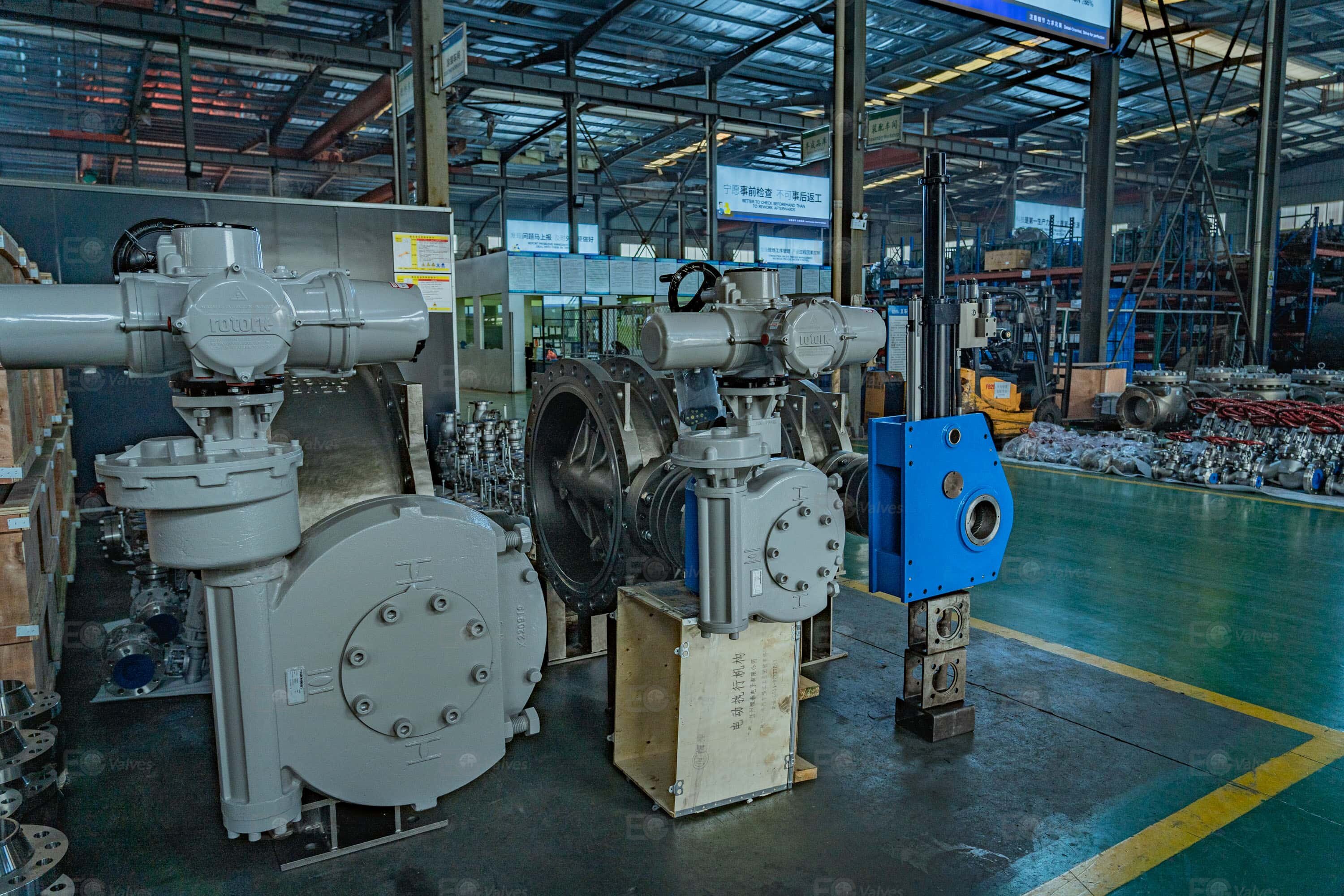
Oil & Gas: API Scope Verification and Material Selection
Oil and gas projects require valves that can handle high-pressure systems and corrosive environments. The buyer should verify that the valve’s certification covers the exact product type, not just the category name. For example, EG Valves' API 6D certification explicitly covers gate valves, ball valves, and check valves in cast and forged steel versions, including models such as the GTS019, GTF023, GTT021, BVF206, BVT207, BVF208, BVF209, BVF210, BVT211, CVS407, and CVF409.
For sour service or corrosive media, the material specification must match the environment. EG Valves produces ball valves, gate valves, and check valves in stainless steel and duplex steel. The fully welded ball valve BVF210, for example, is designed for gas transmission and distribution pipelines, particularly for underground and buried installation, and can be manufactured in carbon steel, stainless steel, alloy steel, or duplex steel.
Chemical Processing: Anti-Corrosion and Lined Valves
Chemical plants operate with media that are often corrosive, toxic, flammable, and under high pressure. The PTFE lined butterfly valve BTF301 is one of the most directly relevant products for this sector. It is available in sizes NPS 2” to 36” (DN50 to DN900), pressure ratings Class 125/Class 150 or PN6/PN10/PN16, with body materials in ductile iron, carbon steel, or stainless steel, and seat materials in PTFE, FEP, or PFA.
The PTFE lining provides an anti-corrosion barrier for acids, salts, alkalis, oxidants, organic solvents, and reducing agents. This is a case where the certification matters less than the material design: a standard carbon steel valve body with a PTFE lining can be justified only when the lining specification and the chemical compatibility have both been confirmed.
Step-by-Step: How to Evaluate an ANSI/API/CE Valve Supplier
Step 1: Verify the certification documents
Ask for the certificate copy and check the number, issuing body, scope, and expiry date against the API or notified body databases. In the case of EG Valves, the API 6D and API 600 certificates are currently valid through 2027-03-30, and the CE PED certificate is valid through 2027-05-26, so a 2026 project sits within the validity window.
Step 2: Confirm material traceability
EN 10204 3.1 material test certificates are provided with every order at EG Valves. That means the buyer receives a document declaring that the materials conform to the required grade, with results from the manufacturer’s own inspection.
Step 3: Check the pressure-temperature rating
Use the size, body material, and Class to identify the rated pressure-temperature envelope. A cast steel gate valve rated Class 150 to Class 1500 is not interchangeable with a forged steel gate valve rated Class 800 to Class 2500; each should be specified for the line that matches its rating.
Step 4: Evaluate the seat and trim for the media
For steam and high-temperature service, look for stellite overlay seating or pressure seal bonnets. For hydrocarbons, verify anti-static and fire-safe design. For corrosive chemicals, verify PTFE lining or stainless steel trim.
Step 5: Check the test and inspection routine
EG Valves reports that it builds a strict QC team and 100% inspects every valve. For a buyer, the standard request should be pressure testing, seat leakage testing, and visual and dimensional inspection prior to shipment.
Product Evidence Map: Certifications and Application Examples
| Application | Recommended Valve Type | Example Model | Rating Range | Certification Support |
|---|---|---|---|---|
| Power station steam isolation | Pressure seal gate valve, pressure seal globe valve | GTP002, GLP107 | Class 600 – Class 2500 | API 600, CE PED, ISO 9001 |
| Oil & gas pipeline isolation | Through conduit gate valve, fully welded ball valve | GTT021, BVF210 | Class 150 – Class 2500 | API 6D, API 600, CE PED |
| Chemical corrosive media handling | PTFE lined butterfly valve | BTF301 | Class 125/150, PN6 – PN16 | CE PED, ISO 9001 |
| Water treatment isolation and flow control | Cast iron gate valve, resilient seated butterfly valve | GTI001, BTV300 | Class 125/150, PN10/PN16 | ISO 9001, CE PED |
The relationship between certificate and product is measurable. In the UAE, a petroleum refining client was supplied 915 pieces of gate, globe, check, ball, and butterfly valves in classes 150–1500 and materials including WCB, WC6, WC9, C5, and sizes from 2” to 36”. In the United States, an oil and gas client received 1,438 pieces of gate, globe, check, and ball valves in classes 150–1500 with sizes from 1/2” to 20”. These examples show that API-certified and CE-certified valves can be delivered in project-level quantities across high-pressure and corrosive service conditions.
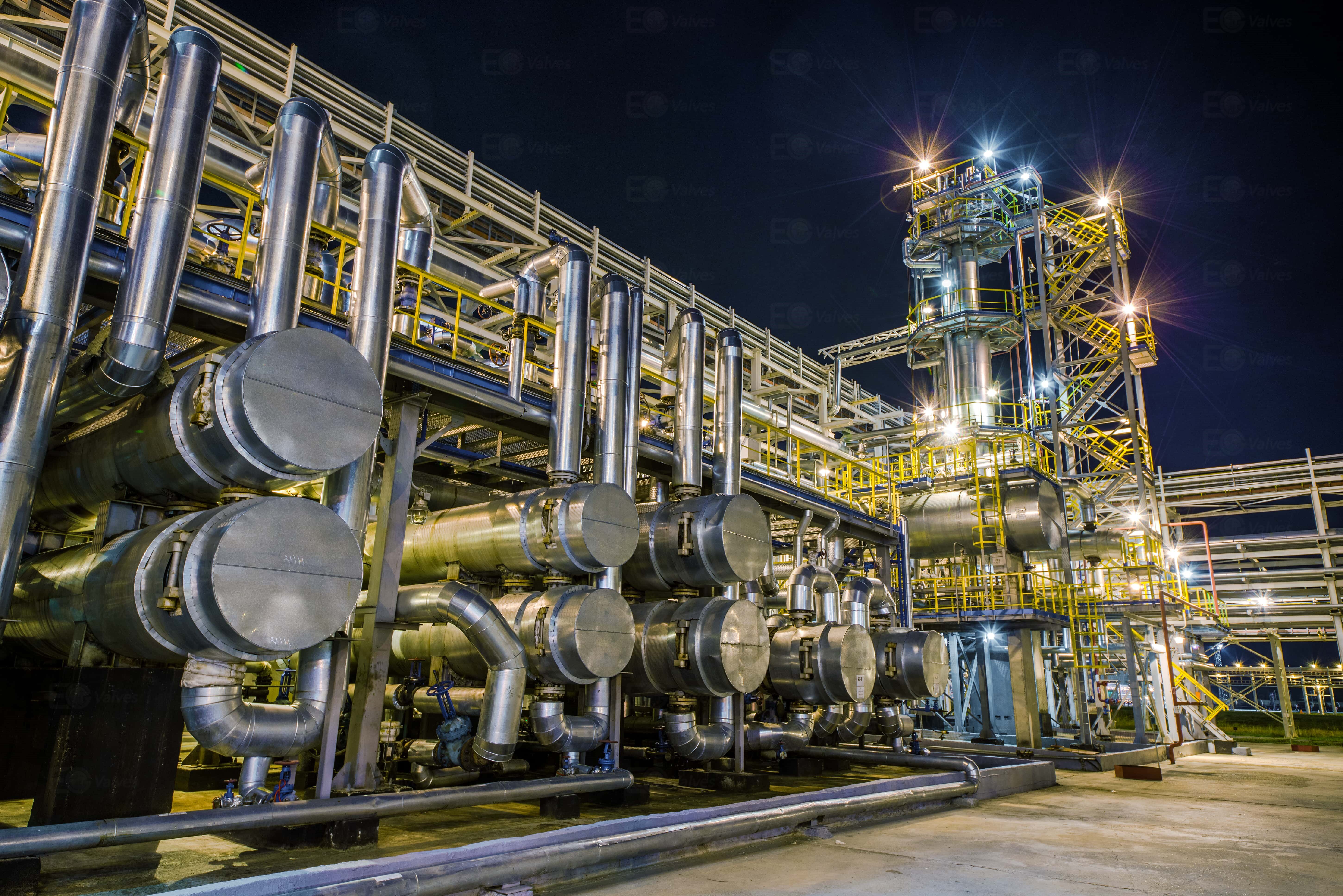
Use Cases for Certified Industrial Valves
Power Plant Use Case
For fossil fuel and nuclear power plants, pressure seal globe valves and pressure seal gate valves are used on high-temperature and high-pressure steam lines. The self-sealing bonnet design creates a tighter joint as internal pressure rises, which reduces the leakage risk that bolted bonnets may face in cycling service.
Oil & Gas Use Case
In oilfield and refinery projects, the required valve package usually includes API 6D gate valves, check valves, and ball valves. The supplier’s certificate scope should list those specific types. For a Mexico-based oil and gas project, EG Valves supplied 290 pieces of gate valves, ball valves, check valves, and plug valves in classes 150–1500, covering drilling, extraction, and refining applications.
Chemical Plant Use Case
In chemical plants, the critical issues are corrosion resistance and leak tightness. PTFE lined butterfly valves protect the valve body from aggressive chemicals, while high performance butterfly valves with PTFE/RTFE or metal seats handle higher pressure ratings. A Spanish chemical client used 260 pieces of gate, globe, and check valves from EG Valves for chemical injection, mixing, and reaction processes.
FAQ
Is the CE PED certification the same as the CE mark for industrial valves?
No. The CE PED certification for valves is granted under the Pressure Equipment Directive PED 2014/68/EU, and the conformity assessment module depends on the valve category and risk level. EG Valves holds CE PED certification number DGR-0036-QS-1360-24, issued by TUV SUD Industrie Service GmbH (TUV), under PED 2014/68/EU Annex III, Module H. The CE mark itself is not a standalone performance certificate; the buyer should verify the PED module and the notified body that issued the certificate.
Which certifications are most important for oil and gas applications?
For critical oil and gas applications, API 6D (pipeline valves) and API 600 (steel gate valves) are the primary industry-specific standards. API 6D covers check valves, ball valves, and gate valves for pipeline service, while API 600 covers bolted bonnet steel gate valves. ASME B16.34 remains the universal standard for pressure-temperature ratings and dimensions. EG Valves holds both API 6D certification number 6D-0506 and API 600 certification number 600-0179 from the American Petroleum Institute.
What does “Class 1500” or “Class 2500” mean for valve procurement?
The Class rating is defined by ASME B16.34 and identifies the pressure-temperature envelope for the valve. Class 1500 and Class 2500 are high-pressure ratings used in power plants and oil and gas facilities. For example, EG Valves manufactures the forged steel gate valve GTF023 in pressure classes 800 to 2500, and the pressure seal globe valve GLP107 from Class 600 to Class 2500. The class rating must be matched with the operating pressure and temperature of the system.
Can a single supplier provide valves for power, oil & gas, and chemical plants?
Yes, if the supplier has the manufacturing capacity and certification scope to cover those services. EG Valves holds API 6D and API 600 for oil and gas, CE PED for EU pressure equipment, and ISO 9001:2015 covering the full range of gate valves, globe valves, ball valves, butterfly valves, check valves, and pipe filters. The product catalog includes over 30,000 specifications across diameters from DN6 to DN1800, in materials from brass and bronze to cast iron, ductile iron, carbon steel, stainless steel, alloy steel, and PTFE-lined versions.
What supporting documents should a buyer request with a certified valve order?
The buyer should request the certification copies, the material test certificates, the pressure test records, and the dimensional inspection report. EG Valves provides EN 10204 3.1 material test certificates with every order, and 100% inspects every valve through its QC team. These documents allow the buyer to verify that the delivered valves match the certified design and material specification.
If you are in the specification or evaluation stage and need a technical review of your valve requirements, contact the EG Valves sales team at sales@egvalves.com or by phone at +86 577 5799 2227. The team is located at Sanqiao Industrial Zone, Wenzhou, Zhejiang Province, China 325100.
Download the EG Valves company brochure (PDF) for a full product overview.
Have Questions or Need More Details?
Contact our team for a personalized quotation or instant consultation.
Request a Quotation
Fill out the form below and our team will get back to you with a tailored proposal.
WhatsApp Direct Chat
Prefer to chat in real-time? Message us on WhatsApp for instant assistance & quick answers.
- Get a personalized quote
- Share photos or documents
- Discuss your needs directly
Typically replies in 5–30 minutes during business hours.