
Solving Erosion in Severe Service: When a Standard Butterfly Valve Fails
Direct answer: when a butterfly valve fails early in erosive service, the cause is usually the sealing principle rather than the brand or the price. A standard concentric, elastomer-seated butterfly valve seals by holding the disc edge against a resilient seat, so every stroke drags the sealing surfaces across each other inside a stream that may also be carrying abrasive particles. The EG Valves BOV303 triple offset butterfly valve is built on the opposite logic: a triple offset design that eliminates wear associated with sealing surface contact, an optional Stellite seat for erosion resistance, and body and disc material options that include carbon steel, stainless steel, alloy steel and duplex steel.
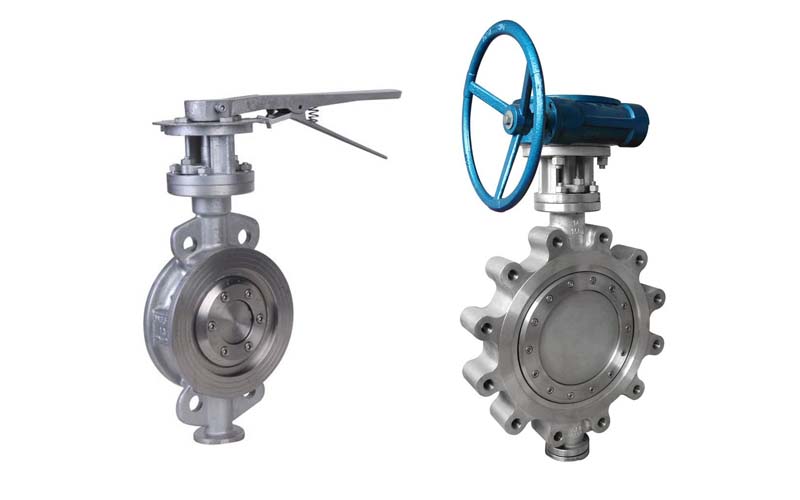
EG Valves triple offset butterfly valve, model BOV303 — metal-seated, bubble-tight, and available with an optional Stellite seat for erosion resistance.
This guide covers what actually fails inside a standard butterfly valve, how triple offset geometry changes the wear equation, which seat and material specifications match erosive duty, what must be verified in certification, and where the standard design remains the correct and more economical choice.
Problem Definition: What “Failure” Looks Like in Erosive Duty
The first sign of an eroded butterfly valve is almost never a visible leak. Operators normally notice a process symptom first: a temperature that will not hold downstream of a heat exchanger, a pump working harder to hold flow, a control loop needing constant correction, or a valve that no longer isolates the line even when the actuator is fully stroked. By the time a leak path appears at the flange line, the sealing surfaces have usually been degrading for some time.
The failure sequence in erosive duty has three recognisable stages.
Stage 1 — Interference wear inside the seal
In a concentric butterfly valve, the disc sits centred in the bore and sealing depends on the disc edge pressing into a resilient seat. In the EG Valves resilient-seated range, those seat materials are EPDM, NBR (Buna-N), FKM (Viton) or PTFE. The interference is small by design, and it exists through the entire stroke: the disc edge is in contact with the seat from the first degree of movement, not only at the closed position. Every cycle therefore transfers a small amount of material from the seat — and the seat is also the component that has to absorb any sand, scale or process particle trapped at the sealing line.
Stage 2 — Erosion by the process medium
Once the medium carries solids — pulp and fibre, ore fines, catalyst particles, scale, produced sand — the sealing line becomes an impingement target. Local velocity across a partly open disc is higher than nominal line velocity, so the same particles strike the seat edge and the disc sealing face at an angle. Seat corners round off, the disc edge loses the sharp contact line that delivered tight shutoff when new, and the torque required to seat the valve rises.
Stage 3 — Loss of shutoff under thermal load
When shutoff is lost, the usual field response is to close the valve harder or to increase actuator torque, which loads an already damaged seat. If the line runs hot, elastomeric seats are additionally limited by the temperature range of their material, and thermal cycling accelerates the loss of resilience. The end state is a valve that passes, a valve that sticks, or a valve that cannot be isolated for maintenance.
None of this makes the standard design defective. A resilient-seated butterfly valve such as the EG Valves BTV300 — concentric design, bi-directional service, quick 90-degree on/off operation, simple and compact construction — is an efficient and economical choice for water and sewage systems, air conditioning, mining, power plants, irrigation and food and beverage lines. The mistake is not choosing a standard butterfly valve; the mistake is choosing one for a line where erosion is part of normal operation.
Industry Background: Severe Service Is Now a Normal Specification
Severe service is no longer a niche in valve procurement. The global industrial valves market was estimated at USD 82.9 billion in 2025, with a projected CAGR of 5.7% through 2034 (IMARC Group). Asia Pacific accounted for approximately 36.3% of that 2025 revenue, with China holding the largest share within the region (Grand View Research). Oil and gas remains the leading end-user segment, at nearly 33% of global valve demand in 2024 (Vantage Market Research, reported by PR Newswire), and cast steel valves alone represented 27.3% of the oil and gas valve market in 2025 (Mordor Intelligence). China exported USD 22.6 billion in valves globally in 2024, roughly 20% of global export concentration (Observatory of Economic Complexity).
Two practical consequences follow for buyers evaluating China valve supply.
First, erosion-resistant selection is a mainstream requirement. When roughly a third of global valve demand comes from oil and gas, plus chemical, refining, mining and pulp and paper duty, the specification question “what happens to this seat when the medium carries solids?” applies to a very large share of installed valves, not to an exotic minority.
Second, certificate scope matters as much as certificate numbers. Valves entering the EU must comply with the Pressure Equipment Directive 2014/68/EU for equipment with pressure exceeding 0.5 bar, and experienced buyers now request the certificate and its scope annex rather than accepting a certification logo on a website.
The Triple Offset Solution: Removing the Contact That Causes the Wear
The BOV303 triple offset butterfly valve is the EG Valves design for erosive and severe service. Its specification states that the triple offset design eliminates wear associated with sealing surface contact, that closure is bubble-tight, and that an optional Stellite seat offers optimum resistance to erosion — with body and disc material options that include carbon steel, stainless steel, alloy steel and duplex steel.
Sealing geometry: why the offset matters
Triple offset geometry changes when the sealing surfaces meet. Instead of the disc edge sweeping across the seat through the full 90-degree travel, the offsets position the sealing cone and the rotation axis so that the disc sealing face lifts clear of the seat as soon as the valve starts to open, and only engages during the final degrees of closing. The seal is a wedging action at the end position rather than a wipe across the whole stroke.
In an erosive line this produces three practical effects: substantially less sliding contact between disc and seat; a sealing line that is not continuously polished away by the medium; and shutoff achieved by seating geometry rather than by compressing a resilient material. That is the mechanism behind the specification statement that the triple offset design eliminates wear associated with sealing surface contact, and behind the stated bubble-tight closure that provides process efficiency with reduced maintenance.
Seat selection: standard options and the Stellite option
The standard seat material options for the BOV303 are stainless steel + graphite, or PTFE + stainless steel. Where the medium is erosive, the optional Stellite seat is offered for optimum resistance to erosion, and this is the specification that matches severe service with entrained solids.
Seat selection is a trade-off, and the limit should be stated plainly: PTFE-based seating delivers very tight closure but depends on the temperature range of the polymer, while metal seating — stainless steel with graphite, or Stellite — is the choice where temperature, abrasion, or both, rule out soft materials. A specification is only as good as the line data behind it, so medium, particle content, temperature, pressure and cycle frequency all belong in the enquiry.
Body and disc materials, including duplex steel
Body material options are carbon steel, stainless steel, alloy steel and duplex steel; disc materials are carbon steel, stainless steel and duplex steel. The choice is a corrosion decision as much as a wear decision. Carbon steel is the practical default for oil, gas and utility service. Stainless and alloy steels are selected for chemical duty and higher-temperature lines. Duplex steel is normally specified where chloride-related corrosion and erosion occur together — seawater-adjacent, offshore and certain chemical process applications — because it combines higher strength with better resistance to chloride stress corrosion than standard austenitic grades.
Operating envelope of the BOV303
- Size range: NPS 2” to 60” (DN50 to DN1500)
- Pressure rating: Class 150 / Class 300 / Class 600; PN10 / PN16 / PN25 / PN40
- Body styles: wafer type, lug type and double flange type
- Seat materials: stainless steel + graphite, or PTFE + stainless steel; optional Stellite seat
- Mode of operation: handle lever, gearbox, worm gear, electric and pneumatic
- Stated design outcomes: bubble-tight closure; triple offset design eliminates wear associated with sealing surface contact
Which certifications actually cover butterfly valves
Certification is where severe-service procurement most often goes wrong, because certificate numbers are frequently quoted without their scope. The table below lists the approvals held by EG Valves Manufacturing Co., Ltd together with their actual coverage.
| Certification | Certificate number | Issuing body | Scope | Market |
|---|---|---|---|---|
| CE PED 0036 | DGR-0036-QS-1360-24 | TUV SUD Industrie Service GmbH | PED 2014/68/EU Annex III, Module H — gate valves, ball valves, globe valves, check valves, butterfly valves, strainers | EU |
| ISO 9001:2015 | 00125Q33391R3M/3400 | China Quality Certification Center (CQC) | Gate valves, globe valves, ball valves, butterfly valves, check valves, pipe filters and flanges | Global |
| API 6D | 6D-0506 | American Petroleum Institute (API) | Check valves, ball valves, gate valves | Global |
| API 600 | 600-0179 | American Petroleum Institute (API) | Bolted bonnet steel gate valves | Global |
Read the scope, not the logo. The API 6D scope listed above covers check valves, ball valves and gate valves; the API 600 scope covers bolted bonnet steel gate valves. Neither scope extends to butterfly valves, so a triple offset butterfly valve should never be presented as “API 6D certified”. For butterfly valves supplied into the EU market, the applicable approval on file is CE PED 0036 under PED 2014/68/EU Annex III, Module H, which expressly covers butterfly valves. Manufacturing across the range runs under ISO 9001:2015.
Step-by-Step: Specifying a Butterfly Valve for Erosive Duty
The sequence below turns a failure report into a specification. Each step exists because it eliminates one specific cause of premature failure.
- Characterise the valve that failed. Record where the damage occurred — seat edge, disc sealing face, shaft, or body bore. Seat-edge and disc-edge damage points to interference wear and erosion rather than to an actuator or control problem.
- Classify the medium. Decide whether the line is clean, corrosive, erosive, or erosive and corrosive together. The presence of entrained solids is the single variable that most often changes the correct valve type.
- Choose the sealing principle before the brand. Concentric resilient seating for clean services; double eccentric designs such as the EG Valves BTV305, where the double eccentric disc design ensures minimal wear and provides excellent throttling capabilities; triple offset geometry such as the BOV303 where erosion and wear are the governing failure modes.
- Decide hard or soft seat against temperature and abrasion. PTFE-based seating for tight closure within polymer temperature limits; stainless steel plus graphite or Stellite where temperature, particles, or both, exclude soft seats.
- Specify the trim where erosion is present. The optional Stellite seat on the BOV303 is the specification step that directly targets erosion at the sealing surface.
- Select body and disc material. Carbon steel, stainless steel, alloy steel, or duplex steel — the last where chloride corrosion and erosion are combined.
- Confirm pressure class, size, end type and actuation. Class 150 / 300 / 600 or PN10 / PN16 / PN25 / PN40; NPS 2” to 60”; wafer, lug or double flange; handle lever, gearbox, worm gear, electric or pneumatic operation.
- Require documentation before shipment. 100% inspection of every valve, EN 10204 3.1 Material Test Certificates with every order, and the certificate scope annex that covers the actual valve type and destination market.
Use Cases: Where Triple Offset Earns Its Place
The BOV303 specification lists its applicable industries as oil and petroleum, refinery and tanks, chemical factories, steel mills and shipbuilding. Those are exactly the environments where the three-stage failure pattern described earlier appears most often.
Refining and tank farms. Refinery service combines high temperature, high pressure, corrosion and coke formation, and valves must hold shutoff between maintenance cycles. A butterfly valve that loses its sealing line in this environment creates isolation problems across the unit, not just at one position.
Chemical plants. Chemical production runs continuously in closed systems with media that are corrosive, and frequently abrasive as well. Metal-seated triple offset construction suits the combination better than an elastomer-seated design, and duplex steel extends the material envelope where chlorides are present.
Steel mills and shipbuilding. Cooling water circuits, scale-bearing lines and utility systems in these plants carry solids that shorten the life of soft-seated valves.
Pulp and paper. Paper and pulp duty is a textbook erosion application: continuous production with fibre, pulp and suspended solids in the flow, where the stated requirement is wear and abrasion resistance, anti-clogging performance and reliable sealing under harsh conditions.
Mining. Mining circuits combine poor environmental conditions with abrasive slurries and demand valve reliability with low maintenance. Where a concentric valve would erode within one campaign, a metal-seated triple offset design is the specification that survives.
Offshore and seawater-adjacent duty. Offshore operations combine corrosive seawater, high-pressure systems and strict regulatory requirements. Duplex steel body and disc options, plus a metal seat, address both the corrosion and the wear side of the problem.
Field evidence supports the material choices rather than just the design: EG Valves supplied a 915-piece valve package including butterfly valves in Class 150 to 1500 and materials WCB, WC6, WC9 and C5, sized 2” to 36”, to a refinery project in the UAE, where the equipment has operated safely and steadily across an 8 to 10 year service period.
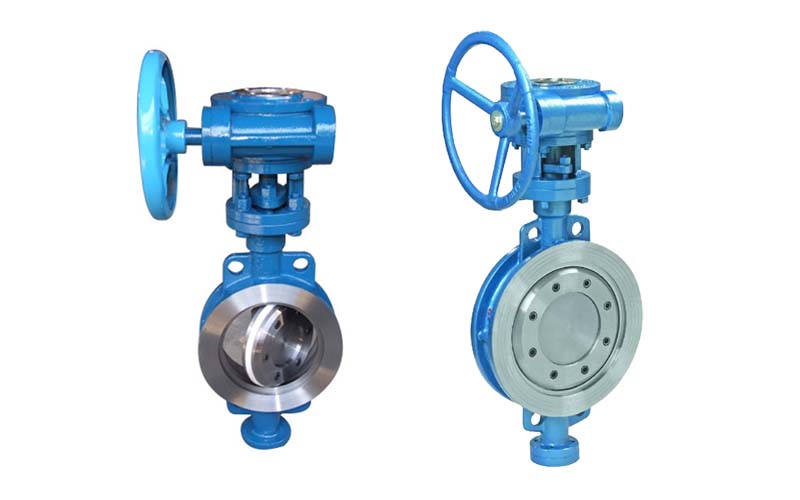
Seat and disc detail on the triple offset butterfly valve: sealing contact occurs only at the final degrees of closing, which is why the medium cannot polish the sealing line away on every stroke.
Design Comparison: Three Butterfly Valve Concepts on Wear and Fit
Choosing between butterfly valve designs is a comparison of sealing principles, not of price lists. The table below compares the three concepts on the specifications that determine whether a valve survives erosive duty.
| Design | Sealing principle | Seat materials | Body / disc materials | Pressure rating | Size range | Wear behaviour | Typical duty |
|---|---|---|---|---|---|---|---|
| Concentric resilient-seated (BTV300) | Concentric design, bi-directional service, disc edge seats against a resilient seal | EPDM, NBR (Buna-N), FKM (Viton), PTFE | Body: cast iron, ductile iron, carbon steel, stainless steel. Disc: stainless steel or ductile iron (nickel plated or nylon coated) | Class 125 / Class 150; PN6 / PN10 / PN16 | NPS 1-1/2” to 48” (DN40 to DN1200) | Relies on continuous disc-to-seat interference; elastomeric seats are the wear and temperature limiting component | Water or sewage systems, air conditioning, mining, power plants, irrigation, food and beverage |
| Double eccentric (BTV305) | Double eccentric disc design; tilted disc releases compression when opening | EPDM, NBR (Buna-N), FKM (Viton) | Body: ductile iron, carbon steel. Disc: ductile iron, carbon steel. Shaft: stainless steel with self-lubricating bearings | Class 125 / Class 150; PN6 / PN10 / PN16 | NPS 8” to 48” (DN200 to DN1200) | Double eccentric disc design ensures minimal wear and provides excellent throttling capabilities; replaceable sealing materials and a tilted disc that releases compression extend durability | Water treatment, HVAC, desalination plants, power generation, municipal water supply |
| Triple offset (BOV303) | Triple offset design: sealing surfaces separate on opening and contact only at final closing | Stainless steel + graphite, or PTFE + stainless steel; optional Stellite seat | Body: carbon steel, stainless steel, alloy steel, duplex steel. Disc: carbon steel, stainless steel, duplex steel | Class 150 / Class 300 / Class 600; PN10 / PN16 / PN25 / PN40 | NPS 2” to 60” (DN50 to DN1500) | Triple offset design eliminates wear associated with sealing surface contact; bubble-tight closure; optional Stellite seat for optimum resistance to erosion | Oil and petroleum, refinery and tanks, chemical factories, steel mills, shipbuilding |
The comparison also marks the boundary of the recommendation. Where the medium is clean and the temperature sits inside the polymer range, the resilient-seated BTV300 remains the most economical and space-efficient answer, and specifying a metal-seated triple offset valve there adds cost without adding life. The triple offset design earns its place when erosion, high temperature, abrasive solids or a combination of these is what actually destroys the installed valve.
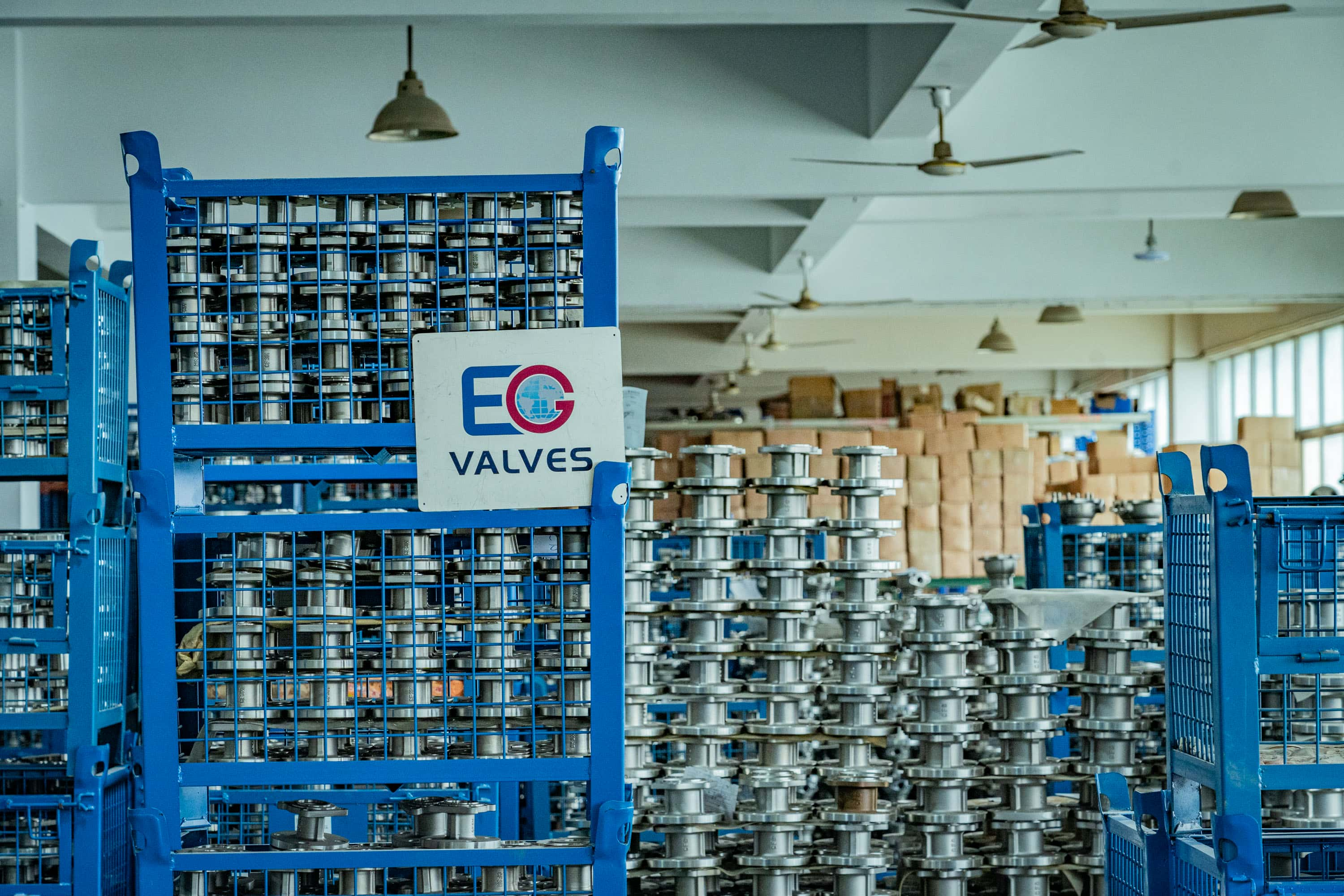
Material selection drives severe-service life: carbon steel, stainless steel, alloy steel and duplex steel body options are available for the triple offset butterfly valve.
Frequently Asked Questions
How do I verify that a China valve manufacturer is genuinely API certified?
Check the certificate number, the issuing body, the scope and the expiry date — then check whether the scope covers the valve type you are buying. EG Valves Manufacturing Co., Ltd holds API 6D certification 6D-0506 from the American Petroleum Institute with a scope of check valves, ball valves and gate valves, and API 600 certification 600-0179 from the American Petroleum Institute with a scope of bolted bonnet steel gate valves. Neither scope covers butterfly valves, so a triple offset butterfly valve should not be presented as API 6D or API 600 certified. For butterfly valves supplied into the EU market, the applicable approval is CE PED 0036, certificate DGR-0036-QS-1360-24, issued by TUV SUD Industrie Service GmbH under PED 2014/68/EU Annex III, Module H, covering gate, ball, globe, check and butterfly valves as well as strainers. Manufacturing is certified to ISO 9001:2015 under certificate 00125Q33391R3M/3400 issued by the China Quality Certification Center (CQC). Ask for the certificate and its scope annex, not a logo.
Can a triple offset butterfly valve handle media that destroy a standard butterfly valve?
Yes, provided the seat and materials are specified for the duty. The BOV303 uses a triple offset design that eliminates wear associated with sealing surface contact, so the sealing line is not wiped across the seat on every stroke, and closure is bubble-tight for process efficiency with reduced maintenance. For media carrying abrasive solids, the optional Stellite seat offers optimum resistance to erosion. Body materials include carbon steel, stainless steel, alloy steel and duplex steel, and disc materials include carbon steel, stainless steel and duplex steel, which allows the valve to be matched to corrosive as well as abrasive conditions. The envelope is NPS 2” to 60” (DN50 to DN1500) with Class 150 / 300 / 600 or PN10 / PN16 / PN25 / PN40 ratings. The limitation to state honestly is that seat selection is always a trade-off: PTFE-based seating gives the tightest soft closure within polymer temperature limits, while metal seating is required where temperature or abrasion excludes soft materials.
What determines the cost difference between a standard butterfly valve and a triple offset butterfly valve?
Because no public list price applies to either design, the cost difference is driven entirely by specification. For the BOV303 the variables are body and disc material (carbon steel, stainless steel, alloy steel or duplex steel), seat construction (stainless steel + graphite, PTFE + stainless steel, or the optional Stellite seat for erosion resistance), pressure class (Class 150, 300 or 600; PN10, PN16, PN25 or PN40), size (NPS 2” to 60”), end configuration (wafer, lug or double flange) and actuation (handle lever, gearbox, worm gear, electric or pneumatic). Two valves in the same nominal size can therefore differ materially in cost depending on the duty they are built for. The practical approach is to send the medium, particle content, operating temperature, pressure and line size, and request a quotation against that specification. Minimum order quantity is 1 pc for big-size valves and 10 pcs for small-size valves, so a single severe-service position can be quoted without committing to a large programme.
Can we validate the valve on a sample before placing a production order?
Yes. EG Valves operates in OEM / ODM mode and can supply valves carrying the client’s brand logo or the EG brand logo. Quality control inspects 100% of valves, and every order is supplied with EN 10204 3.1 Material Test Certificates, so a validation unit arrives with traceable material documentation instead of a generic quality statement. The stated minimum order quantity is 1 pc for big-size valves and 10 pcs for small-size valves, which makes a single-unit trial on a large severe-service position commercially realistic; the unit can be reviewed against the certificate package before the full order is released.
What is the lead time, and what support is available after delivery?
Standard lead time is within 25–35 days, against a monthly capacity of 8,000 pcs valves. After delivery, the EG Valves team provides technical guidance and support to ensure the valves integrate correctly into the existing system, and material certification is issued per order. The practical next step for an erosive-service replacement or a new project is to send the line data — medium, particle content, operating temperature, pressure class, size and connection type — to the EG Valves team for a specification review. The full product range brochure is available for download here: EG Valves product brochure (PDF). Contact: sales@egvalves.com, Tel +86 577 5799 2227, WhatsApp +86 132 0637 0946.
Conclusion: Fix the Sealing Principle, Then Fix the Specification
A standard butterfly valve fails early in erosive service because of how it seals, not how it was built. Interference seating means the disc and seat are in contact through the whole stroke, so erosion and wear act on the one surface that has to remain perfect for shutoff. Changing seat material, adding a coating, or increasing actuator torque does not change that geometry; it only delays the same failure.
The triple offset design changes the geometry. Sealing surfaces contact only at the end of the closing stroke, which is the mechanism behind the specification statement that the triple offset design eliminates wear associated with sealing surface contact. An optional Stellite seat addresses erosion directly, and body and disc options including duplex steel extend the same valve into corrosive severe service. The result is bubble-tight closure with reduced maintenance, in sizes from NPS 2” to 60” and pressure classes from Class 150 to Class 600 or PN10 to PN40.
For buyers, the procurement discipline is straightforward: classify the medium, select the sealing principle before the brand, specify trim and material against the actual conditions, and verify certification by scope rather than by logo. EG Valves Manufacturing Co., Ltd has manufactured industrial valves since 2000 under ISO 9001-certified processes, with API 600, API 6D, CE and PED certifications, exporting to more than 33 countries and regions across Europe, North America, South America and the Middle East through egvalves.com.
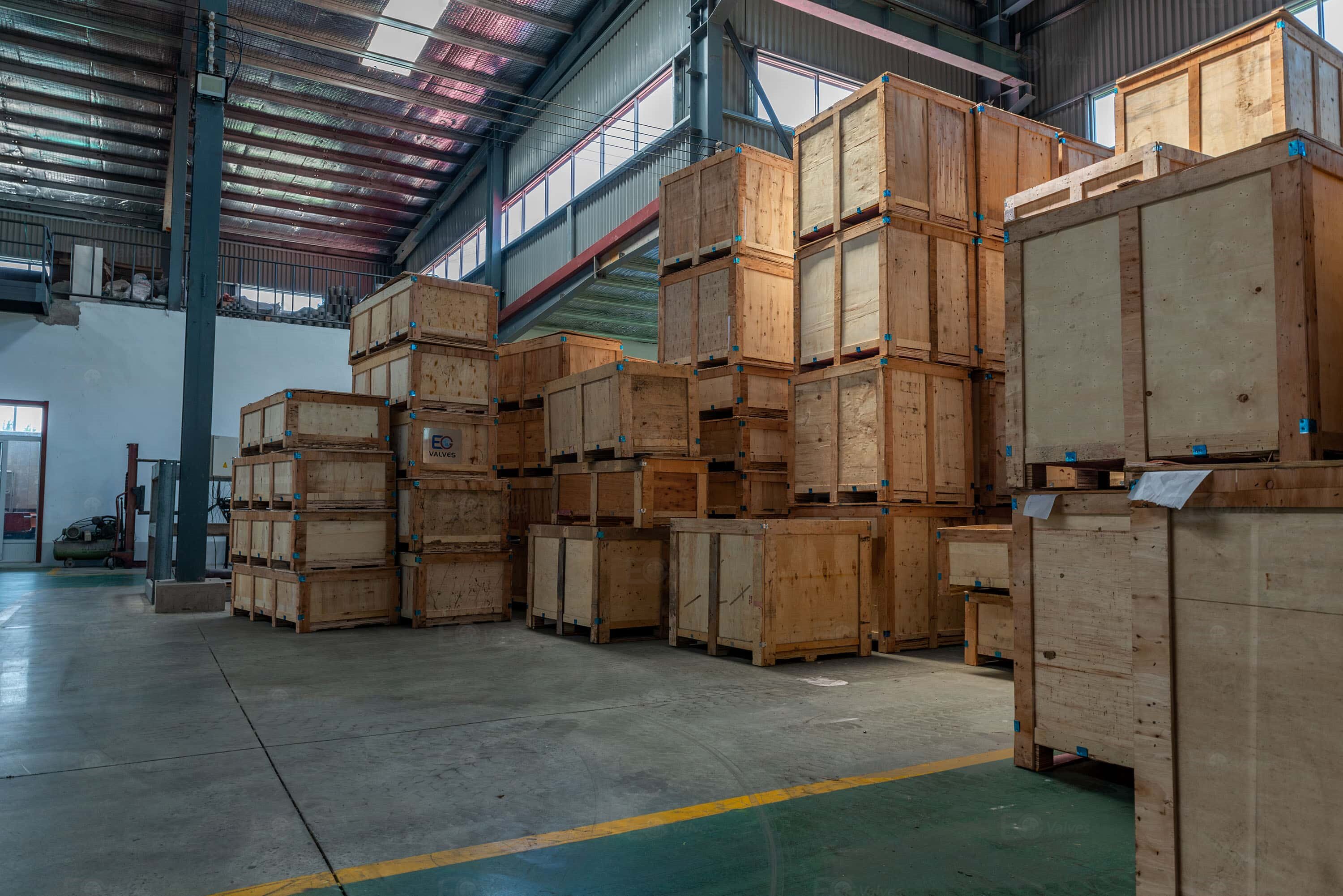
Every valve is inspected 100% before shipment and supplied with EN 10204 3.1 Material Test Certificates.
Next step: send the line conditions for the position that failed — medium, particle content, temperature, pressure class, size and connection type — and the EG Valves team will confirm whether a triple offset BOV303 with a Stellite seat and the appropriate body material is the correct replacement. Request a quotation or a single-unit validation sample, or download the product brochure. Email: sales@egvalves.com · Tel: +86 577 5799 2227 · WhatsApp: +86 132 0637 0946 · Sanqiao Industrial Zone, Wenzhou, Zhejiang Province, China 325100.
Have Questions or Need More Details?
Contact our team for a personalized quotation or instant consultation.
Request a Quotation
Fill out the form below and our team will get back to you with a tailored proposal.
WhatsApp Direct Chat
Prefer to chat in real-time? Message us on WhatsApp for instant assistance & quick answers.
- Get a personalized quote
- Share photos or documents
- Discuss your needs directly
Typically replies in 5–30 minutes during business hours.