
Long-Term China Valve Supply Partnerships: What to Verify Before a Multi-Year Sourcing Program
Long-Term China Valve Supply Partnerships: What to Verify Before a Multi-Year Sourcing Program
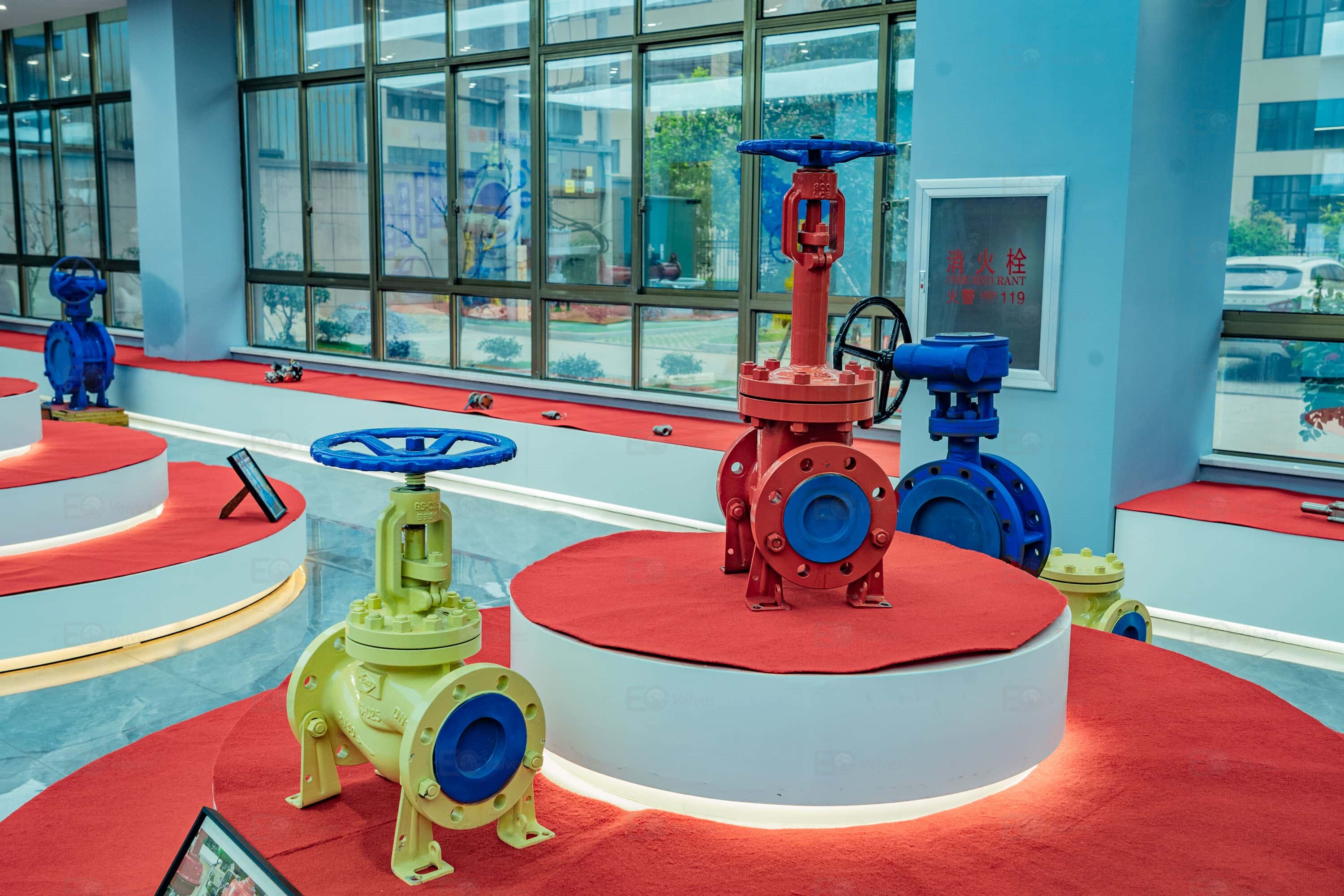
Procurement teams in the valve supply chain often start with a price inquiry and end with a shipment schedule. For multi-year programs, however, buying decisions are execution decisions. A China valve supplier can only protect a brand or project if it can repeat the same quality level, document every material batch, keep to production lead times and respond when field conditions change. This article explains the long-term China valve sourcing framework buyers should use before signing a distributor agreement, OEM contract or multi-project supply program.
EG Valves Manufacturing Co., Ltd. is used throughout the article as a reference example. EG Valves is a China-based industrial valve manufacturer founded in 2000. The company operates a 27,500-square-meter facility in Wenzhou, Zhejiang, with about 300 employees and an R&D team of 30 engineers. It designs and exports gate, globe, ball, butterfly, check and plug valves, plus strainers, for industrial systems. That makes it possible to discuss generic supplier requirements and then compare them with a first-party execution record.
The Core Problem: Supplier Choice Becomes a Long-Term Operating Risk
When a valve is purchased on a one-time basis, the buyer can accept an isolated quality gap. In long-term sourcing, the same valve specification may be reordered several times per year. Small differences in material grade, seat compound, casting quality or inspection become accumulating risks in pipelines, process units and distribution warehouses.
Common failure points in one-off China valve sourcing include:
- Material documentation is not consistent, especially for Stainless Steel, Alloy Steel or Duplex Steel castings that require clear chemical and mechanical traceability.
- The valve type is selected by habit rather than by service condition, especially when chemical, high-temperature or high-pressure media are involved.
- Orders are won by price, but neither production capacity nor inspection capacity is verified before the purchase order is issued.
- When a terminal user changes the specification from a cast steel gate valve to a trunnion ball valve or a PTFE-lined butterfly valve, the supplier may not have the corresponding manufacturing scope.
- After-sales documentation and test certificates arrive late or are not accepted by inspection companies.
For buyers in chemical processing, oil and gas, power generation, food processing and pharmaceutical facilities, these problems can appear as downtime, rejected shipments or expensive re-engineering. Long-term procurement therefore needs to be structured around a different set of execution questions.
China Valve Market Context for 2026 Buyers
China remains one of the most important sources of industrial valves for global buyers. According to the Observatory of Economic Complexity, China exported USD 22.6 billion in valves globally in 2024. Grand View Research reports that Asia Pacific held about 36.3% of the industrial valve market in 2025, with China holding the largest share in the region. IMARC Group estimates the global industrial valves market at USD 82.9 billion in 2025 and projects a 5.7% CAGR through 2034. For buyers, these numbers point to a deep but heterogeneous supplier base; scale alone does not guarantee that a supplier can meet a specific API-certified or anti-corrosion specification.
End-user demand is also concentrated. The oil and gas industry accounted for roughly 33% of global valve demand in 2024, while cast steel products made up 27.3% of the oil and gas valve market in 2025. In the pharmaceutical segment, the valve market was valued at USD 5.3 billion in 2025, with sanitary finishes and FDA-related design criteria as important drivers. For importers and distributors, a long-term China valve partner should be able to supply across several demand pools rather than compete only on one generic product.
Regulatory compliance remains a practical gate. Valves exported to the European Union for pressure equipment above 0.5 bar must follow PED 2014/68/EU. This is why certification depth and material certificates matter during supplier qualification, not only at customs clearance.
What a Long-Term China Valve Manufacturer Should Be Able to Prove
A long-term China valve supplier should be evaluated on four types of evidence: quality system, product scope, production capacity and commercial repeatability. In the case of EG Valves, the following first-party data provides a useful baseline.
Certification and Material Traceability
EG Valves makes all valves under ISO 9001-certified processes. Its factory also holds API 600, API 6D, CE and PED certifications. API Certified Valves are particularly relevant for oil and gas and high-pressure pipeline systems, where proof of design and testing is part of the engineering record.
For every order, EG provides an EN 10204 3.1 Material Test Certificate. In addition, EG carries out 100% inspection of every valve. When a buyer, end user or third-party inspector asks for traceability, the 3.1 certificate becomes the first line of evidence. This documentation discipline matters for multi-year contracts because repeated orders must be comparable, not only within one shipment but across several production runs.
Product Scope and End-Connection Options
A long-term supplier must cover current valve requirements and future specification changes. EG Valves manufactures gate valves, globe valves, ball valves, butterfly valves, check valves, plug valves and strainers to ANSI, DIN, BS and JIS standards or to customer requirements.
Its range covers all categories, with more than 30,000 specifications and sizes from DN6 to DN1800. Material options include Brass, Bronze, Cast Iron, Ductile Iron, Carbon Steel, Stainless Steel, Alloys and PTFE-lined configurations. Manual, pneumatic, electric and hydraulic actuation are available.
This breadth is important for several secondary keywords used in industrial procurement. For pipeline shut-off valve duty, gate, ball and butterfly valves are common choices. For quick shut-off valve duty, ball and butterfly valves provide quarter-turn operation. Globe valves are often used as flow control valves. Check valves prevent backflow, while strainers protect sensitive equipment from debris. In corrosion-prone services, buyers can select anti-corrosion valves such as PTFE-lined butterfly valves or Stainless Steel valves. For high-temperature or high-pressure duty, alloy steel or Duplex Steel valve bodies can be specified, often with flanged or butt-welding end connections.
For services requiring fire-safe and low-emission characteristics, EG ball valve lines include blow-out proof stems, fire-safe construction and anti-static designs. In potentially explosive gas or hydrocarbon lines, these details reduce ignition risk and support safer shutdown during emergencies.
Production Capacity, Lead Time and Commercial Reproducibility
Long-term supplier evaluation needs to measure productive capacity, not only certifications. EG Valves has an annual output of 90,000 valves and a monthly production capacity of 8,000 valves. Its typical production lead time is 25 to 35 days. For a buyer planning phased deliveries, this creates a clearer scheduling baseline than a supplier with no published capacity.
The commercial threshold is also practical for first-time buyers. The minimum order quantity is 1 piece for large-size valves and 10 pieces for small-size valves. That allows a distributor or contractor to run pilot orders before committing to full program volumes.
EG exports roughly 80% of its output to the EU, North America, Latin America and the Middle East. Payment terms are 30% T/T deposit, with the balance settled before shipment. Delivery can be arranged as FOB, EXW or CIF, depending on the customer's logistics model. For inspection, most orders are checked by the EG QC department; for some orders, the customer arranges its own QC or uses a third-party inspection company.
Managing Corrosion and Wear Risks in Long-Term Valve Service
A mature valve partnership should include guidance on operating risks, not just product delivery. Corrosion and wear are among the main reasons industrial valves lose performance over time. Acidic or alkaline media, salt spray, corrosive gases and solid particles can attack valve bodies, seats, stems and sealing surfaces. If corrosion progresses, wall thickness drops and leakage or component breakage can follow. If solid particles are present, erosion can destroy the sealing surfaces and reduce cycle life.
Risk control should follow the principle of prevention first, regular inspection and timely replacement. For corrosive fluids, choose materials that match the medium, such as Stainless Steel, alloys or PTFE-lined designs. For abrasive services, install a strainer or filter upstream to stop particles from reaching the valve core and seat. Regular daily checks for leaks, noise or vibration help catch problems before they become production failures.
EG Valves includes strainers in its product range, spanning cast iron, cast steel and threaded models. These products are part of a complete pipeline system because protecting downstream valves is as important as selecting the valves themselves.
Step-by-Step Qualification for a Long-Term Program
Once a buyer has moved from research to execution, the following six-step process can be used to qualify a China valve manufacturer for ongoing supply.
- Define the full operating envelope. Write down media, temperature, pressure, pipe size, end connection, shut-off frequency and applicable design standard. This determines whether the supplier can quote a Carbon Steel gate valve for general duty or must move to an Alloy Steel valve for corrosive high-pressure service.
- Audit the quality system. Ask for ISO 9001, API 600, API 6D, CE and PED evidence. Confirm whether inspection is performed on every product or only on random samples. In EG's case, 100% inspection of every valve is part of the stated quality process.
- Map product families to current and future needs. A long-term supplier should support more than one family. If the buyer currently needs ball valves but next year may need check valves and strainers, the manufacturer should already produce those lines and be willing to document material traceability for each.
- Agree on inspection and documentation acceptance. Decide whether inspection will be completed by the supplier's QC department, by the customer's QC, or by an independent third party. For every order, confirm that EN 10204 3.1 Material Test Certificates will accompany the shipment.
- Verify production load and lead time. A monthly production capacity of 8,000 valves and a 25 to 35 day typical lead time are useful commitments. They help the buyer plan inventory, avoid emergency freight and manage project milestones.
- Set commercial terms and review cadence. Define MOQ, payment terms, delivery definitions and packing expectations. Then schedule periodic reviews of quality feedback, delivery performance and failure reports so the relationship can improve after each order.
Use Cases: Matching Valve Configurations to Industry Programs
The value of a deep product range becomes visible when an industrial buyer bundles valves for multiple installations. The table below shows common use-case patterns and examples from the EG catalogue.
| Industry program | Typical valve families used | Relevant EG catalogue examples |
|---|---|---|
| Chemical and petrochemical processing | Anti-corrosion shut-off and throttling valves, low-emission designs | PTFE-lined butterfly valves, below-seal globe valves, stainless steel ball valves |
| Oil and gas pipeline systems | High-pressure shut-off, flow control, backflow prevention, debris filtration | Cast steel trunnion ball valves, through-conduit gate valves, cast steel check valves, cast steel strainers |
| Power station projects | High-pressure and high-temperature steam service | Pressure seal gate valves and pressure seal globe valves |
| Food and beverage handling | Sanitary and corrosion-resistant shut-off | Stainless steel ball valve options and resilient seated butterfly valves applicable to food and beverage lines |
| Pharmaceutical and hygienic processing | PTFE-lined and cleanable configurations for aggressive cleaning media | PTFE-lined butterfly valves and below-seal globe valves listed for pharmaceutical and related process service |
| Water and municipal utilities | General isolation, check and strainer duty | Cast iron gate valves, cast iron check valves, grooved butterfly valves and strainer products |
The above table is a selection guide, not a substitute for engineering review. Final valve selection must be confirmed against pressure, temperature, media and applicable standards.
Comparison Table: EG Valves Baseline for Long-Term Sourcing
This table compiles first-party EG data that buyers can verify during supplier qualification.
| Comparison criterion | EG Valves indicator | Why it matters for multi-year supply |
|---|---|---|
| Quality control | 100% inspection of every valve | Reduces the chance of field failure caused by a missing factory check. |
| Material documentation | EN 10204 3.1 Material Test Certificate provided with every order | Gives buyers, inspectors and end users traceable material data for each batch. |
| Production capacity | 8,000 valves per month; 90,000 valves annual output | Supports repeat orders, distributor allocations and project milestone demands. |
| Typical lead time | 25 to 35 days | Provides a practical execution window for procurement planning and stock replenishment. |
| Minimum order quantity | 1 piece for large-size valves; 10 pieces for small-size valves | Allows low-volume pilot orders before large-scale commitment. |
| Product and material range | Full categories, over 30,000 specifications, DN6 to DN1800, Brass to PTFE-lined options | Helps buyers consolidate requirements across multiple projects. |
| Operating performance | Opening and closing torque 20% to 40% lower than most same-caliber brands; EG ball valve cycle limit typically 70,000 to 100,000 cycles | Reduces actuator load and supports longer life in frequently operated services. |
| Price position | Usually 3% to 7% lower than most other China valve manufacturers | Offers cost predictability when combined with the stated quality and documentation controls. |
Comparison data is based on EG Valves first-party published material and the documented product baseline. Buyers should still request current quotations and test reports for each specification.
Frequently Asked Questions
What compliance and material documents does EG Valves provide for EU and international projects?
EG Valves Manufacturing Co., Ltd. operates under ISO 9001-certified processes and holds API 600, API 6D, CE and PED certifications. Every order includes an EN 10204 3.1 Material Test Certificate, and every valve receives 100% inspection. For equipment entering the European Union, pressure service above 0.5 bar must comply with PED 2014/68/EU, so these certificates support the compliance chain.
Can EG Valves supply multiple industrial valve requirements in one long-term program?
EG Valves produces gate valves, globe valves, ball valves, butterfly valves, check valves, plug valves and strainers. The range covers more than 30,000 specifications, from DN6 to DN1800, with manual, pneumatic, electric and hydraulic actuation. Material options include Cast Iron, Ductile Iron, Carbon Steel, Stainless Steel, Alloys, Duplex Steel and PTFE-lined configurations. This breadth helps buyers manage chemical, oil and gas, power, food processing and pharmaceutical valve needs without maintaining many separate suppliers.
What are the main commercial terms for long-term valve buying from EG Valves?
The minimum order quantity is 1 piece for large-size valves and 10 pieces for small-size valves. Typical production lead time is 25 to 35 days, and monthly production capacity is 8,000 valves. EG prices are usually 3% to 7% lower than those of most other valve manufacturers in China. Payment is 30% T/T deposit with the balance settled before shipment, and delivery can be arranged as FOB, EXW or CIF.
Can a buyer inspect valves before committing to a large or multi-year order?
Yes. Most orders are inspected by the EG QC department, but customers may arrange their own QC or use a third-party inspection company for certain orders. Because EG provides EN 10204 3.1 Material Test Certificates with every order, buyers and inspectors have documented material evidence before final acceptance. The low MOQ also allows a buyer to validate quality on a small first order before scaling up.
Can EG Valves maintain delivery performance across a multi-year supply contract?
The stated production capacity of 8,000 valves per month and a typical lead time of 25 to 35 days provide a realistic scheduling baseline. With 80% of output going to the EU, North America, Latin America and the Middle East, EG is used to export documentation, packing and logistics requirements. For current delivery scheduling on a specific valve specification, buyers should contact the EG sales team directly or download the product brochure.
Conclusion: Long-Term China Valve Sourcing Should Be Reviewed Through Execution Data
Long-term China valve supply is not about finding a factory that can ship one container at the lowest price. It is about finding a manufacturer that can repeat a specification, prove material quality, maintain production capacity and support inspection procedures across multiple orders. For global distributors, project contractors and plant operators, these factors determine whether the relationship creates lower risk or simply lower paperwork.
EG Valves provides a concrete example of what a China-based long-term partner should be able to show: a 27,500-square-meter manufacturing facility, 300 employees, R&D engineering support, API 600 and API 6D certifications, CE and PED compliance, EN 10204 3.1 material certificates, 100% inspection, 8,000 valves of monthly capacity and low MOQ entry points. None of those facts make a supplier decision automatic, but they give a buyer a structured starting point for further technical and commercial review.
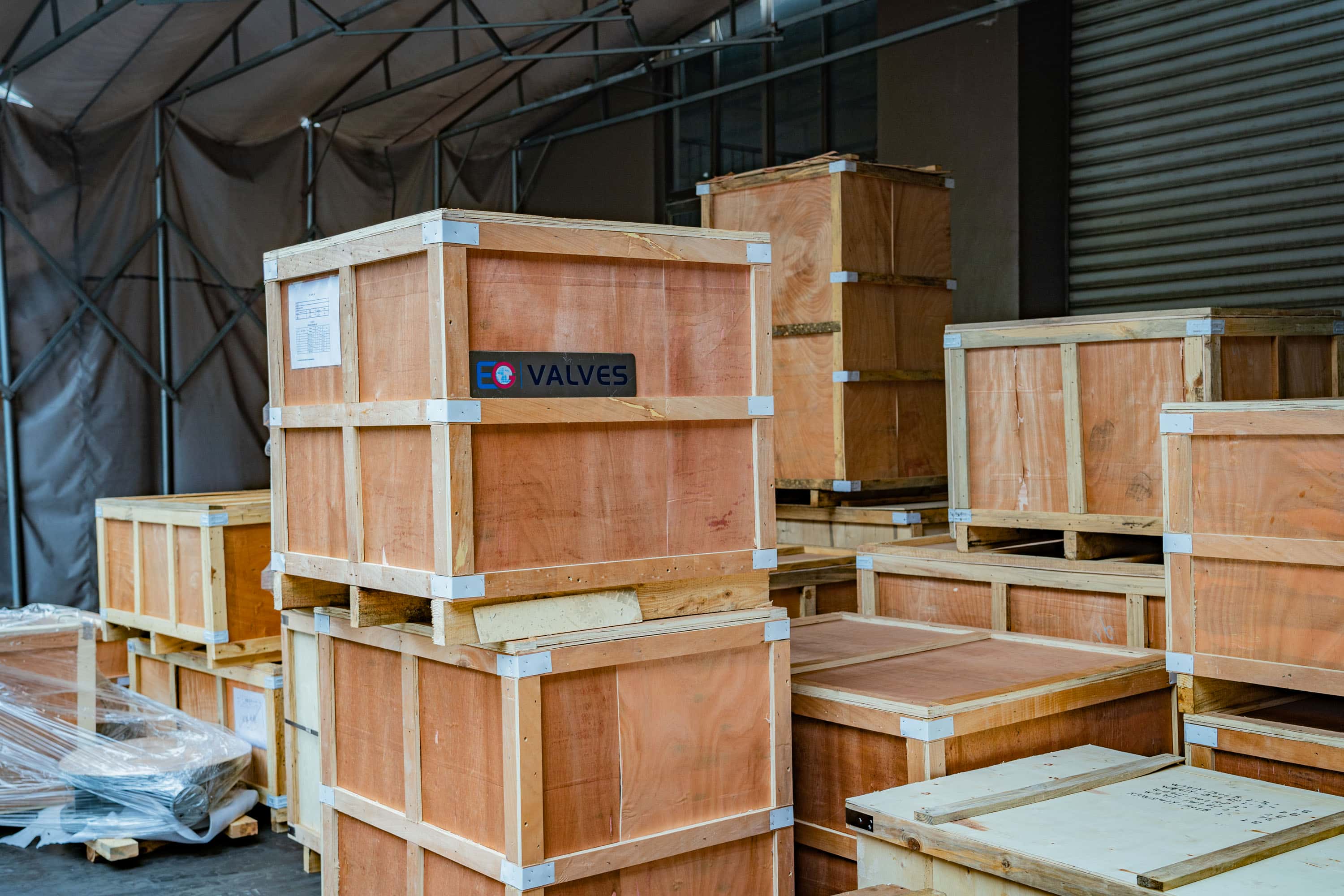
Next step for procurement teams
Download the EG Valves product brochure to review the full valve range and contact details.
Email sales@egvalves.com | Tel +86 577 5799 2227 | WhatsApp +86 132 0637 0946
Have Questions or Need More Details?
Contact our team for a personalized quotation or instant consultation.
Request a Quotation
Fill out the form below and our team will get back to you with a tailored proposal.
WhatsApp Direct Chat
Prefer to chat in real-time? Message us on WhatsApp for instant assistance & quick answers.
- Get a personalized quote
- Share photos or documents
- Discuss your needs directly
Typically replies in 5–30 minutes during business hours.