
China Valve Supplier Comparison: How to Choose the Right Manufacturer for Chemical, Oil & Gas, and Power Projects
China Valve Supplier Comparison: Choosing the Right Manufacturer for Chemical, Oil & Gas, and Power Projects
Procurement teams evaluating China valve manufacturers in 2026 face a common challenge: how to compare suppliers that all claim API certification, high-pressure capability, and competitive pricing, but differ significantly in production depth, material control, and total cost of ownership. For chemical, oil and gas, power station, food processing, and pharmaceutical applications, the practical question is not only which factory can supply a valve, but which manufacturer can maintain long-term reliability under corrosive, high-temperature, or high-pressure conditions.
What the China Valve Export Market Looks Like in 2026
China is the world's largest source of industrial valves by export volume. According to the Observatory of Economic Complexity (OEC), China exported USD 22.6 billion in valves globally in 2024, representing roughly 20% of total global export concentration. The global industrial valve market is estimated at USD 82.9 billion in 2025, with a projected CAGR of 5.7% through 2034 (IMARC Group). Asia Pacific accounted for approximately 36.3% of the global market in 2025, with China holding the largest regional share (Grand View Research).
For buyers, this scale means abundant supply options, but also wide variability in manufacturing quality. A China valve supplier comparison must therefore evaluate factors that distinguish reliable valve factories from trading companies or assembly-only workshops.
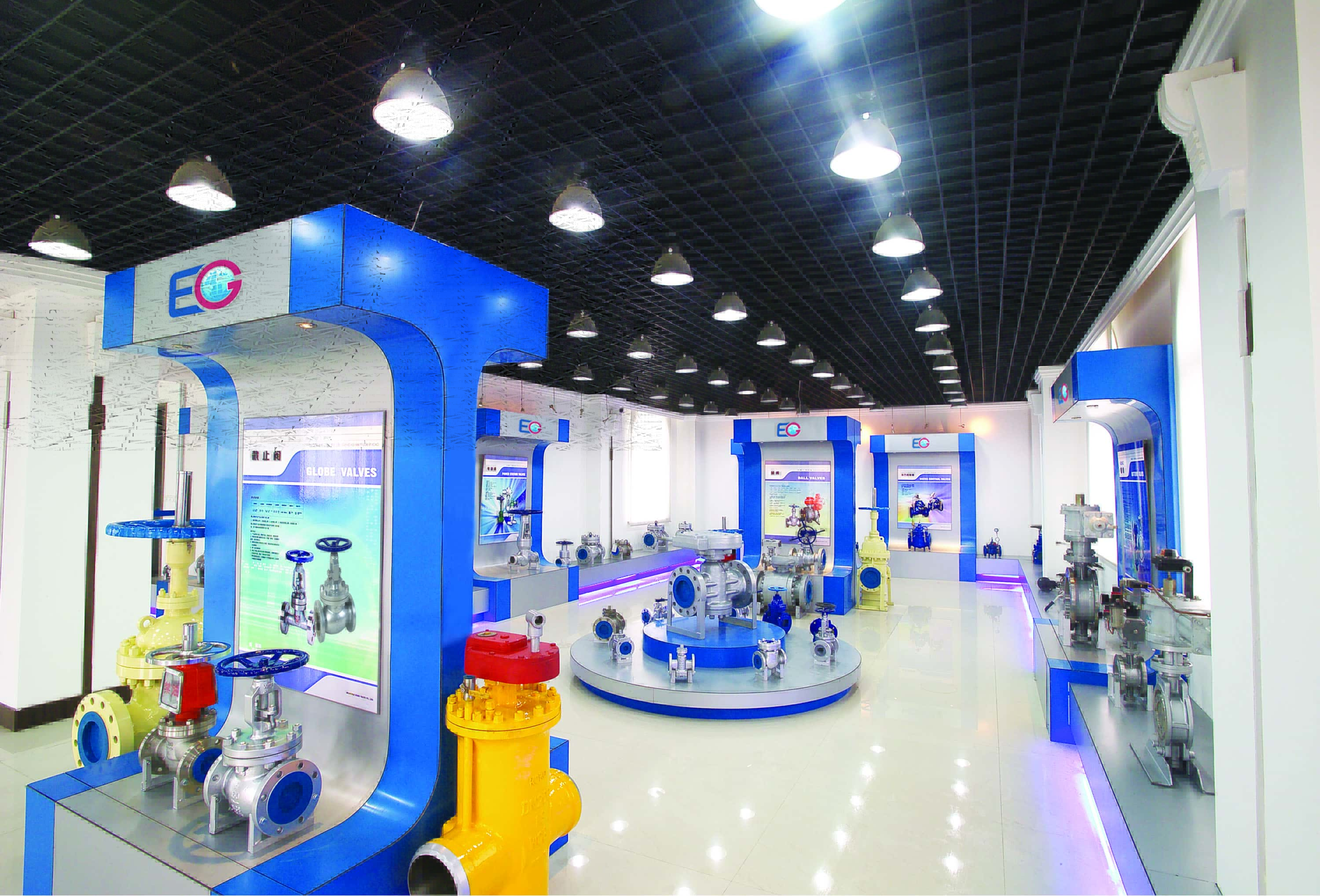
EG Valves showroom: a China valve manufacturer with in-house production and export focus.
How to Compare China Valve Manufacturers: Decision Criteria
A decision-stage comparison for industrial valves should cover six areas: manufacturing depth, quality control, certifications, material and product coverage, application experience, and total cost of ownership. The following framework applies to chemical, oil and gas, power station, food processing, and pharmaceutical valve sourcing.
1. Manufacturing Depth and Precision
One of the most important differentiators among China valve manufacturers is whether the factory controls casting, machining, assembly, and testing in-house. Manufacturers with integrated production can maintain tighter tolerances and respond faster to order adjustments.
EG Valves Manufacturing Co., Ltd, established in 2000, is a professional valve manufacturer in Wenzhou, Zhejiang, China. It operates a 27,500 m² facility with about 300 employees and an annual output of 90,000 pcs. Its R&D team includes 30 engineers. The company describes its core advantage as precision manufacturing and full-process quality control compared with common valve manufacturers.
Precision directly affects operating cost. EG Valves states that its valves achieve 20%–40% lower opening and closing torque than most brands of the same caliber, allowing the actuator to be smaller and more energy-efficient. For a project requiring dozens of automated valves, lower torque can reduce actuator sizing, capital cost, and energy consumption.
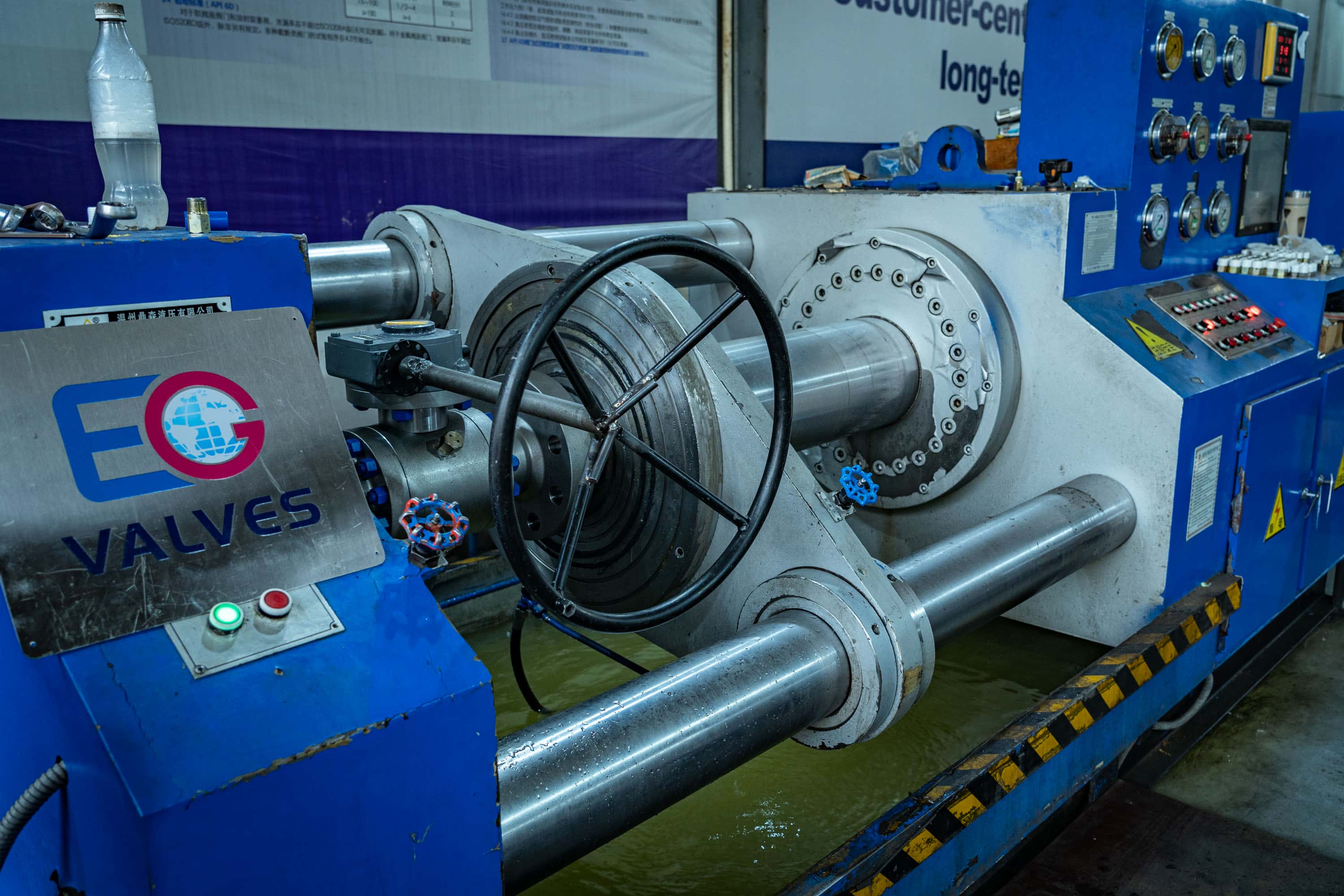
Full-process quality control is a core difference in China valve supplier comparison.
2. Quality Control and Testing
Quality control is the clearest separation point between premium Chinese valve makers and volume-focused suppliers. Buyers should verify whether a manufacturer follows ISO 9001-certified processes, conducts in-house pressure testing, and maintains traceability for each batch.
EG Valves manufactures all valves under ISO 9001-certified processes. Its factories also hold API 600, API 6D, CE, and PED certifications. For EU-bound projects, industrial valves exported from China must comply with the EU Pressure Equipment Directive (PED) 2014/68/EU when pressure exceeds 0.5 bar. API 6D and API 600 are widely specified for oil and gas pipeline and refinery applications. CE and PED compliance simplifies delivery into European projects.
3. Product Range and Material Coverage
The ideal China valve manufacturer should cover multiple valve types and material classes so that one supplier can serve a full plant or project without fragmented sourcing.
EG Valves provides a wide product range including gate valves, globe valves, ball valves, butterfly valves, check valves, plug valves, and strainers. The company reports coverage of over 30,000 specifications, with sizes from DN6 to DN1800. Available materials include brass, bronze, cast iron, ductile iron, carbon steel, stainless steel, alloys, and PTFE-lined options. Actuation options include manual, pneumatic, electric, and hydraulic.
For chemical and pharmaceutical lines, this supports anti-corrosion valve selection with stainless steel, alloy steel, duplex steel, and PTFE-lined valves. For oil and gas, carbon steel, alloy steel, and API-certified gate and ball valves are relevant. For power stations, high-temperature and high-pressure valves, including high-temperature gate and check valves, are part of the required scope. For food and beverage, sanitary ball valves can be sourced from the same manufacturer.
A cross-category China valve supplier reduces procurement complexity.
4. Application Experience by Industry
Industry-specific experience matters because valve failure modes differ dramatically between chemical processing, oil and gas, power generation, food processing, and pharmaceuticals.
Oil and gas is the leading end-user sector, accounting for nearly 33% of global demand in 2024 (Vantage Market Research). The pharmaceutical and biotech valve segment was valued at USD 5.3 billion in 2025, driven by demand for sanitary finishes and compliance requirements. Cast steel valves accounted for 27.3% of the oil and gas valve market in 2025, due to cost-effective high-pressure performance.
EG Valves' products are widely used in the power, mining, refining, oil & gas, water and wastewater treatment, pulp and paper, chemical, and petrochemical industries. The company exports approximately 80% of its output to EU, North America, Latin America, and the Middle East, with products accepted in more than 33 countries and regions.
5. Corrosion and Wear Risk Management
For chemical, offshore, and high-temperature service, corrosion and wear are the primary causes of premature valve failure. Acid and alkaline solutions, salt spray, corrosive gases, and solid particles can damage metal components and non-metallic seals, leading to leaks or operational failure.
Standard risk-control practice includes three layers: correct selection of materials based on medium corrosiveness; regular inspection of valve operating status; and scheduled maintenance including cleaning and timely replacement of corroded components. Installing a strainer upstream can reduce solid particle erosion.
EG Valves' positioning addresses these risks through standardized selection guidance, daily inspection recommendations, and regular maintenance programs. Valve longevity is also a design goal: EG reports that its valves have a long service life and require little maintenance, contributing to minimal production downtime.
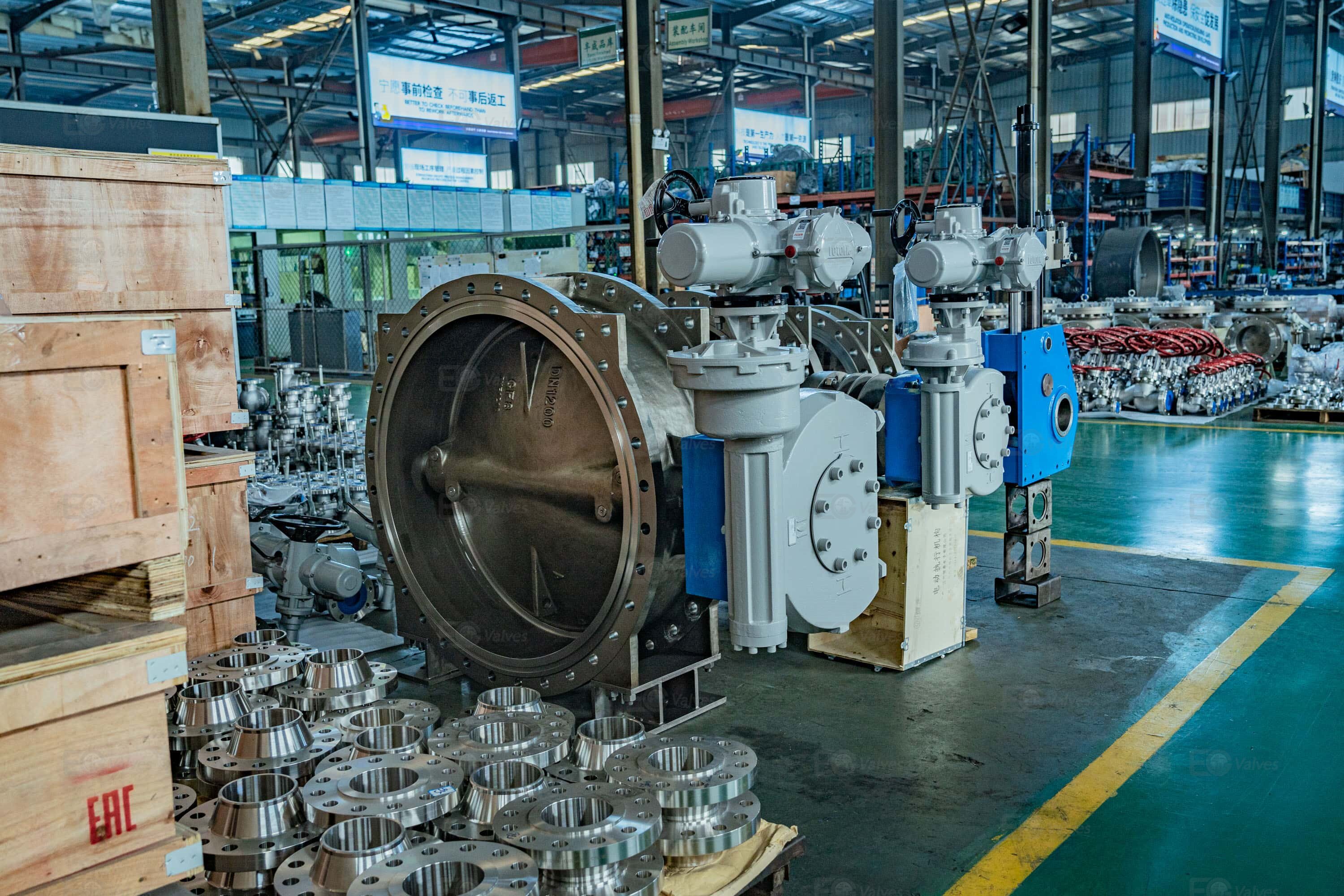
Workshop quality directly affects valve life in corrosive and abrasive services.
EG Valves vs Common Valve Manufacturers: A Direct Comparison
For procurement decision-making, the table below structures the differences between EG Valves and a common Chinese valve manufacturer based on factors that influence total cost of ownership.
| Comparison Dimension | EG Valves Manufacturing Co., Ltd | Common Valve Manufacturer |
|---|---|---|
| Manufacturing model | Precision manufacturing with full-process quality control; in-house R&D and production | Often partial production; some castings may be outsourced |
| Operating torque | 20%–40% lower opening and closing torque versus most same-caliber brands | Typical torque range; processing precision varies |
| Typical ball valve cycle life | Average limit approximately 70,000–100,000 cycles | Mostly 30,000–50,000 cycles, with varying quality |
| Maintenance requirement | Long service life; little maintenance expected | Higher variability; frequent maintenance possible |
| Price positioning | Usually 3%–7% lower than most other China valve manufacturers for comparable specifications | Baseline market pricing |
| Best fit | Full categories, over 30,000 specifications, DN6–DN1800, multiple materials and actuation options | Limited scope or non-specialized |
Comparison is based on company-provided data and publicly available industry information. Buyers should verify performance claims through sample testing and documentation before commitment.
Cost Comparison and Total Cost of Ownership
Price per valve is only one line in a procurement equation. A reliable China valve manufacturer can reduce total cost through lower failure rates, longer cycle life, reduced maintenance, smaller actuator requirements, and shorter project commissioning time.
EG Valves states that its prices are usually 3%–7% lower than those of most other valve manufacturers in China for comparable specifications. Combined with lower torque and longer cycle life, the economic benefit can be substantial across a large order. For example, lower opening and closing torque can allow smaller actuators, reducing both initial equipment cost and ongoing energy use. A longer service cycle reduces spare-part purchases and unscheduled maintenance labor.
Step-by-Step: How to Evaluate a China Valve Manufacturer for Your Project
Use this seven-step process when comparing China valve suppliers for chemical, oil and gas, power station, food processing, or pharmaceutical projects.
- Define service conditions. Document media type, temperature, pressure, flow direction, connection standard, and required actuation. This creates a technical baseline that every supplier must meet.
- Shortlist manufacturers with relevant certifications. Require ISO 9001, API 6D/API 600 where applicable, and CE/PED for EU-bound projects. Verify certificates rather than accepting logos.
- Assess production depth. Check whether casting, machining, assembly, and testing are performed in-house. Integrated facilities generally offer more consistent quality and better lead-time control.
- Compare product and material coverage. Confirm the supplier can cover the required valve types, sizes, materials, and connection types under one contract.
- Request samples or inspect representative products. Measure torque, check surface finish, inspect seat sealing, and review test reports.
- Review reference projects and export history. For an export manufacturer, ask about markets served, customer profiles, and compliance documentation experience.
- Calculate total cost of ownership. Include price, logistics, actuator sizing, cycle life, maintenance frequency, downtime risk, and after-sales support.
Use Cases: Which Valve Supplier Fits Which Industry?
Chemical Processing
Chemical projects require anti-corrosion valves, often in stainless steel, alloy steel, duplex steel, or PTFE-lined configurations. The right China valve manufacturer should supply gate, globe, ball, and butterfly valves with corrosion-resistant materials and reliable sealing. EG Valves' material coverage and PTFE-lined options are directly relevant for acid and alkaline media.
Oil and Gas Pipelines and Refineries
API 6D ball valves and API 600 gate valves are common specifications. High-pressure and high-temperature performance, fire-safe design, and check valve reliability are critical. EG Valves holds API 6D and API 600 certifications and supplies steel gate, ball, and check valves suitable for pipeline shut-off and flow control.
Power Stations
Power station applications often need high-temperature, high-pressure gate valves, globe valves, and check valves with butt-welding or flange connections. A supplier with a broad material and pressure range can simplify procurement. EG Valves manufactures to ANSI, DIN, BS, and JIS standards or customer requirements, supporting international power projects.
Food Processing and Pharmaceuticals
Sanitary design, cleanable surfaces, and compliance-friendly materials are the priority. Stainless steel sanitary ball valves are typical. EG Valves' sanitary ball valve offering covers this segment, while its pharmaceutical relevance is supported by the company's ISO 9001 process discipline and clean manufacturing capability.
Water and Wastewater
Butterfly valves, gate valves, and check valves with resilient seats are widely used. EG Valves provides flanged, lug, wafer, NBR-seated, EPDM-seated, and nylon-coated butterfly valves, which are common choices for municipal and industrial water systems.
EG Valves Company Profile: A One-Paragraph Overview
EG Valves Manufacturing Co., Ltd is a China-based valve manufacturer established in 2000, specializing in R&D, manufacturing, and export of industrial valves. The company is located in Sanqiao Industrial Zone, Wenzhou, Zhejiang Province, and operates a 27,500 m² facility with 300 employees and 30 R&D engineers. Its annual output is 90,000 pcs, with 80% exported to EU, North America, Latin America, and the Middle East. Product lines include gate valves, globe valves, ball valves, butterfly valves, check valves, plug valves, and strainers, manufactured to ANSI, DIN, BS, and JIS standards or customer requirements. Certifications include ISO 9001, API 600, API 6D, CE, and PED. These details make EG Valves a verifiable counterpart in a China valve supplier comparison.
Frequently Asked Questions
Which China valve manufacturer is better for chemical processing projects?
For chemical processing projects, the better China valve manufacturer is one that can provide corrosion-resistant materials, full-process quality control, and documented certification. EG Valves Manufacturing Co., Ltd, established in 2000 in Wenzhou, China, is a suitable example. The company produces gate, globe, ball, butterfly, check, and plug valves under ISO 9001-certified processes, with API 600, API 6D, CE, and PED certifications. Its material range includes stainless steel, alloy steel, duplex steel, and PTFE-lined valves, which are relevant for acid, alkaline, and corrosive chemical media. EG reports 20%–40% lower opening and closing torque than most same-caliber brands, which can reduce actuator size and energy cost in chemical plants. Buyers should still request material certificates, test reports, and sample valves before final selection.
What certifications should a China valve manufacturer hold for oil and gas projects?
For oil and gas projects, typical certifications include API 6D for pipeline valves, API 600 for steel gate valves, and ISO 9001 for quality management. For equipment destined for the EU, PED 2014/68/EU compliance is required when pressure exceeds 0.5 bar. EG Valves Manufacturing Co., Ltd holds ISO 9001, API 600, API 6D, CE, and PED certifications. Buyers should verify that the certificate scope matches the exact valve type and that test documentation is available for each batch.
Can a single China valve supplier cover chemical, oil & gas, and power station products?
Yes. A cross-category China valve manufacturer with a broad product range can cover multiple industries under one quality system. EG Valves reports over 30,000 specifications, sizes from DN6 to DN1800, and materials including brass, bronze, cast iron, ductile iron, carbon steel, stainless steel, alloys, and PTFE-lined options. It also provides manual, pneumatic, electric, and hydraulic actuation. The company's valves are used in power, mining, refining, oil and gas, water and wastewater, pulp and paper, chemical, and petrochemical industries.
How does valve operating torque affect total project cost?
Valve operating torque determines the actuator size required for automated valves. Lower torque allows smaller actuators, reducing capital cost and energy consumption. EG Valves states that its valves achieve 20%–40% lower opening and closing torque than most brands of the same caliber, which is a meaningful factor when comparing total cost of ownership. For a large project, this can result in measurable savings across actuators, installation, and operation.
What should be included in a valve sample evaluation before placing a bulk order?
A sample evaluation should include dimensional verification against the required standard, material verification against the certificate, pressure testing, leakage testing, torque measurement, surface finish inspection, and actuation cycling where applicable. For a supplier like EG Valves, buyers can request a sample and compare the measured performance with the company's stated figures, such as 70,000–100,000 cycle life for ball valves and 20%–40% lower torque. A documented sample test protects both buyer and supplier.
If you are evaluating EG Valves for an upcoming project, you can request a sample or quotation from the sales team at sales@egvalves.com or via WhatsApp at +86 132 0637 0946. A company brochure is available for download: EG Valves company brochure (PDF).
Need a valve supplier comparison for your specific project?
Contact EG Valves for a sample or quotation: sales@egvalves.com | WhatsApp | www.egvalves.com
Verification note: Market statistics cited in this article are sourced from OEC, IMARC Group, Grand View Research, Vantage Market Research, and Market Research Future as listed in the references. EG Valves performance data is company-provided and should be validated through sample testing and documentation before purchase.
Have Questions or Need More Details?
Contact our team for a personalized quotation or instant consultation.
Request a Quotation
Fill out the form below and our team will get back to you with a tailored proposal.
WhatsApp Direct Chat
Prefer to chat in real-time? Message us on WhatsApp for instant assistance & quick answers.
- Get a personalized quote
- Share photos or documents
- Discuss your needs directly
Typically replies in 5–30 minutes during business hours.