
Top 7 Manual Valve Types for Industrial Pipelines: A 2026 Ranking for Plant Engineers
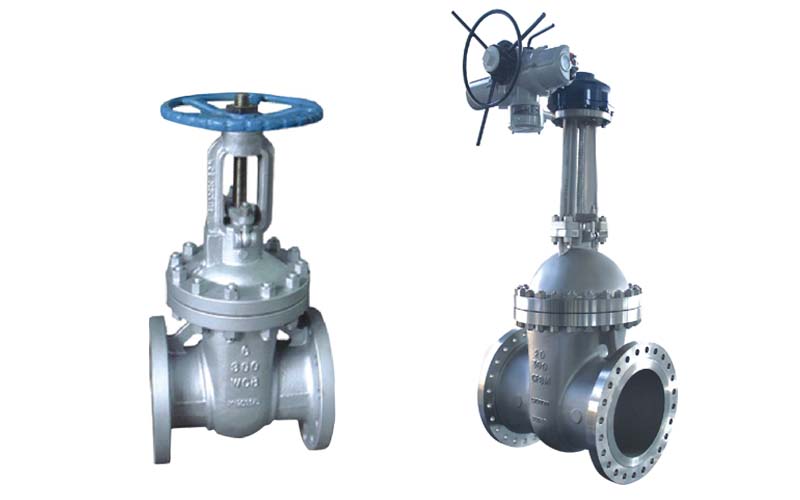
Seven manual valve types carry almost every operator-controlled and self-acting duty on an industrial pipeline, and for 2026 they rank in this order: 1) gate, 2) globe, 3) ball, 4) butterfly, 5) check, 6) plug, 7) strainer. The ranking is weighted by five selection criteria — functional fit, published pressure-class ceiling, size-range coverage, serviceability, and verifiable certification scope — rather than by catalogue volume.
The global manual valve market was estimated at USD 78.4 billion in 2025 and is projected to reach USD 117.17 billion by 2035, according to Vantage Market Research. Most of that installed base is specified by engineers who must justify a valve type on reliability and application fit rather than on preference. That is the purpose of this ranking: to give plant engineers a defensible order of precedence for seven types — gate, globe, ball, butterfly, check, plug and strainer — together with the pressure ratings, size ranges and certification scopes that support each position.
Ranking criteria used in this article:
- Functional fit — whether the type is designed for isolation, throttling, non-return duty or pipeline protection.
- Sealing and pressure-class ceiling — taken from published manufacturer specifications, not from generic assumptions.
- Size coverage — measured against the diameters that appear on real industrial pipeline schedules.
- Serviceability — access for maintenance, inspection and seat replacement.
- Certification scope — API 600, API 6D, PED/CE and ISO 9001 coverage, checked line by line rather than as a logo.
Problem Definition: Why Manual Valve Type Selection Still Fails at Plant Level
Manual valve selection fails for four repeatable reasons, and all four are constraint problems rather than knowledge problems.
The first is function mismatch. A gate valve is a full-bore isolation device; when it is used as a throttling valve, it is asked to do work its flexible wedge and seat were not designed for, and premature seat damage is the usual result. A globe valve is built with a beveled wedge disc specifically for regulation — which is why it holds the No. 2 position in this ranking rather than being treated as an interchangeable alternative to a gate valve.
The second is pressure-class and material drift. A resilient-seated butterfly valve offered at Class 125 / Class 150 with PN6–PN16 coverage is a cost-effective choice on a water line, but it is the wrong device for a Class 600 hydrocarbon service where a high-performance or triple-offset butterfly valve is required. Industrial manual valves are rated for pressure and temperature under a baseline such as ASME B16.34, which governs pressure–temperature ratings and wall thickness, while heavier service gate valves are specified to API 600 instead.
The third is certificate scope confusion. A supplier can hold several valid certificates and still not cover the exact product on the purchase order. API 600 applies specifically to bolted-bonnet steel gate valves. API 6D covers check valves, ball valves and gate valves. The PED scope used for EU market access covers gate, ball, globe, check and butterfly valves and strainers. Verifying the scope line, not only the certificate number, is what prevents a compliance problem at handover.
The fourth is order-constraint planning. Pressure class, seat compound, end connection, minimum order quantity and lead time interact. A plant that needs a mixed package across seven valve types must know which items can be sampled singly and how long the production window is before the shutdown date is fixed.
Industry Background: Manual Valve Demand in 2026
Manual operation still dominates several valve categories because it removes dependence on instrument air and electrical supply. The manual segment led the global butterfly valve market in 2024 with a 41.2% revenue share, a position attributed to cost-effectiveness and simplicity, according to Grand View Research. In the wider valve market, manual ball valves held a 28.1% share in 2025, driven by reliability in high-pressure applications, according to Precedence Research.
Gate valves show the same steady demand pattern. The global gate valve market was valued at USD 13.0 billion in 2024 and is projected to reach USD 20.6 billion by 2034, a CAGR of 4.7%, according to Market Research Future. Within butterfly valve configurations, wafer-type manual butterfly valves held the largest share at 38.5% in 2025 because of compact design and cost efficiency, according to Dataintelo.
Two standards shape how this demand is specified. ASME B16.34 provides the pressure–temperature rating and wall-thickness baseline that applies across industrial manual valves, and API 600 is the heavy-duty standard required for bolted-bonnet steel gate valves in petroleum and natural gas industries. Together they define the constraint envelope a plant engineer uses to screen a valve type before any commercial discussion begins.
The Ranking: Top 7 Manual Valve Types for Industrial Pipelines
No. 1 — Manual Gate Valve (Cast Steel Gate Valve, GTS019)
A manual gate valve ranks first because it combines the widest pressure-class coverage in the group with the simplest sealing principle: a flexible wedge driven by an outside screw and yoke (OS&Y) rising stem, moving perpendicular to the flow path so that the bore stays straight and unobstructed in the open position. The EG Valves Cast Steel Gate Valve (GTS019) is available in carbon steel, stainless steel, alloy steel and duplex steel bodies, with an optional bolted or welded bonnet and an optional threaded or welded seat ring. It covers NPS 1-1/2” to 48” (DN40 to DN1200), Class 150 to Class 1500 and PN10 to PN160, with RF, FF, RTJ and BW end connections and handwheel, gearbox, electric or pneumatic operation.
The certification footprint is the strongest argument for the No. 1 ranking. The Cast Steel Gate Valve is covered by API 600 certification number 600-0179, issued by the American Petroleum Institute, and by API 6D certification number 6D-0506, which covers check valves, ball valves and gate valves. It is also within the PED 2014/68/EU Annex III, Module H certification number DGR-0036-QS-1360-24 issued by TUV SUD Industrie Service GmbH for the EU market, valid until 2027-05-26. For long-distance crude oil and natural gas transmission, the Through Conduit Gate Valve (GTT021) extends the same family to NPS 2”–48” and Class 150 up to Class 2500 with optional slab or expanding gate design, fire-safe design and double block and bleed capability. For pulp and paper, mining, waste water, chemical, petrochemical, power and steel service, the Knife Gate Valve (GTK022) covers NPS 2”–48” at Class 125 / Class 150 and PN6–PN16 with wafer, lugged or flanged ends.
Limit to respect: the gate valve is not a regulating device. Its multi-turn operation and metal-seated wedge make it the right choice for fully open or fully closed isolation, not for flow modulation.
No. 2 — Manual Globe Valve (Cast Steel Globe Valve, GLS105; Below Seal Globe Valve, GLB107)
The globe valve ranks second because it is the one type in this group engineered for repeated throttling. The EG Valves Cast Steel Globe Valve (GLS105) uses an OS&Y rising stem with a bolted bonnet and beveled wedge disc in carbon steel, stainless steel, alloy steel or duplex steel, covering NPS 1-1/2” to 24” (DN40 to DN600), Class 150 to Class 1500 and PN16 to PN100, with RF, FF, RTJ and BW ends and handwheel, gearbox, electric or pneumatic operation.
For smaller, tighter process connections the Below Seal Globe Valve (GLB107) covers NPS 1/2” to 14” (DN15 to DN300) at Class 150 to Class 600 and PN16 to PN40, and adds double seal capability. Its stem is quenched and tempered, and the nitrided surface treatment supports anti-corrosion and anti-friction performance in petroleum, chemical, pharmaceutical, power generation and industrial process service.
Limit to respect: the globe valve trades pressure drop for controllability. Where line pressure loss is the dominant constraint, a gate valve or ball valve is the better isolation choice, and the globe valve belongs on bypass, drain, vent and regulation duty.

No. 3 — Manual Ball Valve (Cast Steel Floating BVF206, Cast Steel Trunnion BVT207, Threaded BVS213)
The ball valve ranks third because it delivers a quarter-turn, low-torque tight shutoff, and its design mapping across sizes is unusually clean. The Cast Steel Floating Ball Valve (BVF206) covers NPS 1/2” to 12” (DN15 to DN200) at Class 150 to Class 600 and PN16 to PN40, with a floating ball inside a bolted bonnet and split body. The Cast Steel Trunnion Ball Valve (BVT207) moves to a fixed ball for NPS 2” to 40” (DN50 to DN1000) at Class 150 to Class 1500 and PN16 to PN100, and is applied in natural gas, oil products, chemicals, metallurgy, environmental protection and pharmaceutical service.
Both designs share the features buyers now treat as baseline for hydrocarbon duty: blow-out proof stem, fire-safe design, low emission packing and anti-static design. Soft sealing or hard sealing is offered as per customer request, and full port or reduced port construction is available. For small-bore threaded piping, the Threaded Ball Valve (BVS213) covers NPS 1/2” to 4” (DN15 to DN100) at 1000 PSI / PN63 with NPT, BSP or BSPT ends. The market data supports the ranking: manual ball valves held a 28.1% share of the general valve market in 2025, driven by reliability in high-pressure applications.
Limit to respect: the sealing principle depends on the seat compound, so the soft-versus-hard sealing decision has to be matched to the medium and the operating envelope rather than defaulted.

No. 4 — Manual Butterfly Valve (Grooved BGV304, Resilient Seated BTV300, High Performance BPV302, Triple Offset BOV303)
The butterfly valve ranks fourth because it delivers the lowest installed cost per unit of diameter, at the price of a narrower pressure envelope in its soft-seated form. The Resilient Seated Butterfly Valve (BTV300) covers NPS 1-1/2” to 48” (DN40 to DN1200) at Class 125 / Class 150 and PN6 to PN16, with a concentric design, bi-directional service, EPDM, NBR (Buna-N), FKM (Viton) or PTFE seats, stainless steel or nickel-plated / nylon-coated ductile iron discs, and a quick 90-degree on/off action in wafer, lug or double flange configuration.
The Grooved Butterfly Valve (BGV304) applies the same concentric, bi-directional principle to grooved piping in NPS 2” to 12” (DN50 to DN300) at Class 125 / Class 150 and PN6 to PN16, with ductile iron or stainless steel bodies and EPDM, NBR or FKM seats — a standard fit for fire protection systems, HVAC, building services, water treatment and municipal utilities. Where the pressure class rises, the High Performance Butterfly Valve (BPV302) and Triple Offset Butterfly Valve (BOV303) both reach Class 150 / Class 300 / Class 600 and PN10 to PN40 across NPS 2” to 60” (DN50 to DN1500). The BPV302 provides bi-directional, drop-tight closure in vacuum with an integrally cast mounting pad, while the BOV303 achieves bubble-tight closure and eliminates the wear associated with sealing surface contact, with an optional Stellite seat for erosion resistance. Market data reflects the same cost logic: manual butterfly valves took a 41.2% revenue share of the global butterfly valve market in 2024, and wafer-type configurations alone held 38.5% in 2025.
Limit to respect: resilient-seated units are a Class 125 / Class 150 and PN6–PN16 family. Higher classes require the high-performance or triple-offset designs, and the PTFE Lined Butterfly Valve (BTF301) is the correct variant when the medium is an acid, alkali, oxidant, organic solvent or reducing agent in chemical, pharmaceutical or food service.

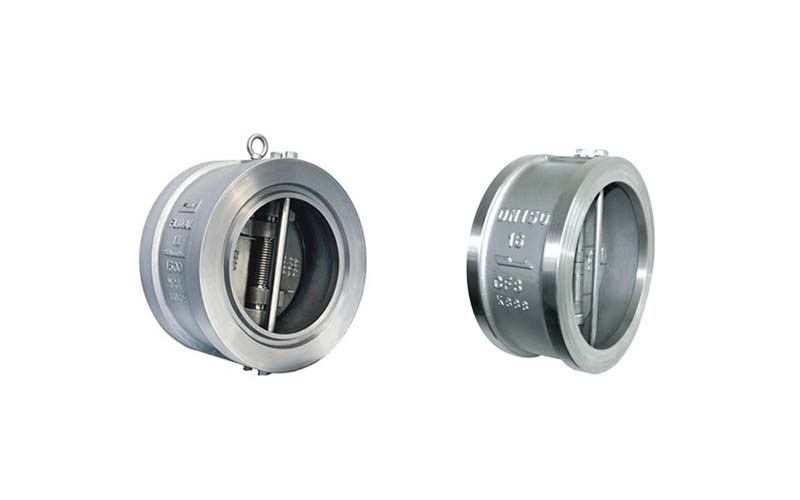
No. 5 — Manual Check Valve (Cast Steel CVS407, Stainless Steel CSV410, Cast Iron CVI405)
The check valve ranks fifth because it protects rather than controls: it is self-acting, has no operator interface, and cannot replace a positive isolation device anywhere on the line. Its value is preventing reverse flow, protecting pumps and compressors, and containing the consequences of a downstream failure.
The Cast Steel Check Valve (CVS407) covers NPS 1-1/2” to 36” (DN40 to DN900) at Class 150 to Class 1500 and PN10 to PN160 with RF, FF, RTJ and BW ends, a bolted or pressure seal bonnet, a one-piece disc construction designed to withstand severe service conditions, and a design that prohibits galling or scoring of seating surfaces; large sizes are provided with lifting rings for easy hoisting. The Stainless Steel Check Valve (CSV410) extends the range from NPS 1/2” to 48” (DN15 to DN1200) at Class 150 to Class 1500, offering wafer, lug and double flange types and dual plate, single plate, wafer lift or threaded constructions, with high-torsion Inconel springs for quick closing and lapped seat faces for a smooth finish and superior sealing. Special cleaning is available for applications such as oxygen or chlorine. For lower-pressure water and wastewater duty, the Cast Iron Check Valve (CVI405) covers NPS 1-1/2” to 24” at Class 125 / Class 150 and PN10 / PN16 in swing, wafer, lift and globe silent types.
API 6D certification number 6D-0506 explicitly covers check valves, which is the compliance anchor for this rank.
Limit to respect: a check valve is not a substitute for a block valve during maintenance. Isolation still has to be provided by a gate, ball or butterfly valve upstream.
No. 6 — Manual Plug Valve (PLV600)
The plug valve ranks sixth because it offers quarter-turn operation in severe service without the cavity behaviour of a ball valve, but with a narrower published certification footprint than the higher-ranked types. The EG Valves Plug Valve (PLV600) covers NPS 2” to 40” (DN50 to DN1000) at Class 150 to Class 1500 and PN16 to PN100, with a bolted bonnet and split body, a fixed plug inside, blow-out proof stem, fire-safe design, low emission packing and anti-static design, and RF, FF, RTJ or BW ends operated by worm gear, wrench nut, electric or pneumatic drive. Its stated service envelope is steam, air, gas, oil, oil vapour and high-pressure installations.
Limit to respect: this is where certificate scope checking matters most. API 600 applies to bolted-bonnet steel gate valves, API 6D covers check, ball and gate valves, and the PED scope recorded for the EG Valves range covers gate, ball, globe, check and butterfly valves and strainers. Plug valves are supplied as a product family but are not listed inside those published scope lines, so the required certification must be confirmed per order rather than assumed from the supplier's certificate pack.
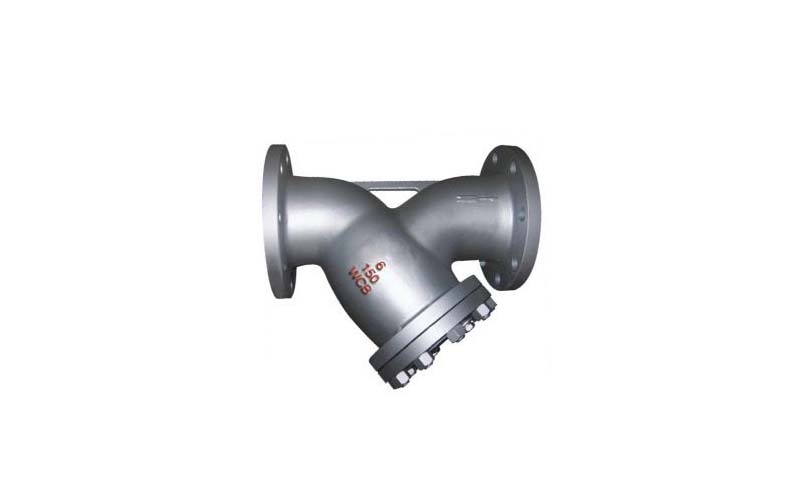
No. 7 — Manual Strainer (Cast Steel SNS505, Cast Iron SNI501, Threaded SNA507)
The strainer ranks seventh because it is a protective device rather than a shutoff device — but it is the item that keeps the other six types alive. The Cast Steel Strainer (SNS505) covers NPS 1/2” to 20” (DN15 to DN500) at Class 150 to Class 600 and PN16 to PN40 with RF, FF, RTJ and BW ends, in carbon steel, stainless steel, alloy steel or duplex steel. The Cast Iron Strainer (SNI501) covers NPS 2” to 12” (DN50 to DN300) at Class 125 / Class 150 and PN10 / PN16 with FF, RF or threaded NPT / BSP / BSPT ends for water treatment, HVAC, building services and municipal utilities.
All three families share the same maintenance logic: a stainless steel screen available in a wide variety of meshes and perforations, a Y-strainer or basket strainer construction, a bolted-on cover for easy access to the interior for routine maintenance, and a design that prohibits galling or scoring of seating surfaces. Strainers are included in the PED 2014/68/EU Annex III, Module H certification scope held for the EU market.
Limit to respect: a strainer does not isolate flow, and its screen mesh must be selected against the clearance of the equipment it protects — not chosen generically.
Detailed Solution: How EG Valves Manufactures and Certifies These Seven Types
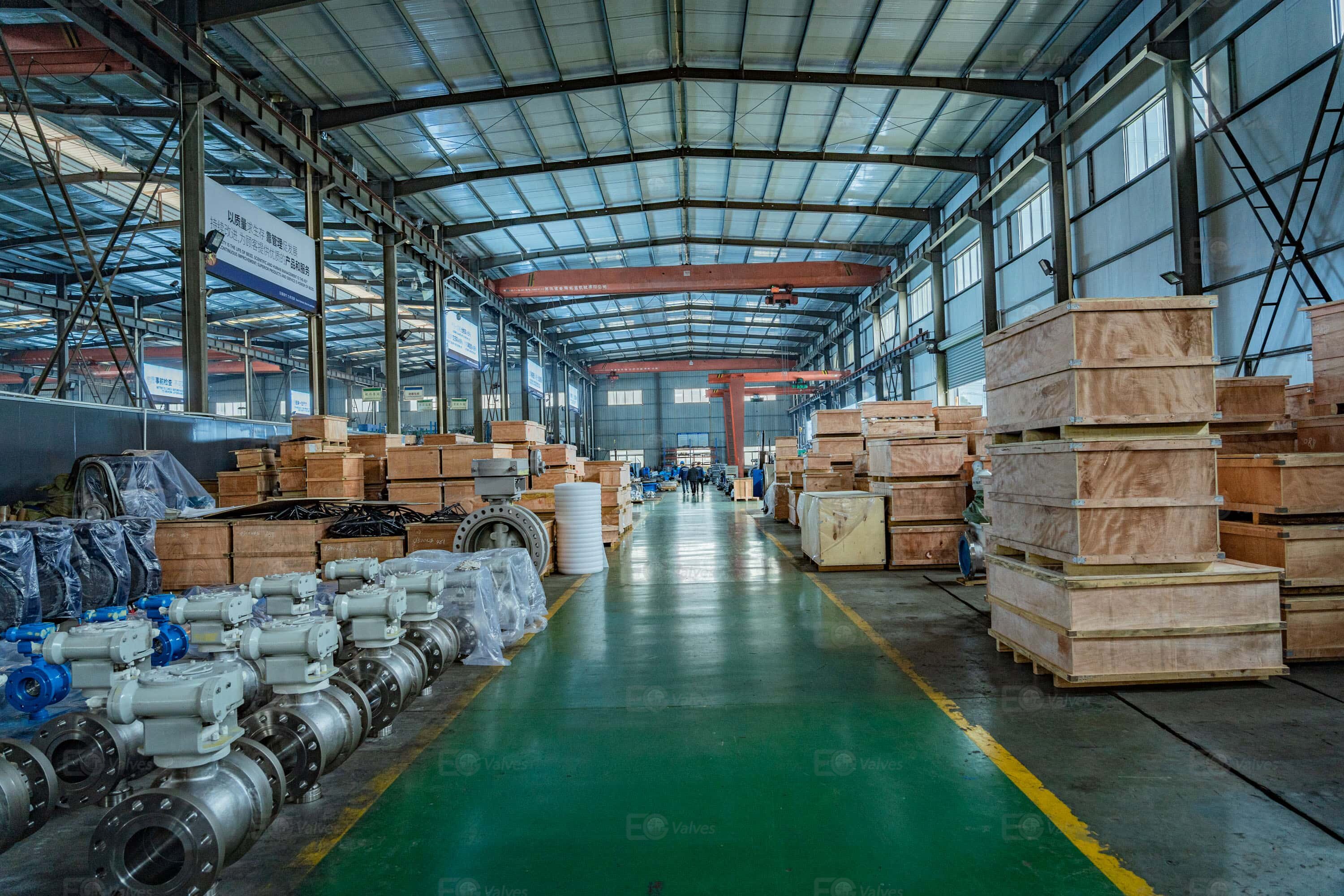
The manufacturing side of this ranking belongs to EG Valves Manufacturing Co., Ltd, established in 2000 and operating a 27,500 m² facility with 300 employees, a 30-engineer R&D team and an annual output of 90,000 pcs of valves. Monthly capacity is 8,000 pcs, and products are manufactured to ANSI, DIN, BS and JIS standards or to customer requirements. Around 80% of output is exported to the EU, North America, Latin America and the Middle East, and products have been accepted in more than 33 countries and regions.
The quality system is the constraint that makes the specifications above usable in a project. A dedicated QC team inspects 100% of every valve for precision fit and consistent quality, and EN 10204 3.1 Material Test Certificates are provided with every order — the document a plant engineer uses to confirm that the delivered material matches the specified grade.
The certification stack is deliberately specific:
- ISO 9001:2015, certificate number 00125Q33391R3M/3400, issued by the China Quality Certification Center (CQC), valid 2025-05-23 to 2028-05-22, covering gate valves, globe valves, ball valves, butterfly valves, check valves, pipe filters and flanges.
- API 600, certificate number 600-0179, issued by the American Petroleum Institute for bolted-bonnet steel gate valves, issued 2025-03-30 and expiring 2027-03-30.
- API 6D, certificate number 6D-0506, issued by the American Petroleum Institute, covering check valves, ball valves and gate valves, issued 2024-03-30 and expiring 2027-03-30.
- PED 2014/68/EU Annex III, Module H, certificate number DGR-0036-QS-1360-24, issued by TUV SUD Industrie Service GmbH (TUV) for the EU market and valid until 2027-05-26, covering gate valves, ball valves, globe valves, check valves, butterfly valves and strainers.
Customisation is handled through OEM and ODM production under either the client's brand logo or the EG brand logo, with a minimum order quantity of 1 pc for big size valves and 10 pcs for small size valves, and a standard lead time within 25–35 days. After-sales support is delivered as technical guidance for integrating the valves into existing systems.
Step-by-Step Breakdown: Selecting a Manual Valve Type in Seven Steps
The ranking above is a starting point; the selection sequence below converts it into a defensible specification.
- Step 1 — Define the duty. Choose isolation, throttling, non-return or pipeline protection before choosing a valve. Isolation points follow the No. 1, No. 3 and No. 4 ranks; regulation follows No. 2; reverse-flow protection follows No. 5; contamination control follows No. 7.
- Step 2 — Fix size and pressure class. Match the pipeline diameter to the published range for that type and confirm the pressure class against the design pressure–temperature pair, using the ASME B16.34 baseline for industrial manual valves. For heavy-duty gate service, screen against API 600 instead.
- Step 3 — Select body and trim material. Carbon steel, stainless steel, alloy steel and duplex steel are available across the gate, globe, ball and butterfly families; cast iron and ductile iron cover the lower-pressure water, HVAC and municipal duties. Duplex and stainless options answer chloride and corrosive service where carbon steel will not.
- Step 4 — Select the seat or sealing system. Metal-seated wedge for gate valves, beveled wedge disc for globe valves, soft or hard sealing for ball valves on request, and EPDM, NBR (Buna-N), FKM (Viton) or PTFE for butterfly valves. For corrosive chemicals, the PTFE-lined butterfly variant is the correct answer.
- Step 5 — Confirm the end connection. RF, FF, RTJ or BW for flanged-butt welded classes; NPT, BSP or BSPT for threaded small bore; grooved for fire protection and building services; wafer, lug or double flange for butterfly valves.
- Step 6 — Verify the certification scope. Check ISO 9001, API 600, API 6D and PED/CE scopes against the exact model, and require EN 10204 3.1 Material Test Certificates with the order.
- Step 7 — Validate commercially. Confirm the sample quantity, the lead time window and the inspection protocol before the shutdown date is locked.
Use Cases: Where These Seven Types Have Already Been Deployed
Field evidence across the seven types, drawn from EG Valves project records, shows how the ranking translates into packages:
- Water treatment, Brazil — 8 years in service. A total of 326 pcs of gate valves, butterfly valves and check valves, PN16, DN40 to DN2000, managing water flow and pressure to optimise treatment processes. Reported outcome: stable operation with low noise.
- Petroleum refining, UAE — 8 to 10 years in service. 915 pcs of gate, globe, check, ball and butterfly valves, Class 150 to Class 1500, materials WCB, WC6, WC9 and C5, sizes 2” to 36”, managing high-pressure systems while maintaining valve reliability and safety. Reported outcome: safe and steady operation.
- Oil and gas, United States — 8 years in service. 1,438 pcs of gate, globe, check and ball valves, Class 150 to Class 1500, materials WCB, WC6, WC9, C5 and A105, sizes 1/2” to 20”, for high-pressure systems and corrosive environments.
- Oil and gas, Russia and Uzbekistan — 10 years in service. 650 pcs of gate, check and ball valves, PN16 to PN100, materials LCB, WCB, A105 and F316, DN40 to DN2000, for high-pressure systems and low-temperature environments.
- Oil and gas, Mexico — 8 years in service. 290 pcs of gate, ball, check and plug valves, Class 150 to Class 1500, materials WCB, WC6, WC9, C5 and A105, sizes 2” to 18”, tailored to drilling, extraction and refining applications.
- Offshore, Malaysia — 3 years in service. 120 pcs of ball and gate valves, Class 150 to Class 1500, materials bronze, WCB, A105, SS316, 2205 and 2507, sizes 1/2” to 36”, selected for corrosive seawater environments in deepwater conditions.
- Chemical, Spain — 5 years in service. 260 pcs of gate, globe and check valves, DN250 to DN1200, for corrosive environments and aggressive fluids in chemical injection, mixing and reaction processes.
- Food and beverage, Italy — 5 years in service. 180 pcs of gate, ball, butterfly and check valves, PN16, DN15 to DN750, selected for cleanliness and contamination prevention.
- Construction and infrastructure, United Kingdom — 10 years in service. 150 pcs of gate, globe and butterfly valves, DN40 to DN800.
Comparison Table: The Seven Manual Valve Types Compared
| Rank | Type | Primary duty | Size range | Pressure rating | Sealing / seat | End connections | Certification coverage |
|---|---|---|---|---|---|---|---|
| 1 | Manual gate valve (GTS019) | Full-bore isolation | NPS 1-1/2”–48” (DN40–DN1200) | Class 150–1500; PN10–PN160 | OS&Y rising stem, flexible wedge, metal seated | RF, FF, RTJ, BW | API 600, API 6D, PED, ISO 9001 |
| 2 | Manual globe valve (GLS105; GLB107) | Throttling and regulation | NPS 1-1/2”–24”; below-seal NPS 1/2”–14” | Class 150–1500; PN16–PN100 (below-seal Class 150–600) | Bolted bonnet, beveled wedge disc; below-seal double seal with nitrided stem | RF, FF, RTJ, BW | PED, ISO 9001 |
| 3 | Manual ball valve (BVF206, BVT207, BVS213) | Quarter-turn tight shutoff | Floating NPS 1/2”–12”; trunnion NPS 2”–40”; threaded NPS 1/2”–4” | Floating Class 150–600; trunnion Class 150–1500; threaded 1000 PSI / PN63 | Floating or fixed ball, soft or hard sealing, fire-safe, anti-static | RF, FF, RTJ, BW; NPT / BSP / BSPT on threaded | API 6D, PED, ISO 9001 |
| 4 | Manual butterfly valve (BTV300, BGV304, BPV302, BOV303) | Large-diameter on/off | Resilient NPS 1-1/2”–48”; grooved NPS 2”–12”; HP and triple offset NPS 2”–60” | Resilient Class 125/150 (PN6–PN16); HP and triple offset Class 150/300/600 | EPDM, NBR, FKM, PTFE or metal; bubble-tight closure on triple offset | Wafer, lug, double flange; grooved | PED, ISO 9001 |
| 5 | Manual check valve (CVS407, CSV410, CVI405) | Non-return protection | Cast steel NPS 1-1/2”–36”; stainless NPS 1/2”–48”; cast iron NPS 1-1/2”–24” | Class 150–1500; PN10–PN160 | Swing, dual plate, single plate, wafer lift, threaded; Inconel springs | RF, FF, RTJ, BW; wafer, lug | API 6D, PED, ISO 9001 |
| 6 | Manual plug valve (PLV600) | Quarter-turn severe service | NPS 2”–40” (DN50–DN1000) | Class 150–1500; PN16–PN100 | Fixed plug, fire-safe design, low emission packing | RF, FF, RTJ, BW | Not listed inside the published API 600 / API 6D / PED scope lines above — confirm per order |
| 7 | Manual strainer (SNS505, SNI501, SNA507) | Pipeline protection (not shutoff) | Cast steel NPS 1/2”–20”; cast iron NPS 2”–12”; threaded NPS 1/2”–2” | Cast steel Class 150–600; cast iron Class 125/150 | Stainless steel screen, multiple meshes; Y-type or basket | RF, FF, RTJ, BW; threaded NPT / BSP / BSPT | PED (strainers in scope), ISO 9001 |
FAQ
Verify four documents before purchase-order release: an ISO 9001:2015 certificate covering the exact product families — the EG Valves certificate is number 00125Q33391R3M/3400, issued by the China Quality Certification Center (CQC), valid from 2025-05-23 to 2028-05-22, covering gate, globe, ball, butterfly and check valves plus pipe filters and flanges; API 600 certificate number 600-0179 for bolted-bonnet steel gate valves; API 6D certificate number 6D-0506 covering check valves, ball valves and gate valves; and, for EU projects, PED 2014/68/EU Annex III, Module H certificate number DGR-0036-QS-1360-24 issued by TUV SUD Industrie Service GmbH, valid until 2027-05-26 and covering gate, ball, globe, check and butterfly valves and strainers. Read the scope line rather than the logo, because API 600 covers gate valves only and plug valves are not listed in the published scopes above.
Published ratings differ by type. Cast steel gate valves: NPS 1-1/2” to 48” (DN40 to DN1200), Class 150 to Class 1500, PN10 to PN160. Cast steel globe valves: NPS 1-1/2” to 24” (DN40 to DN600), Class 150 to Class 1500, PN16 to PN100. Cast steel ball valves: floating NPS 1/2” to 12” at Class 150 to Class 600, trunnion NPS 2” to 40” at Class 150 to Class 1500, threaded NPS 1/2” to 4” at 1000 PSI / PN63. Butterfly valves: resilient-seated NPS 1-1/2” to 48” at Class 125 / Class 150 (PN6 to PN16), high-performance and triple-offset designs NPS 2” to 60” at Class 150 / 300 / 600. Check valves: cast steel NPS 1-1/2” to 36” and stainless steel NPS 1/2” to 48” at Class 150 to Class 1500. Plug valves: NPS 2” to 40” (DN50 to DN1000) at Class 150 to Class 1500. Strainers: cast steel NPS 1/2” to 20” at Class 150 to Class 600, cast iron NPS 2” to 12” at Class 125 / Class 150.
The minimum order quantity is 1 pc for big size valves and 10 pcs for small size valves, which allows a plant to assemble a mixed package across several types without committing to a full production run. Monthly capacity is 8,000 pcs of valves. Every valve is 100% inspected by an in-house QC team, and each order is provided with EN 10204 3.1 Material Test Certificates, so delivered material grade and heat information can be checked against the specification. OEM and ODM production is available under the client's brand logo or the EG brand logo.
Yes. Because the minimum order quantity is 1 pc for big size valves, a single unit can be ordered and inspected as a sample before the full order is released. Each unit passes a 100% inspection, and orders are delivered with EN 10204 3.1 Material Test Certificates, which is what allows an engineering team to verify the material grade, seat compound and end connection against the datasheet before the production run is confirmed.
Standard lead time is within 25–35 days, supported by a monthly capacity of 8,000 pcs of valves. To start, send the operating conditions — medium, design pressure and temperature, size, end connection and the certification scope you need — to the EG Valves sales team at sales@egvalves.com or via WhatsApp on +86 132 0637 0946, and request a sample or a quotation. The full product range, including the seven manual valve types ranked above, is available in the EG Valves catalogue at https://cdn.socialarks.com/sbsp/24748/0/2026/0409/69d7093326fe1.pdf.
Conclusion
For a 2026 industrial pipeline, the ranking of manual valve types is stable because it is driven by physics and standards rather than by fashion: gate valves first for full-bore isolation across the widest pressure envelope, globe valves second for regulation, ball valves third for quarter-turn tight shutoff, butterfly valves fourth for economical large-diameter service, check valves fifth for non-return protection, plug valves sixth for severe-service quarter-turn duty, and strainers seventh because they protect all six types without performing a shutoff function themselves.
The ranking only becomes procurement value when it is paired with verifiable constraints: size range, pressure class, seat material, end connection, certificate scope and order terms. EG Valves Manufacturing Co., Ltd manufactures all seven types under ISO 9001-certified processes with a 100% inspection regime and EN 10204 3.1 Material Test Certificates, supported by API 600, API 6D and PED certifications, and exports 80% of its output to the EU, North America, Latin America and the Middle East. The company website is www.egvalves.com.
Next step: if you are finalising a 2026 pipeline package and need a type-by-type recommendation, send your operating conditions to sales@egvalves.com, call +86 577 5799 2227, or message WhatsApp +86 132 0637 0946. Samples can be requested against a 1 pc minimum for big size valves, and quotations are issued against the confirmed specification.
Download the full EG Valves catalogue: EG Valves Product Catalogue (PDF)
Have Questions or Need More Details?
Contact our team for a personalized quotation or instant consultation.
Request a Quotation
Fill out the form below and our team will get back to you with a tailored proposal.
WhatsApp Direct Chat
Prefer to chat in real-time? Message us on WhatsApp for instant assistance & quick answers.
- Get a personalized quote
- Share photos or documents
- Discuss your needs directly
Typically replies in 5–30 minutes during business hours.