
Application Guide: Choosing Butterfly Valves for Oil, Chemical & Pipeline Projects
Application Guide: Choosing Butterfly Valves for Oil, Chemical & Pipeline Projects
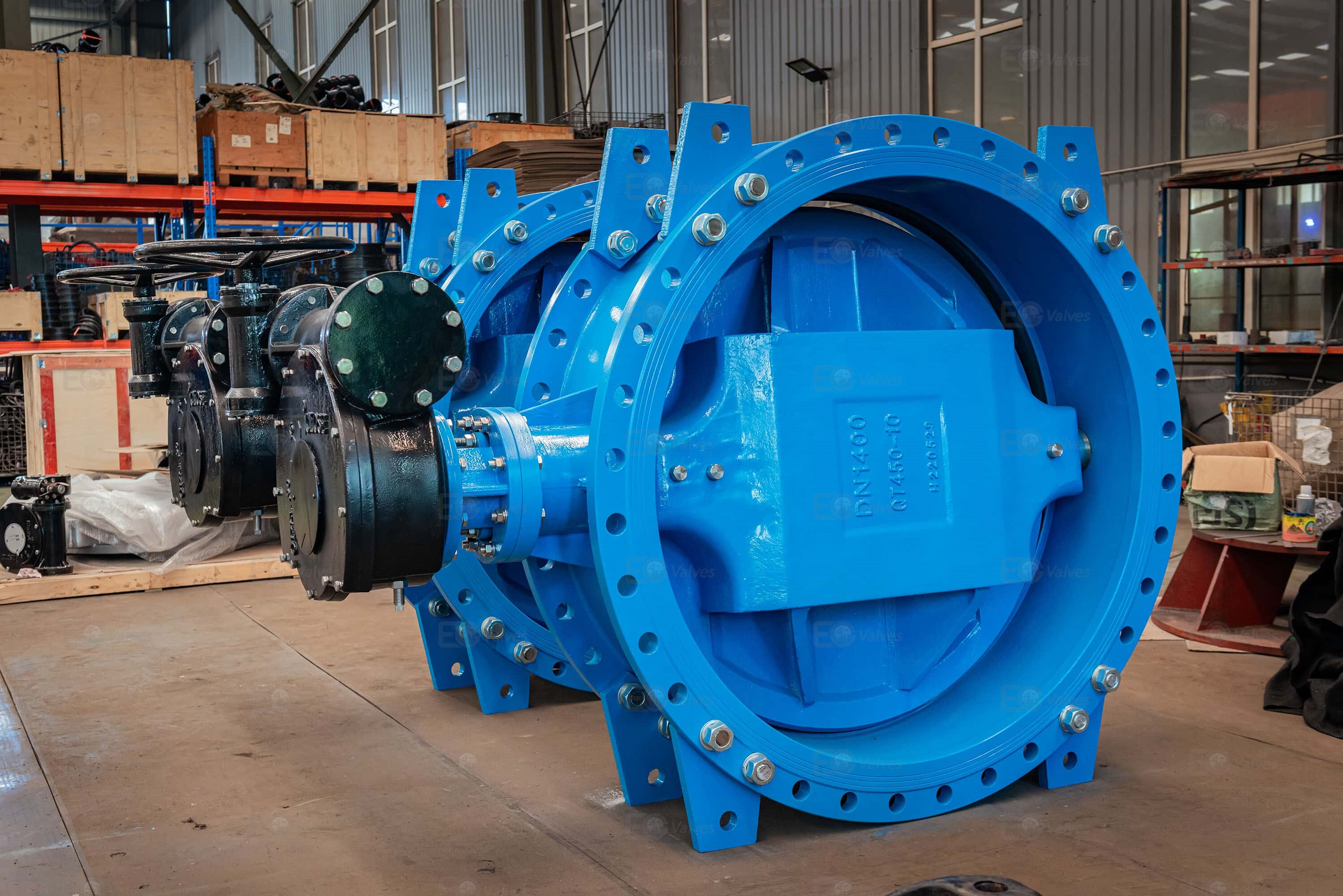
Butterfly valve selection for oil, chemical and pipeline projects is a severity-matching exercise, not a price exercise. Two designs from EG Valves Manufacturing Co., Ltd cover most of the range: the BOV303 triple offset butterfly valve, referenced for oil and petroleum, refinery and tanks, chemical factories, steel mills and shipbuilding industries, and the BTV305 double eccentric butterfly valve, referenced for water treatment, HVAC, desalination plants, power generation and municipal water supply. The engineering question is which design matches the severity of the line, and which adjacent option — BPV302 high performance or BTF301 PTFE lined — handles an aggressive or vacuum duty that neither of the two main designs is intended for.
Scale is what makes that selection decision commercially important. China exported USD 22.6 billion in valves globally in 2024, representing approximately 20% of the total global export concentration, according to the Observatory of Economic Complexity. A buyer working through that market sees a very large number of suppliers quoting very similar descriptions. What separates a workable project valve from a maintenance problem is the design family, the seat construction, the pressure class and the documented inspection record.
This guide is written for plant engineers, project engineers and procurement teams specifying butterfly valves for oil and petroleum, chemical, steel, shipbuilding and pipeline services. It maps two EG butterfly valve designs to severity levels, walks through a seven-step selection sequence, and explains why triple offset units are the design most often referenced for pipelines and chemical plants.
Problem Definition: Where Butterfly Valve Selection Goes Wrong
Most butterfly valve failures on industrial projects trace back to one of three predictable selection errors. None of them are manufacturing defects, and all of them become visible only after commissioning.
1. A seat construction that relies on permanent interference
A concentric, soft-seated butterfly valve closes by compressing an elastomer seat against the disc edge. That works well in clean utility water and in HVAC loops. It becomes a liability when the line carries abrasive particles, polymerising hydrocarbons or aggressive chemistry, because the sealing surface is in contact through every cycle. A triple offset design takes a different route: the geometry rotates the disc out of the seat before it turns, which eliminates wear associated with sealing surface contact, and the closure is described as bubble-tight, providing process efficiency with reduced maintenance.
2. Torque growth and progressive loss of tight shut-off
When the seat material degrades, operating torque climbs and the valve stops sealing before it stops moving. The BTV305 design addresses this from two directions: a perfectly machined seat ring ensures continued tight shut off, and replaceable sealing materials ensure optimum seating torque. A tilted disc releases the compression, which extends durability. These are maintenance-facing design features, and they matter most on large-diameter lines where replacing a valve is a shutdown event rather than a workshop job.
3. A design applied outside its pressure class
The third error is the simplest and the most expensive: specifying a valve family against a service it was never rated for. The BTV305 is rated Class 125 / Class 150 and PN6 / PN10 / PN16, with a size range of NPS 8 in to 48 in (DN200 to DN1200). The BOV303 is rated Class 150 / Class 300 / Class 600 and PN10 / PN16 / PN25 / PN40, with a size range of NPS 2 in to 60 in (DN50 to DN1500). Referencing a double eccentric utility valve for a high-pressure hydrocarbon line is not a cost optimisation — it is a specification error, and it will surface the first time the line is pressurised to its design condition.
The severity itself is defined by the process, not by the purchaser. Petroleum refining, for example, operates under high temperature, high pressure, hydrogen-rich, coking, corrosive, flammable and explosive conditions. Chemical plant service carries aggressive fluids that require corrosion resistance, flow control and regulatory compliance. Those conditions set the minimum design requirement before any commercial discussion begins.
Industry Background: Why Design Qualification Now Drives Valve Sourcing
The industrial valve market is large, geographically concentrated and still expanding, which raises the cost of a wrong specification rather than lowering it.
- The global industrial valves market size is estimated at USD 82.9 billion in 2025, with a projected CAGR of 5.7% through 2034 (IMARC Group).
- Asia Pacific dominated the industrial valves market in 2025 with a revenue share of approximately 36.3%, with China holding the largest share within the region (Grand View Research).
- The oil and gas industry remains the leading end-user for industrial valves, accounting for nearly 33% of global demand in 2024 (Vantage Market Research, via PR Newswire).
- Cast steel valves accounted for 27.3% of the oil and gas valve market in 2025, driven by cost-effective high-pressure performance (Mordor Intelligence).
- Industrial valves exported from China must comply with the EU Pressure Equipment Directive (PED) 2014/68/EU for equipment with pressure exceeding 0.5 bar.
Two conclusions follow for a project engineer. First, the pressure-and-material segment — cast steel, alloy steel, duplex steel — is where oil and gas demand concentrates, so qualification evidence in that segment is what separates suppliers. Second, the compliance boundary is explicit: PED 2014/68/EU applies to pressure equipment above 0.5 bar, which covers essentially every process butterfly valve on a European-facing project.
Detailed Solution: Matching Butterfly Valve Design to Project Severity
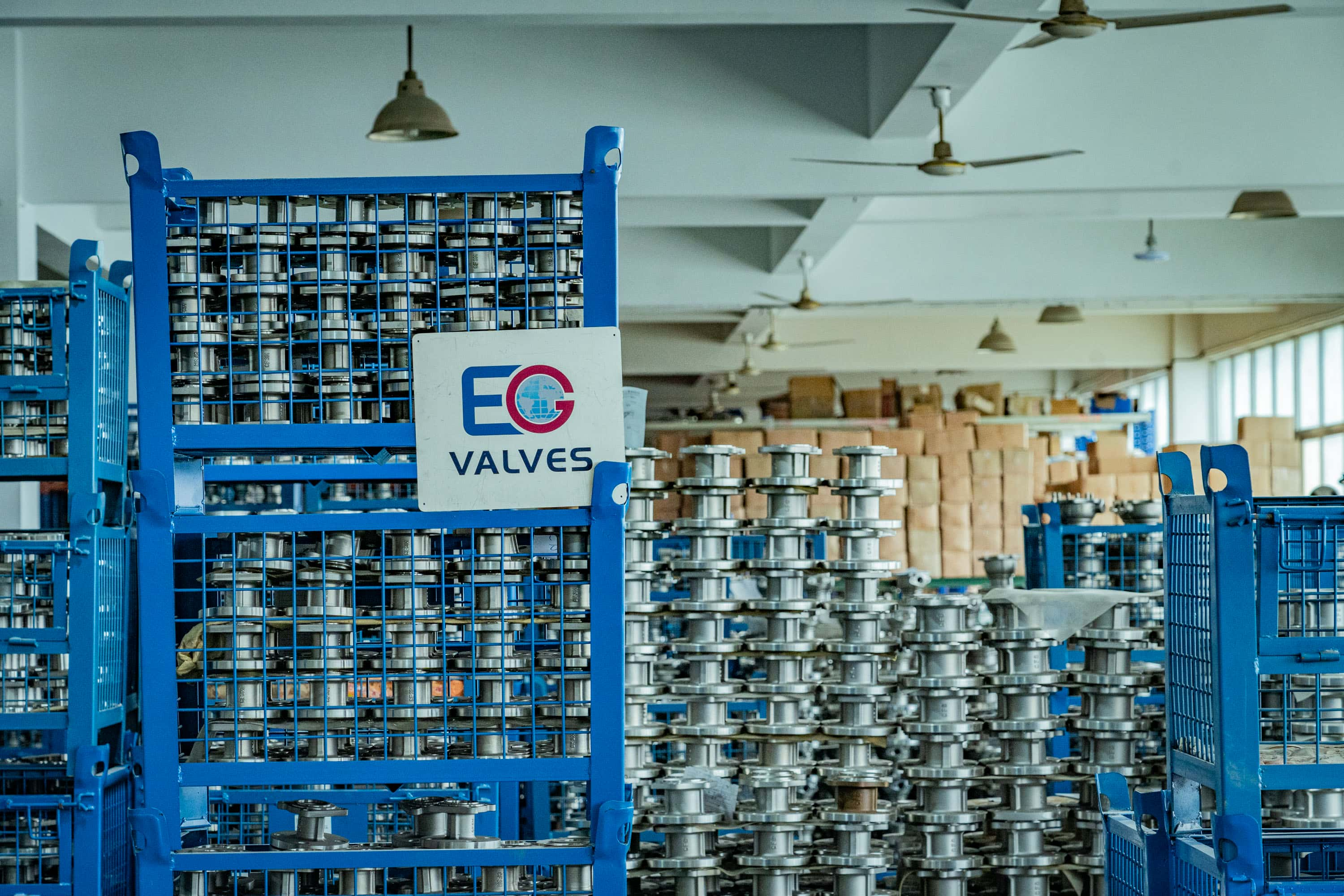
EG Valves Manufacturing Co., Ltd was established in 2000 and operates a 27,500 m2 manufacturing base with 300 employees, a 30-engineer R&D team and an annual output of 90,000 valves. Around 80% of production is exported to the EU, North America, Latin America and the Middle East, and products are made under ISO 9001 certified processes, with API 600, API 6D, CE and PED certifications held at factory level. Within that range, four butterfly valve designs cover the practical project spectrum.
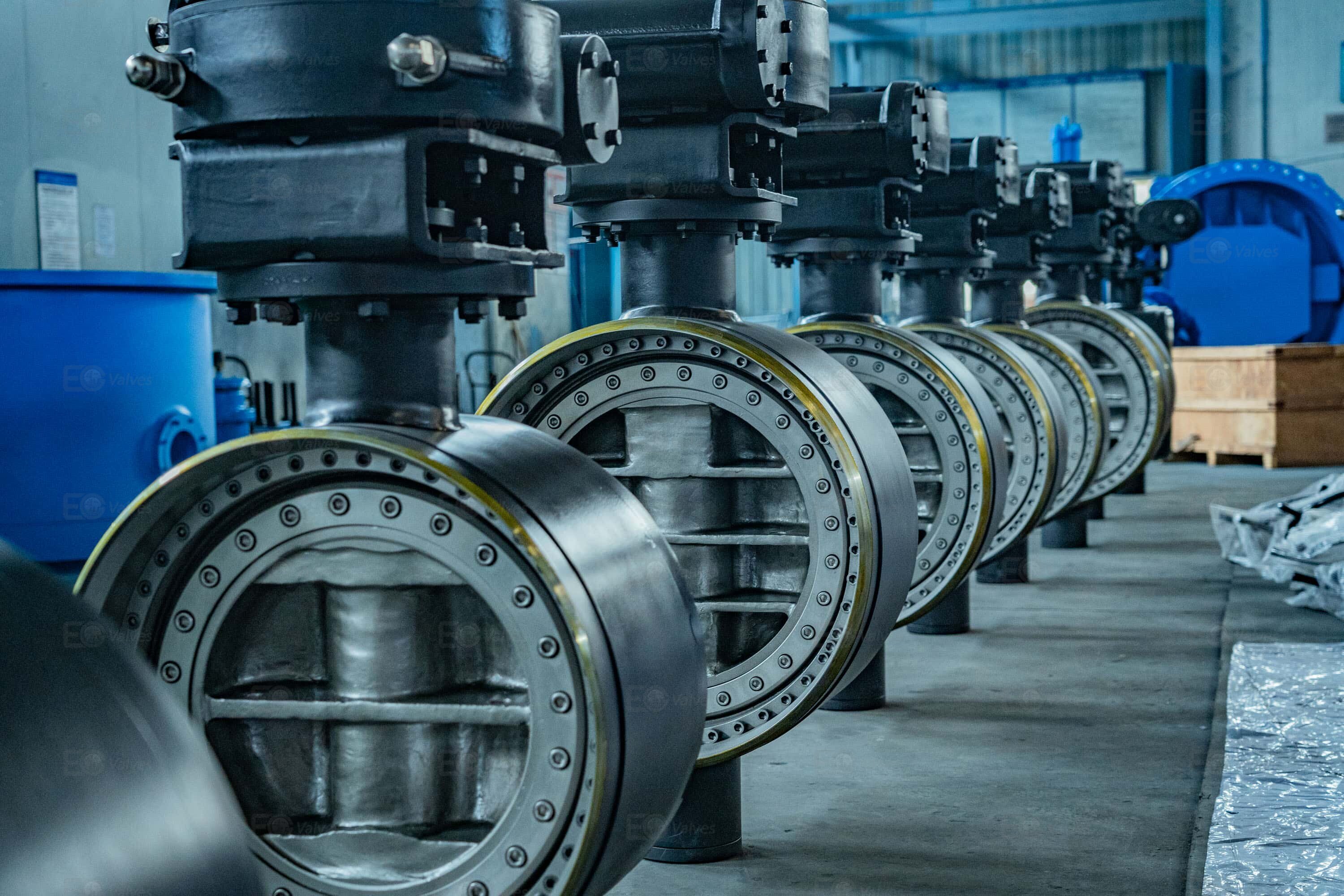
BOV303 triple offset butterfly valve — severe and aggressive duty
The BOV303 is the design to start with when the line carries hydrocarbons, chemicals or high-temperature media and the requirement is a tight, repeatable closure. Its build is deliberately severe-service oriented:
- Body: carbon steel, stainless steel, alloy steel or duplex steel.
- Disc: carbon steel, stainless steel or duplex steel.
- Seat: stainless steel + graphite, or PTFE + stainless steel, with an optional Stellite seat that offers optimum resistance to erosion.
- Size and class: NPS 2 in to 60 in (DN50 to DN1500); Class 150 / 300 / 600; PN10 / PN16 / PN25 / PN40.
- Body styles: wafer, lug and double flange.
- Operation: handle lever, gearbox, worm gear, electric or pneumatic.
Two design statements matter for pipeline and chemical plant duty. The bubble-tight closure provides process efficiency with reduced maintenance, and the triple offset design eliminates wear associated with sealing surface contact. In a refinery or chemical plant, those two properties are what keep a large-diameter isolation valve out of the turnaround scope. The design is referenced for oil and petroleum, refinery and tanks, chemical factories, steel mills and shipbuilding industries — which is a concentrated list of exactly the services where leakage is a safety event rather than a housekeeping issue.
BTV305 double eccentric butterfly valve — large-diameter utility duty
The BTV305 is the high-flow, large-diameter workhorse of the range. It is built for lines where the medium is benign enough for an elastomer seal and the pipe is large enough that compactness and throttling behaviour matter more than metal-seat extreme-temperature capability:
- Body: ductile iron or carbon steel; disc in ductile iron or carbon steel.
- Sealing: EPDM, NBR (Buna-N) or FKM (Viton).
- Size and class: NPS 8 in to 48 in (DN200 to DN1200); Class 125 / Class 150; PN6 / PN10 / PN16.
- Operation: gearbox, worm gear, electric or pneumatic.
Its engineering logic is durability under repeated cycling. The double eccentric disc design ensures minimal wear and provides excellent throttling capabilities. Replaceable sealing materials ensure optimum seating torque, a perfectly machined seat ring ensures continued tight shut off, and the tilted disc releases the compression, which extends the durability of the seal. The shaft is stainless steel running in self-lubricating bearings. EG references this design for water treatment, HVAC, desalination plants, power generation and municipal water supply — utility and cooling duties rather than hydrocarbon isolation.
BPV302 and BTF301 — the adjacent options
Two further designs close the gaps on either side. The BPV302 high performance butterfly valve sits between the two severities: carbon or stainless steel body with stainless or duplex disc, seat in PTFE/RTFE, stainless steel/Monel, or PTFE + stainless steel, available with soft or hard sealing on request. It provides bi-directional, drop-tight closure in vacuum, carries an integrally cast mounting pad for mounting many actuators, spans NPS 2 in to 60 in (DN50 to DN1500) at Class 150 / 300 / 600 and PN10 / PN16 / PN25 / PN40, and is referenced for oil and gas, petrochemical, power generation, HVAC and hydrocarbon processing.
The BTF301 PTFE lined butterfly valve is the corrosion answer at moderate pressure. Body in ductile iron, carbon steel or stainless steel, disc in stainless steel or fully PTFE lined stainless steel, and seat in PTFE, FEP or PFA, it delivers excellent anti-corrosive performance with 90-degree on/off operation, spanning NPS 2 in to 36 in (DN50 to DN900) at Class 125 / Class 150 and PN6 / PN10 / PN16. It is referenced for acids, salts, alkalis, oxidants, organic solvents and reducing agents in chemical, pharmaceutical, petroleum and food industries.
Why triple offset units are the reference design for pipelines and chemical plants
The reason is structural rather than promotional. A pipeline or chemical plant isolation valve has to do three things at once: hold a tight closure after many cycles, tolerate media that attack elastomers, and survive erosion from particulate carry-over. The triple offset geometry removes sealing-surface contact wear, the stainless steel + graphite or PTFE + stainless steel seat combination extends media compatibility beyond elastomer limits, and the optional Stellite seat adds erosion resistance where it is needed. That combination is why the BOV303 — not a concentric soft-seated unit — is the design EG references for oil and petroleum, refinery and tanks, chemical factories, steel mills and shipbuilding.
Step-by-Step Breakdown: A Seven-Step Selection Sequence
- Define the fluid and the severity. Establish whether the line carries hydrocarbons, aggressive chemistry, abrasive slurry or treated water. Refinery service means high temperature, high pressure, hydrogen-rich, coking, corrosive, flammable and explosive conditions; chemical plant service means aggressive fluids with corrosion resistance and regulatory compliance requirements. Severity drives everything downstream.
- Fix the pressure class before the model. Compare the line design pressure against the class range of each candidate. BOV303 covers Class 150 / 300 / 600 and PN10 / PN16 / PN25 / PN40. BTV305 covers Class 125 / Class 150 and PN6 / PN10 / PN16. BPV302 covers Class 150 / 300 / 600 and PN10 / PN16 / PN25 / PN40. A class mismatch disqualifies a design regardless of its size range.
- Select the seat and sealing system. Choose stainless steel + graphite or PTFE + stainless steel, with an optional Stellite seat for erosion resistance, on severe or high-temperature duty. Choose EPDM, NBR or FKM where the medium and temperature allow it. On chemically aggressive low-pressure lines, a PTFE, FEP or PFA seat with a fully PTFE lined disc is the corrosion-resistant option.
- Confirm size and body style. BOV303 spans NPS 2 in to 60 in; BPV302 spans NPS 2 in to 60 in; BTF301 spans NPS 2 in to 36 in; BTV305 spans NPS 8 in to 48 in. Wafer, lug and double flange configurations are available on BOV303, BPV302 and BTF301 — the selection among them follows the pipe class and whether the valve must be removable with the line in service.
- Decide the operation mode. Handle lever, gearbox, worm gear, electric and pneumatic operation are available across the butterfly range, with electric and pneumatic actuators supporting automated control. For project lines with remote or interlocked operation, actuator selection must be fixed at the valve selection stage, not after.
- Fix body and trim materials. Carbon steel, stainless steel, alloy steel and duplex steel are available across the severe-service range; ductile iron and carbon steel are the standard materials for the large-diameter utility design. Material choice should follow the fluid, not the budget line item.
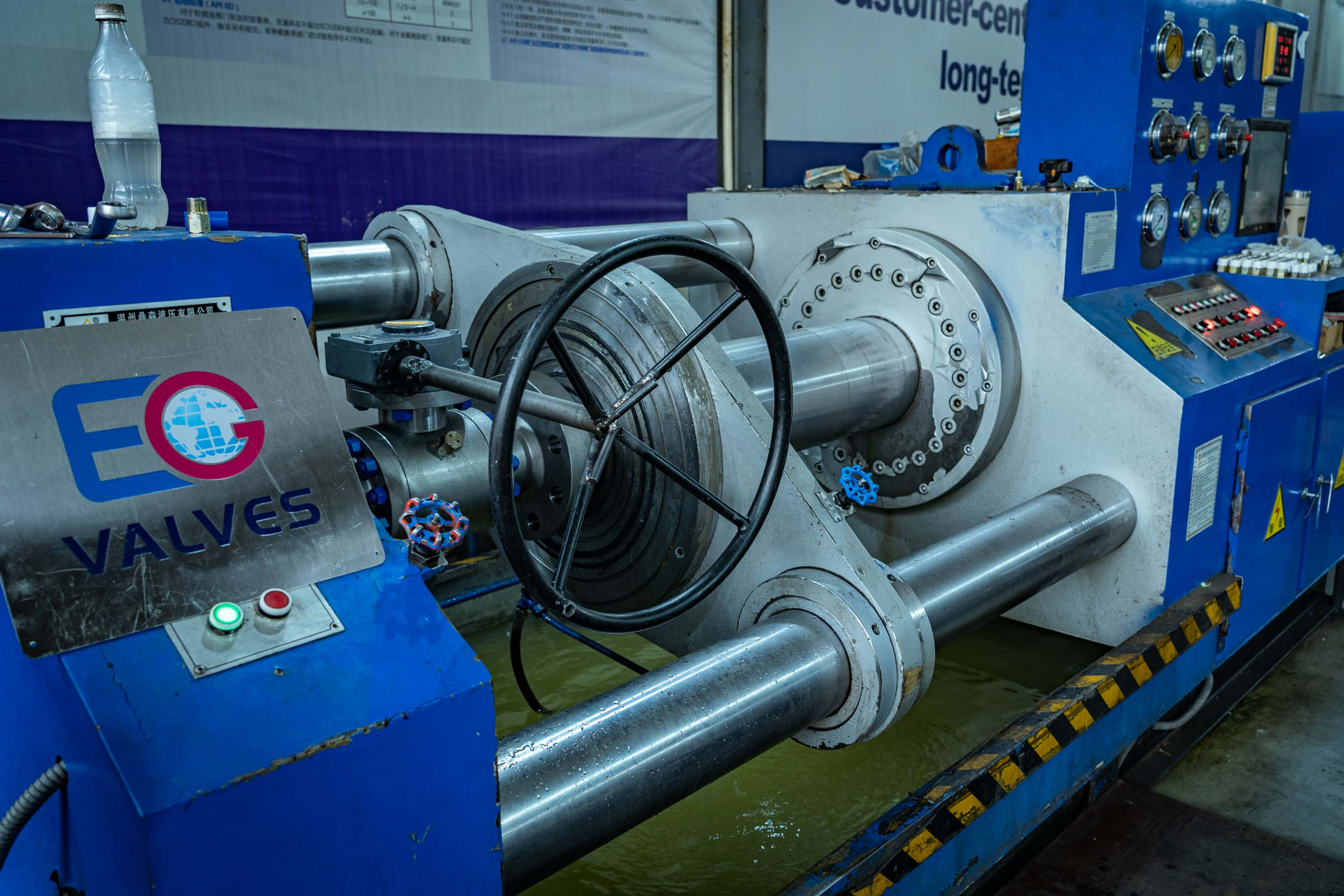
- Confirm documentation and inspection before order release. EG builds a strict QC team and inspects 100% of every valve, ensuring precision fits and consistent quality, and provides EN 10204 3.1 Material Test Certificates to every order. For PED-scope European projects, certification status should be verified at the same time.
Use Cases: How the Mapping Works in Practice
Refinery and pipeline isolation
Crude, product and utility isolation lines inside refineries and tank farms are the classic BOV303 application. The design is referenced for oil and petroleum and for refinery and tanks, and it is the reason EG butterfly valves appear alongside gate, globe and ball valves on large refining scopes. One documented refining project in the UAE covered a total of 915 pieces of gate, globe, check, ball and butterfly valves from Class 150 to Class 1500, in WCB, WC6, WC9 and C5 materials, in sizes from 2 in to 36 in, supplying a refining system where high-pressure systems and corrosive environments had to be managed simultaneously. The valves have operated safely and steadily over an 8 to 10 year service period.
Chemical plant process and utility lines
Chemical plants split into two duty bands. Aggressive chemistry at moderate pressure goes to the PTTF-lined BTF301, referenced for acids, salts, alkalis, oxidants, organic solvents and reducing agents. Higher-pressure process isolation and high-temperature lines go to the BOV303, which is referenced for chemical factories directly. Both bands share the same requirements: corrosion resistance, flow control and regulatory compliance. A documented chemical plant project in Spain covered 260 pieces of valves in sizes DN250 to DN1200 across a five-year service period, and the project scope specifically included handling corrosive environments and aggressive fluids.
Steel mills and shipbuilding
Steel mill and shipyard services combine high temperature, particulate contamination and demanding cycle counts. Because the BOV303 is referenced for steel mills and shipbuilding industries, it is the design to evaluate first where cooling water, scale-bearing water and process lines meet at a single isolation point. The optional Stellite seat is the relevant option where erosion is the dominant wear mechanism.
Utility, cooling and desalination duty
Large-diameter cooling water, HVAC, municipal supply and desalination lines are BTV305 territory. The double eccentric design delivers minimal wear, excellent throttling capability, a machined seat ring for continued tight shut off and replaceable sealing materials that maintain optimum seating torque — the properties that matter on a line that cycles daily but carries a benign medium.

Comparison Table: Butterfly Valve Designs by Project Duty
| Design | Size range | Pressure rating | Seat / sealing | Defining design feature | Where EG references it |
|---|---|---|---|---|---|
| BOV303 Triple offset butterfly valve | NPS 2 in – 60 in (DN50 – DN1500) | Class 150 / 300 / 600 PN10 / 16 / 25 / 40 | Stainless steel + graphite, or PTFE + stainless steel; optional Stellite seat | Triple offset design eliminates wear associated with sealing surface contact; bubble-tight closure | Oil and petroleum, refinery and tanks, chemical factories, steel mills, shipbuilding |
| BTV305 Double eccentric butterfly valve | NPS 8 in – 48 in (DN200 – DN1200) | Class 125 / 150 PN6 / 10 / 16 | EPDM, NBR (Buna-N), FKM (Viton) | Double eccentric disc design for minimal wear and excellent throttling; replaceable sealing materials; tilted disc releases compression | Water treatment, HVAC, desalination plants, power generation, municipal water supply |
| BPV302 High performance butterfly valve | NPS 2 in – 60 in (DN50 – DN1500) | Class 150 / 300 / 600 PN10 / 16 / 25 / 40 | PTFE / RTFE, stainless steel / Monel, or PTFE + stainless steel; soft or hard sealing | Bi-directional, drop-tight closure in vacuum; integrally cast mounting pad for actuators | Oil and gas, petrochemical, power generation, HVAC, hydrocarbon processing |
| BTF301 PTFE lined butterfly valve | NPS 2 in – 36 in (DN50 – DN900) | Class 125 / 150 PN6 / 10 / 16 | PTFE, FEP, PFA | Excellent anti-corrosive performance; concentric design with bi-directional service | Acid, salt, alkali, oxidant, organic solvent and reducing agent service in chemical, pharmaceutical, petroleum and food industries |
Wafer, lug and double flange body styles are available across the butterfly range; handle lever, gearbox, worm gear, electric and pneumatic operation modes are available depending on the design and size.
Frequently Asked Questions
What should a China valve manufacturer for chemical processing projects be able to document?
A valve manufacturer supplying chemical processing projects should be able to document both its quality system and its product certifications. EG Valves Manufacturing Co., Ltd was established in 2000 and produces under ISO 9001 certified processes, with API 600, API 6D, CE and PED certifications held at factory level. For European-facing projects, the compliance boundary is defined by the EU Pressure Equipment Directive (PED) 2014/68/EU, which applies to equipment with pressure exceeding 0.5 bar. At order level, EG provides EN 10204 3.1 Material Test Certificates to every order and operates a strict QC team that inspects 100% of every valve, which is how precision fits and consistent quality are evidenced rather than asserted.
Which butterfly valve design fits a chemical plant line versus a pipeline shut-off duty?
Both duties usually point to the same design family. The BOV303 triple offset butterfly valve is referenced for oil and petroleum, refinery and tanks, chemical factories, steel mills and shipbuilding industries; it spans NPS 2 in to 60 in (DN50 to DN1500), covers Class 150 / 300 / 600 and PN10 / PN16 / PN25 / PN40, uses a stainless steel + graphite or PTFE + stainless steel seat with an optional Stellite seat for erosion resistance, and delivers a bubble-tight closure. Where a chemical line is aggressive but operates at moderate pressure, the PTFE lined BTF301 — rated Class 125 / Class 150 and PN6 / PN10 / PN16, with PTFE, FEP or PFA sealing — is the corrosion-specific alternative.
What is the minimum order quantity for a butterfly valve project order?
EG works to an MOQ of 1 piece for big size valves and 10 pieces for small size valves, which allows a project team to place a small trial order before committing to the full scope. Monthly capacity is 8,000 valves, and EG operates in OEM / ODM mode with either the client's brand logo or the EG brand logo. This matters when a project requires valve tagging, batch consistency or a staged release across several construction packages.
Can plant engineers validate a butterfly valve sample before a full project order?
Yes. Because the MOQ is 1 piece for big size valves, a single butterfly valve can be ordered for dimensional and functional validation before series production. Every valve is inspected 100%, and an EN 10204 3.1 Material Test Certificate is issued with the order, so material and inspection evidence accompanies the sample. Engineers comparing a triple offset unit against a double eccentric unit for the same line can request both designs and confirm torque, closure behaviour and connection dimensions against the piping class before release. To start that process, send the line data — fluid, size, pressure class and operation mode — to the EG sales team at sales@egvalves.com.
What lead time should be planned for a butterfly valve order?
EG quotes a lead time within 25–35 days from order confirmation, supported by a monthly capacity of 8,000 valves and an annual output of 90,000 pieces from a 27,500 m2 facility. For multi-package projects, that lead time should be reconciled against the construction schedule at the same stage as the valve specification itself, particularly where large-diameter valves in Classes 300 and 600 or specialised seating options such as the Stellite seat are involved.
Conclusion: Match the Design to the Severity, Then Verify the Evidence
Butterfly valve selection for oil, chemical and pipeline projects reduces to a short set of decisions: establish the fluid severity, fix the pressure class, select the seat construction, confirm size, body style and operation mode, and require documentation before release. Applied in that order, the mapping is straightforward. The BOV303 triple offset design covers severe hydrocarbon, chemical, steel mill and shipbuilding duty with a bubble-tight, wear-resistant closure in Class 150 to Class 600 and sizes up to NPS 60 in. The BTV305 double eccentric design covers large-diameter, lower-severity utility duty in Class 125 / 150 and PN6 to PN16 with replaceable sealing materials for long cycling life. The BPV302 and BTF301 designs fill the vacuum and aggressive-chemistry gaps between them.
EG Valves Manufacturing Co., Ltd has manufactured under those specifications since 2000, exporting to more than 33 countries and regions across Europe, North America, South America and the Middle East, with documented project experience in refining, chemical, oil and gas, offshore, water treatment and infrastructure service.
Next step for your project: send the line data — fluid, size, pressure class, temperature and operation mode — and the EG engineering team will return the matching butterfly valve design, material and seat recommendation.
Email: sales@egvalves.com | Tel: +86 577 5799 2227 | WhatsApp: +86 132 0637 0946 | Website: www.egvalves.com
Download the full product catalogue and specification reference: EG Valves Product Brochure (PDF)
Have Questions or Need More Details?
Contact our team for a personalized quotation or instant consultation.
Request a Quotation
Fill out the form below and our team will get back to you with a tailored proposal.
WhatsApp Direct Chat
Prefer to chat in real-time? Message us on WhatsApp for instant assistance & quick answers.
- Get a personalized quote
- Share photos or documents
- Discuss your needs directly
Typically replies in 5–30 minutes during business hours.