
Choosing Between Chinese and International Industrial Valve Suppliers: A Practical Comparison Guide for Gate Valves
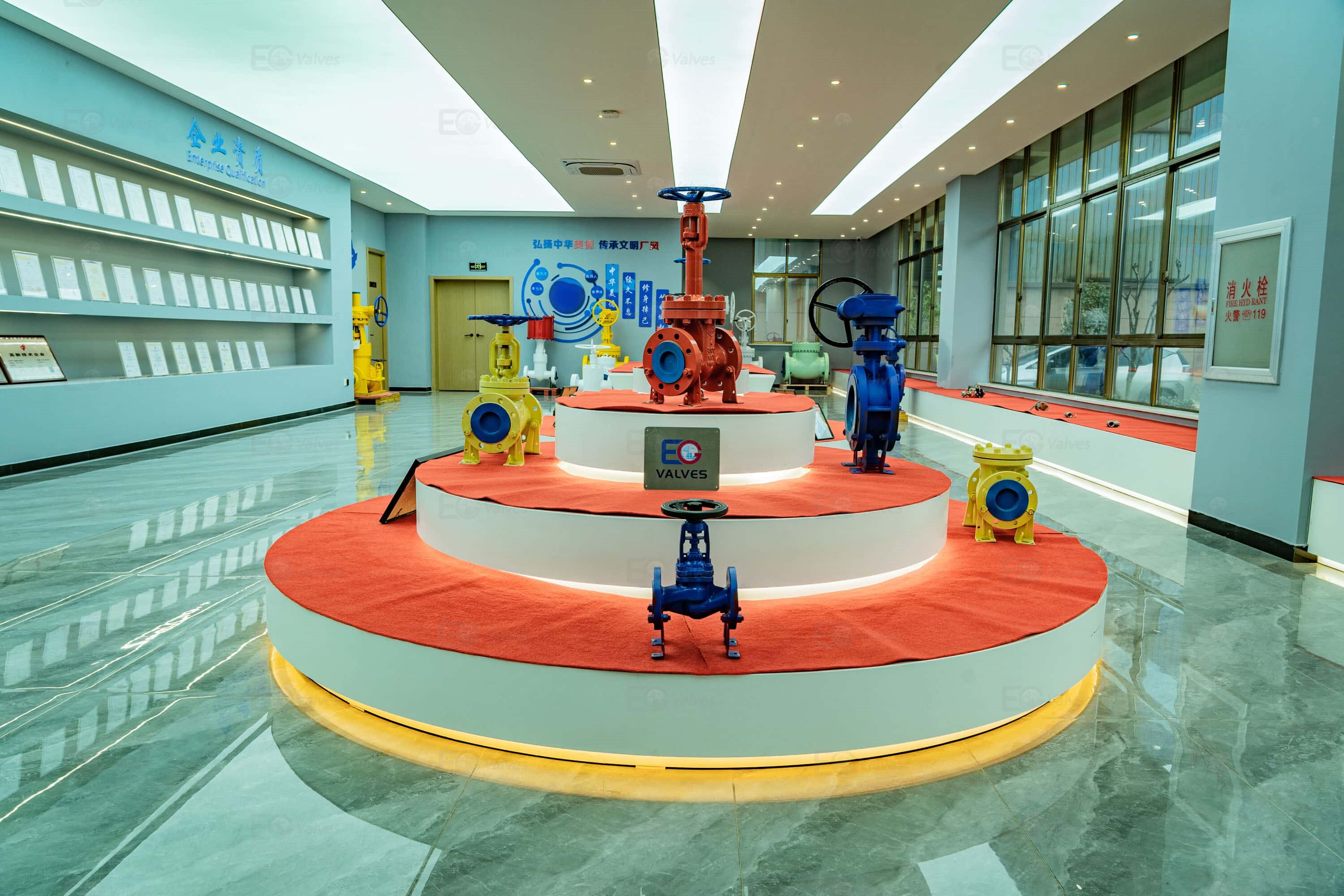
1. Product Comparison: Cast Steel Gate Valve vs. Forged Steel Gate Valve
For heavy-duty industrial applications such as power generation, oil & gas, and chemical processing, gate valves are commonly used for on-off service. Two prevalent types are cast steel gate valves and forged steel gate valves. The following comparison examines their key differences across four dimensions: technical parameters, applicable scenarios, cost, and maintenance.
Technical Parameters
Cast Steel Gate Valve (model GTS102): Body material includes Carbon Steel, Stainless Steel, Alloy Steel, and Duplex Steel. Size range: NPS 1-1/2" to 24" (DN40 to DN600). Pressure rating: Class 150 to Class 1500 (PN16 to PN100). End types: RF, FF, RTJ, BW. Construction: OS&Y (Rising Stem), Bolted Bonnet.
Forged Steel Gate Valve (model GTF023): Body material includes Forged Carbon Steel, Stainless Steel, and Alloy Steel. Size range: NPS 1/2" to 2-1/2" (DN15 to DN65). Pressure rating: Class 800 to Class 2500 (PN140 to PN320). End types: NPT/BSP threaded, SW, RF, BW. Construction: optional bolted bonnet, welded bonnet, pressure seal bonnet.
Forged steel valves offer higher pressure ratings (up to Class 2500) and are suitable for smaller line sizes, while cast steel valves provide larger sizes at moderate pressure ratings.
Applicable Scenarios
Cast steel gate valves are widely used in water supply, HVAC, building services, and general industrial systems. Forged steel gate valves are designed for steam, air, gas, oil, oil vapor, and high-pressure installations (per product specification). In practice, forged steel valves are preferred in critical high-pressure and high-temperature applications like refinery feed lines, while cast steel valves serve well in main water and steam lines of power plants.
Cost
Based on market data, forged steel gate valves generally cost 30–50% more than equivalent cast steel valves due to the forging process and higher material density. However, for high-pressure applications, the initial investment is justified by longer service life. For low-to-medium pressure applications, cast steel valves provide a more cost-effective solution.
Maintenance Difficulty
Both valve types require regular inspection of the stem and seat seals. Cast steel valves with bolted bonnets allow easier internal access for maintenance. Forged steel valves, especially welded bonnet designs, may require specialized tools for disassembly. Overall, maintenance complexity is similar, but the smaller size of forged steel valves makes handling simpler.
2. Supplier Comparison: Chinese Manufacturer (EG Valves) vs. International Brands
When sourcing industrial gate valves, procurement professionals often weigh Chinese manufacturers against established international brands such as Emerson (Fisher) and Flowserve. The comparison below highlights key factors:
| Factor | EG Valves (Chinese Origin) | Emerson / Flowserve (International) |
|---|---|---|
| Price | Generally 30–40% lower than international brands. EG valve prices are typically 3–7% lower than other Chinese manufacturers (per provided data). | Premium pricing due to brand equity, global R&D, and extensive service networks. |
| Customization Ability | High flexibility: EG offers OEM/ODM services, customized materials (e.g., Duplex, Hastelloy), and special end connections. MOQ as low as 1 piece for large sizes. | Limited customization for standard product lines; engineered-to-order (ETO) projects involve longer lead times and higher minimum quantities. |
| Delivery Lead Time | Standard lead time 25–35 days. Monthly capacity: 8,000 pcs valves. Expedited options available. | Typical lead times 8–16 weeks for standard products; longer for custom orders. |
| After-Sales Service Network | Centralized support from China with technical guidance and remote troubleshooting. Local partners in EU, Americas, Middle East for physical support. | Global network of service centers, field service engineers, and spare parts warehouses. Faster on-site response in remote locations. |
3. Decision Model: 3-Step Process for Selecting the Right Industrial Valve
Procurement managers can use the following structured approach to make informed decisions:
Step 1: Define the Application Scenario
Identify the fluid medium (clean water, steam, corrosive chemicals, abrasive slurry, etc.), operating temperature and pressure ranges, and whether the service is on-off or throttling. For example, high-pressure steam lines require forged steel gate valves, while low-pressure water mains can use cast iron or cast steel.
Step 2: Match Technical Parameters
Select material (body, trim, seat) compatible with the medium. Verify pressure class (e.g., Class 150, 300, 600, etc.), end connections (RF, BW, threaded), and valve size. For actuated valves, confirm torque requirements and actuator type (pneumatic, electric).
Step 3: Calculate Total Cost of Ownership (TCO)
Include initial purchase price, installation costs, expected maintenance frequency, spare parts availability, and valve lifecycle. EG valves, for example, are designed for long service life with low maintenance. As per available data, EG ball valves average 70,000–100,000 cycles, significantly higher than the 30,000–50,000 cycles typical of many other Chinese brands. This translates to lower replacement costs over time.
4. Case Study: An American Oil & Gas Operator Selects EG Valves
In 2018, a major oil & gas operator in the United States required a large quantity of gate, globe, check, and ball valves for a refinery expansion project. The initial specification favored an international brand, but after a thorough comparison, the procurement team chose EG Valves Manufacturing Co., Ltd.
The order comprised 1,438 pieces of valves (Gate, Globe, Check, Ball) in Class 150 to 1500, with materials including WCB, WC6, WC9, C5, and A105, sizes ranging from 1/2" to 20". The supplier delivered within the agreed 30-day lead time, compared to the 12-week quote from the international competitor. The total cost was 35% lower. EG Valves provided EN 10204 3.1 Material Test Certificates for every order, ensuring full traceability.
Core differentiators in this decision included EG's precision manufacturing, full-process quality control, compatibility with special media, and long-life design. The valves have been operating safely and stably for over 8 years with zero leakage issues, confirming the reliability of the Chinese manufacturer.
Have Questions or Need More Details?
Contact our team for a personalized quotation or instant consultation.
Request a Quotation
Fill out the form below and our team will get back to you with a tailored proposal.
WhatsApp Direct Chat
Prefer to chat in real-time? Message us on WhatsApp for instant assistance & quick answers.
- Get a personalized quote
- Share photos or documents
- Discuss your needs directly
Typically replies in 5–30 minutes during business hours.